New articles every week — Expert-backed health & beauty tips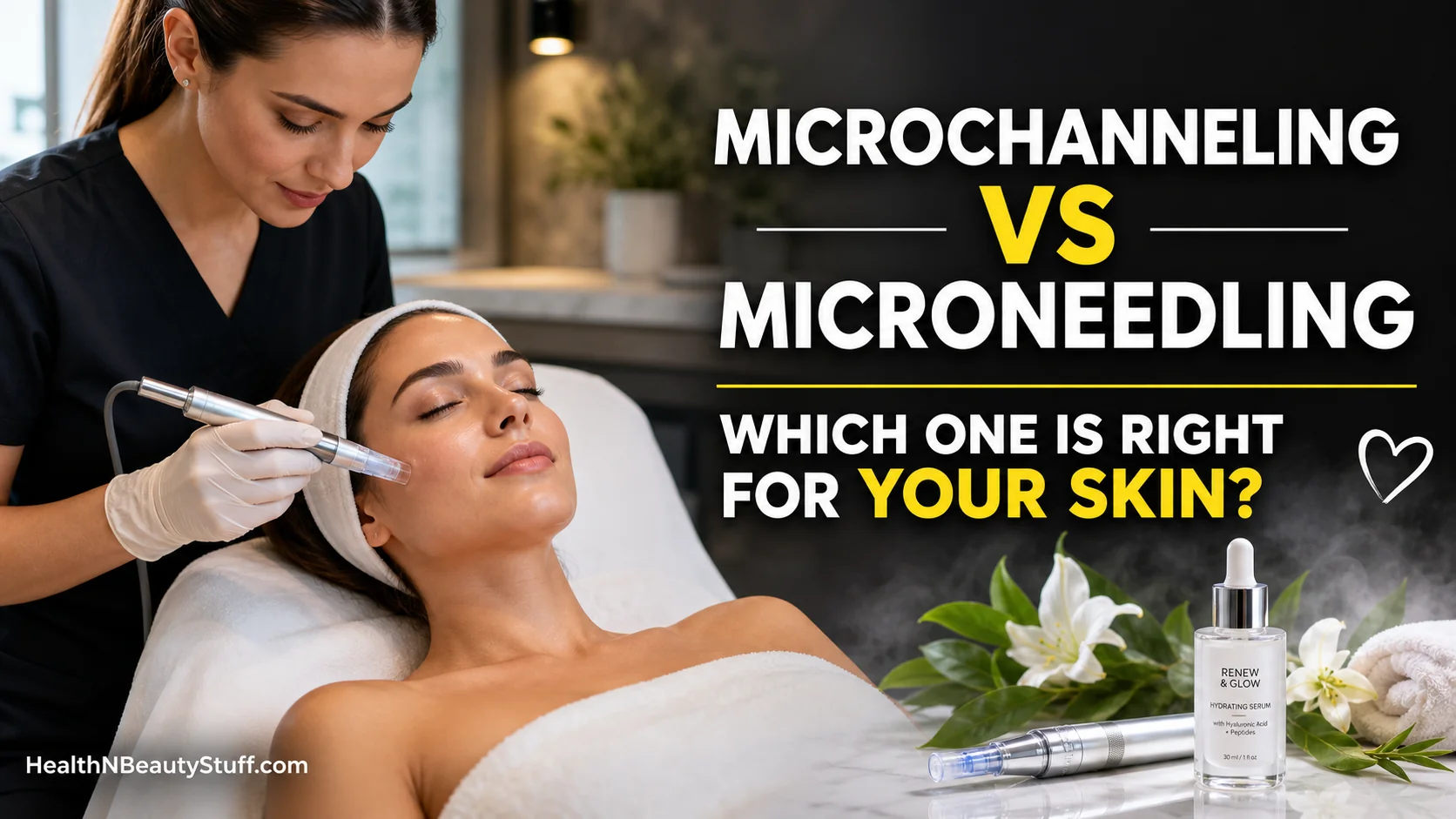
You've been scrolling Instagram and a med-spa ad promises "microchanneling, the gentler microneedling" with zero downtime. It sounds amazing. But is it a genuine upgrade, or just great marketing wrapped around a familiar treatment?
Quick Verdict
Microchanneling is the gentler, serum-friendly option if your goal is glow, hydration, and fast recovery.
Microneedling is the deeper, more established treatment for acne scars, wrinkles, and firmness. Choose based on your skin concern, downtime tolerance, and practitioner - there is no universal winner.
Both microchanneling and microneedling work on the same principle: create tiny controlled injuries in the skin to trigger collagen production. The difference is how they do it, and that "how" matters more than most clinics will tell you.
As one widely cited summary puts it: microchanneling causes less trauma and has shorter downtime, while traditional microneedling penetrates deeper for severe scarring. That's accurate, but there's a lot more to unpack before you book an appointment.
At-a-Glance Comparison
What Is the Actual Difference? (Device Mechanics Explained)
It comes down to stamping vs. gliding.
Microneedling uses a motorized pen (brands like SkinPen or Dermapen) with tiny oscillating needles. The device stamps vertically into the skin while the provider glides it across your face. Those punctures trigger your skin's healing response, producing collagen and elastin. This is called collagen induction therapy.
Microchanneling uses a different tool entirely. Instead of a gliding pen, a stamping device presses ultra-fine filaments straight down into the skin, lifts, and repeats. No dragging. This creates uniform microchannels rather than micro-wounds with friction involved.
Procell is the most marketed branded microchanneling system. It pairs the stamping technique with growth-factor serums applied during treatment. Worth knowing: most of the "microchanneling is superior" content online comes from clinics selling Procell. That doesn't make the technique bad. It just means read the source.
The depth difference is real and important. Microneedling pens can reach deeper into the dermal layer where collagen lives. Microchanneling stays closer to the surface, focusing on serum infusion and superficial renewal.
Microchanneling vs Dermarolling: Why At-Home Rollers Lose
Never compare a professional clinical treatment to a DIY dermaroller. They aren't the same category.
A dermaroller has needles arranged in a barrel that rolls across your skin. Because of the rolling motion, needles enter and exit at an angle, causing micro-tears rather than clean vertical channels. That dragging motion creates more tissue trauma, more irritation, and less precision.
Professional microneedling pens and microchanneling stampers both work vertically. Clean in, clean out. No tearing. That's why clinical devices produce better results with less damage than any at-home roller.
If you're comparing microneedling pen vs dermaroller for home use, the pen wins on safety and effectiveness. But home devices of any kind are weaker than professional-grade equipment. More on that below.
Which Is Better for Acne Scars?
Microneedling wins for deep scarring. Microchanneling wins for sensitive skin and product absorption.
Deep icepick scars and boxcar scars sit below the epidermis in the dermis. Reaching them requires deeper needle penetration, sometimes up to 2.5mm with a professional-grade pen. Microchanneling simply doesn't go that deep, by design.
If you have deep pitted acne scars, microchanneling won't give you the structural remodeling you need. A skilled provider using an adjustable microneedling pen is the better call.
That said, microchanneling does something microneedling doesn't do as well: it infuses active serums (stem cells, growth factors, peptides) directly into the microchannels during treatment. For texture, tone, dullness, and fine lines, that serum absorption is a real advantage.
Here's how to decide:
- Deep pitted acne scars: Choose microneedling with an adjustable pen
- Superficial texture, enlarged pores, dullness: Microchanneling works well
- Rosacea-prone or sensitive skin: Microchanneling is gentler
- Wrinkles and skin firmness: Both can help; microneedling has more long-term data
Downtime, Pain, and the "Zero Downtime" Myth
Both leave you red. Microchanneling recovers faster, but "zero downtime" is a marketing phrase, not a medical fact.
With microneedling, expect:
- Redness and sensitivity for 1-3 days (sometimes 3-5 depending on depth)
- Mild peeling or flaking around day 2-3
- Numbing cream is typically applied beforehand, but the treatment still causes moderate discomfort
- RF (radiofrequency) microneedling is the premium tier with up to a week of recovery
With microchanneling, expect:
- Mild redness for 12-24 hours
- Most people return to work the same day or next morning
- Less pain overall because the stamping technique causes less trauma
Both treatments share the same aftercare rules: no direct sun exposure, no active skincare acids for 24-48 hours, and no sweating in a gym the same day. Any provider skipping this conversation is cutting corners.
One more thing: do not microneedle over spider veins. The needle trauma can irritate fragile capillaries. If you have visible spider veins on your face, tell your provider before treatment starts. Laser is the right tool for those, not needles.
Results Timeline: Glow vs. Collagen
You'll get an immediate glow from the serums. Real collagen remodeling takes months.
Here's what a realistic timeline looks like after a single session:
- Day 1: Redness, skin looks flushed
- Days 2-3: Possible mild flaking, skin feels tighter
- Week 1: Subtle plumping, skin looks more hydrated
- Weeks 4-6: Collagen remodeling begins in earnest
- Month 3+: Visible improvement in texture and tone
For lasting microchanneling results or microneedling results, both treatments need 3-6 sessions spaced about 4 weeks apart. Anyone promising dramatic results from a single session is overselling.
The glow you see immediately after microchanneling is largely from the serums hydrating your skin. That's real, but it's not the same as long-term collagen production. Give both treatments time.
Microchanneling vs Microneedling Cost
Expect $200-$700 per session for microneedling and roughly $300-$500 per session for microchanneling. National averages skew higher depending on your city and provider.
Here's a realistic breakdown:
- Microneedling per session: $200-$700 (national average closer to $950 including premium providers)
- Microchanneling per session: $179-$300 at independent salons; packages of 5 sessions around $1,400
- RF microneedling (premium tier): $800-$2,500 per session
- Add-ons (PRP, stem-cell serums, exosomes): $200-$500 extra per session
Insurance does not cover either treatment. Both are cosmetic procedures.
Cost per session isn't the only number that matters. Multiply by the number of sessions you'll need (3-6) to get your real total. A "cheap" per-session price across 6 visits adds up faster than a slightly pricier package deal.
Also: if a clinic charges significantly more than average and can't explain why (better device? more experienced provider? included serums?), ask questions before booking.
Is Microchanneling Safe for Dark Skin?
Both treatments are generally safe for darker skin tones when performed by a skilled, experienced provider. The risk isn't the treatment itself. The risk is technique.
Microneedling done too aggressively (too deep, too fast, with too much heat) can trigger post-inflammatory hyperpigmentation in deeper skin tones. That's when the skin overproduces melanin in response to trauma, leaving dark spots that can take months to fade.
Microchanneling's gentler stamping technique and shallower depth make it a lower-risk starting point for melanin-rich skin. But it's still not risk-free if done wrong.
If you have a deeper skin tone, ask specifically:
- Has this provider treated patients with your skin tone before?
- What settings will they use?
- Do they have before-and-after photos of patients who look like you?
Post-treatment sun protection is non-negotiable for everyone, but especially critical for hyperpigmentation-prone skin.
Pros and Cons
Microneedling
Microchanneling
When to Skip Both (Edge Cases)
Some situations make either treatment a bad idea. Know the contraindications before you book.
Skip both if you have:
- Active cystic acne or open lesions (needles spread bacteria)
- A history of keloid scarring (both techniques can trigger raised scar formation)
- A severe rosacea flare-up in progress
- Active eczema or psoriasis in the treatment area
- Pregnancy (not enough safety data)
- Blood-thinning medications (increased bruising and bleeding risk)
- Active infections or cold sores on the face
At-home microchanneling stamps (brands like Qure) exist, and they do work to a degree. But home devices use shorter, finer filaments than professional equipment. Manage your expectations. You're getting maintenance-level improvement, not the structural results a clinic provides. They're not dangerous if used correctly, just genuinely less powerful.
Questions to Ask Your Provider
Before you hand over your skin (and your money), get clear answers to these:
- How deep will you go, and at what settings? A good provider customizes depth to your skin concern.
- Which device do you use, and is it FDA-cleared? Cleared devices have undergone safety review. Ask specifically.
- What's included in the session price? Are serums included? PRP? Growth factors? Or are those add-ons?
- What's realistic downtime for MY skin type? Not a general answer. Your specific skin and your schedule.
- How many sessions do you recommend, and why? If the answer is always "6 sessions" regardless of your concern, that's a red flag.
A skilled, honest provider will adjust their recommendation to your skin, not their price list.
Final Verdict
Choose the pen (microneedling) for structural repair: deep pitted acne scars, significant wrinkles, skin laxity, or stretch marks. You'll have more downtime and more discomfort, but you'll reach the depth where real remodeling happens.
Choose the stamp (microchanneling) for superficial rejuvenation: texture, glow, hydration, fine lines, and sensitive or rosacea-prone skin. You'll recover faster and feel less during the procedure.
Neither is universally better. The right treatment is the one matched to your specific skin concern and delivered by a skilled, experienced practitioner. The technique matters far less than the hands holding the device.