New articles every week — Expert-backed health & beauty tips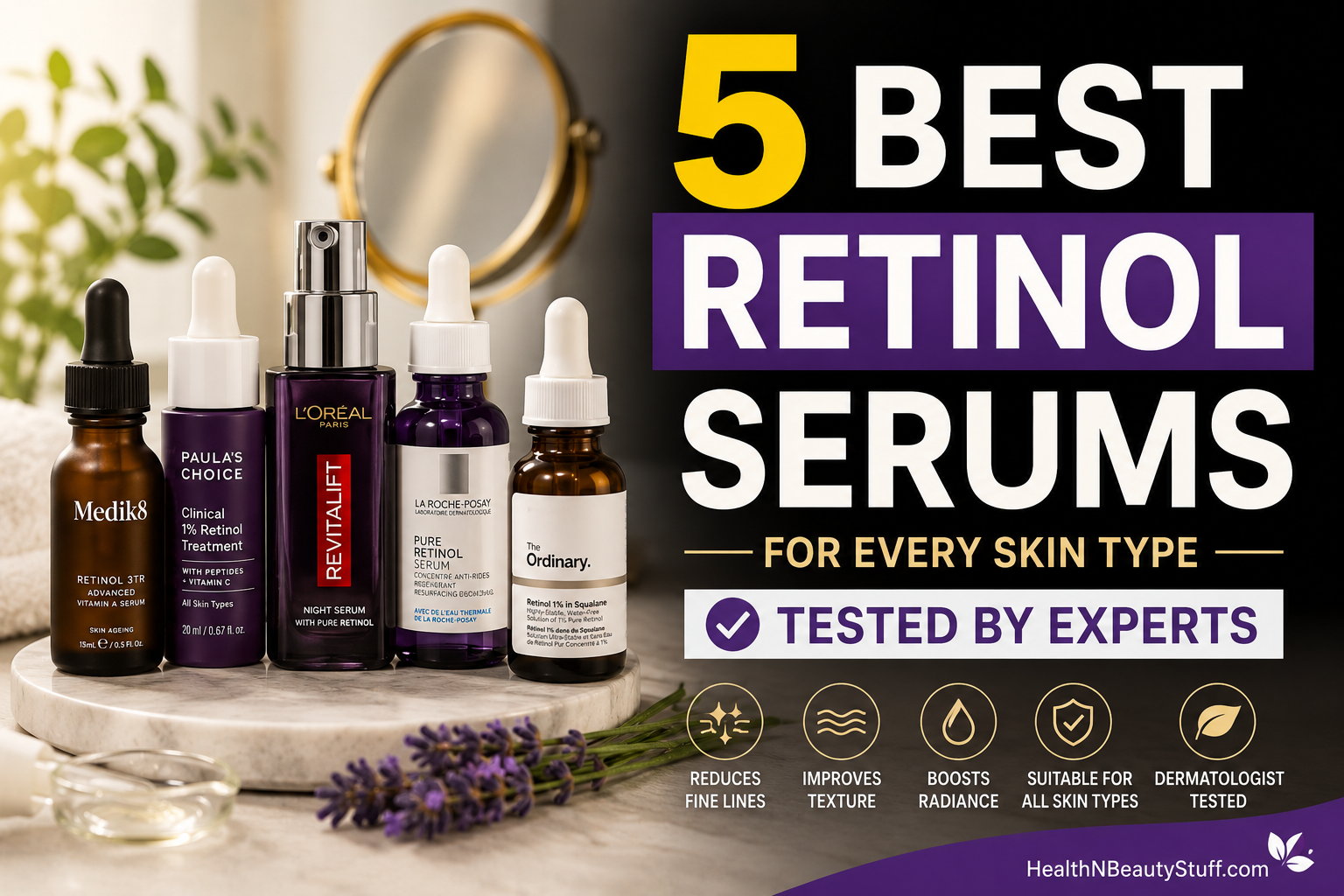
Retinol is the most recommended anti aging ingredient by dermatologists, but it is also the most intimidating. Redness, peeling, purging. The horror stories are real. We have all heard about someone whose face peeled off for a month just to get rid of a few wrinkles. It sounds terrifying, and honestly, it can be if you dive in blindly.
The truth is, retinol works. But only if you pick the right formula for your specific skin. What works for your friend might wreck your oily or acne prone barrier. Most people quit because they started with the wrong product. They blame the ingredient, when really, they just needed a better match.
We tested 5 retinol serums from brands that specialize in different skin needs. Whether you are a beginner, dealing with acne, or have sensitive skin, one of these is the right starting point. The best retinol serum is simply the one your skin actually tolerates and loves.
What Is Retinol?
Quick answer: Retinol is a vitamin A derivative that speeds up skin cell turnover and boosts collagen production. It treats fine lines, uneven texture, hyperpigmentation, and acne.
Let us break down the science without the confusing jargon. Think of your skin cells like a busy highway. When you are young, traffic moves perfectly. As we age, traffic slows down, and dead cells pile up. Retinoids act like a traffic cop, clearing the jam and getting things moving smoothly again.
Not all retinoids are created equal. They exist on a spectrum. Retinyl ester is the gentlest. Retinol is the standard over the counter option. Retinaldehyde is one step closer to prescription strength. Retinoic acid is the prescription version.
When you first start, you will go through a phase called retinization. This is a 4 to 8 week period where your skin throws a little tantrum. You might see dryness or mild peeling. This is normal. To survive this phase, you need to use the retinol sandwich method. You apply a layer of moisturizer, then your retinol, then another layer of moisturizer. It buffers the impact and saves your skin barrier.
Also, sunscreen is non negotiable. Retinol brings fresh, new skin to the surface, making it highly sensitive to the sun. If you skip SPF, you will actually cause more hyperpigmentation. Finally, do not mix retinol with AHAs, BHAs, or benzoyl peroxide in the same routine. That is a one way ticket to retinol burn.
The 5 Best Retinol Serums for Every Skin Concern
Best Overall for Anti-Aging: Paula’s Choice Clinical 1% Retinol Treatment
Paula’s Choice has been the science first skincare brand since the 90s. Their 1% Retinol Treatment combines pure retinol with peptides, vitamin C, and licorice extract. The peptide complex boosts collagen while the antioxidants calm oxidative stress. This makes it one of the few formulas that actually reduce irritation rather than cause it.
Best for: Experienced users who want visible wrinkle reduction and skin firming. If you have used drugstore options and want to level up to the best retinol anti-aging cream experience, this is your next step.
Skin type: Normal, dry, combination. The cream texture is rich but absorbs quickly.
Caveat: 1% is strong. If you are new, start with 2 to 3 times a week and use the sandwich method.
Best Clinical and Professional-Grade: Revision Skincare Retinol Complete
Revision Skincare is the brand dermatologists send patients to when they want medical grade results without a prescription. Retinol Complete uses a triple retinoid complex. It includes encapsulated retinol, retinyl propionate, and retinyl acetate. These are delivered through a ceramide rich base that protects the skin as the active ingredients work.
What makes it different: The three retinoids work at different depths and speeds. Encapsulated retinol releases slowly overnight. Retinyl propionate works in the mid layers. Retinyl acetate provides surface level renewal. This staggered release means less irritation and more consistent results.
Best for: Anyone wanting serious anti aging with professional oversight. It is a common choice for pre and post procedure maintenance.
Skin type: All skin types, including sensitive. The ceramide base is designed for barrier support.
Best Retinol for Acne-Prone Skin: Naturium Retinol Serum
Naturium brings a no nonsense, affordable approach to active ingredients. Their Retinol Serum pairs retinol with niacinamide and bakuchiol. Bakuchiol is a plant based alternative that boosts results while calming inflammation.
Why it works for acne: This is the ultimate retinol for acne because it unclogs pores and normalizes cell turnover. Niacinamide reduces post acne redness and oil production. Bakuchiol adds antibacterial support. It is a triple threat for adult breakouts and aging.
Best for: Adults dealing with both breakouts and fine lines. It serves the crowd that standard drugstore acne products leave behind.
Skin type: Oily, combination, acne prone. The lightweight gel texture will not clog pores.
Best for Sensitive Skin and Barrier-First: Dieux Skin Retinal + Peptide Serum
Dieux built their reputation on barrier first skincare. Their Retinal + Peptide Serum uses retinaldehyde. This is one step closer to retinoic acid than standard retinol. It works faster and at a lower concentration. The real magic is the delivery. Supportive peptides and ceramides buffer the active so sensitive skin gets results without the red, flaky phase.
Best for: People who have tried retinol before and quit because of irritation. These are truly the best retinol serums for sensitive skin on the market. It is also great for eczema prone or rosacea prone skin.
Skin type: Sensitive, reactive, compromised barrier. Use the sandwich method even with this one. It is gentle, but retinaldehyde is still potent.
Why retinaldehyde: Studies show it kills acne causing bacteria better than retinol, making it excellent for sensitive but acne prone skin.
Best Luxury and Slow-Release: Ourself Skincare Retinol Repair
Ourself takes a different approach. Instead of hitting the skin with retinol all at once, their slow release delivery system meters out the ingredient over 8 to 12 hours. This means zero retinol burn but consistent results.
Best for: Anyone who wants the benefits without the adjustment period. It is also ideal for dry or mature skin that cannot tolerate fast release formulas.
Skin type: Dry, mature, sensitive. The rich cream texture doubles as a moisturizer.
The tradeoff: Results take slightly longer to appear, but with zero downtime. For many people, that trade is completely worth it.
Comparison Table
| Product | Retinoid Type | Best For | Price | Key Additives |
|---|---|---|---|---|
| Paula’s Choice Clinical 1% | Pure retinol | Advanced anti-aging | $$$ | Peptides, Vitamin C, Licorice |
| Revision Retinol Complete | Triple-retinoid complex | Clinical/professional | $$$$ | Ceramides, Peptides |
| Naturium Retinol Serum | Retinol + Bakuchiol | Acne + aging | $$ | Niacinamide, Bakuchiol |
| Dieux Retinal + Peptide | Retinaldehyde | Sensitive/barrier-first | $$$ | Peptides, Ceramides |
| Ourself Retinol Repair | Slow-release retinol | Luxury, low irritation | $$$$ | Time-release complex |
How to Start Retinol Without Ruining Your Skin
Answer first: Apply retinol 2 to 3 nights a week, use the retinol sandwich method, and wear SPF 50 every morning. If you need a full baseline guide, check out our skincare routine for beginners before diving in.
The Retinol Sandwich Method Step by Step:
- Wash your face and pat it completely dry. Damp skin absorbs products too fast.
- Apply a basic, hydrating moisturizer. Let it sink in for a minute.
- Apply a pea sized amount of your retinol serum or cream.
- Seal it all in with another layer of moisturizer.
Retinol Purging vs Breaking Out: Purging happens because retinol speeds up cell turnover, pushing existing clogs to the surface. This usually lasts 2 to 4 weeks and happens in areas you normally break out. If you see breakouts in brand new areas, that is a sign of product irritation, not purging. Stop using it immediately.
Retinization Timeline:
- Week 1 to 2: Purging, dryness, and mild flaking. Stick to the sandwich method.
- Week 4 to 6: Skin texture starts improving. The peeling should stop.
- Week 8 to 12: Visible results in glow and fine line reduction.
- 6 months and beyond: Deep collagen remodeling occurs.
When to Increase Frequency: Wait until your skin is fully adjusted. You should feel no stinging and see no peeling. Only then should you move to every other night.
What NOT to Mix: Avoid AHAs, BHAs, and benzoyl peroxide on the same night. You can use vitamin C in the morning and retinol at night. Never layer them directly on top of each other.
Can you use hypochlorous acid with retinol? Yes. Hypochlorous acid is a gentle disinfectant that actually helps calm retinol irritation. It is perfectly safe to use as a spray before your moisturizer on retinol nights.
FAQ
What is the best retinol serum for beginners?
The retinol for beginners depends on your skin type. For oily or acne prone beginners, Naturium’s Retinol Serum is a great starting point because the bakuchiol buffers the retinol. For sensitive skin beginners, Dieux’s Retinal + Peptide or Ourself Retinol Repair are gentler options that minimize the adjustment period.
Can I use retinol every night?
Not when you start learning how to start retinol safely. Begin with 2 to 3 nights per week for the first 3 to 4 weeks. Once your skin stops peeling or feeling irritated, you can increase to every other night. Full nightly use is possible for most people after 8 to 12 weeks of gradual build up.
Does retinol cause purging or breaking out?
Retinol purging is normal. It happens because retinol speeds up cell turnover, pushing existing clogs to the surface faster. This usually lasts 2 to 4 weeks and happens in areas you normally break out. If you see breakouts in new areas, that is a sign of product irritation, not purging.
Can I use retinol with vitamin C?
Yes, but not at the same time. Use the best vitamin c serums in the morning for antioxidant protection against UV damage. Use retinol at night because it is sensitive to light and works best during the skin’s repair cycle. Together, they form a perfect retinol skincare routine.
How long does it take for retinol to work?
Most people see visible improvement in skin texture and fine lines after 8 to 12 weeks of consistent use. Collagen remodeling, which is the deep anti aging benefit, takes 6 months or more. Patience is the real active ingredient here.
The Bottom Line: Which Retinol Should You Pick?
| If you are… | Pick this brand |
|---|---|
| New to retinol, want something gentle | Naturium or Ourself |
| Experienced, want visible anti-aging | Paula’s Choice |
| Sensitive skin, scared of retinol burn | Dieux |
| Want professional-grade without prescription | Revision |
| Dealing with both acne and aging | Naturium |
Once you have chosen the right formula for your skin type, you can easily find these top-rated serums at major online beauty retailers. To make your skincare investment a little more affordable, be sure to check for a Lookfantastic discount code before finalizing your order.
We tested each of these retinol serums over a 12 week period. We reached out to each brand for ingredient verification and all products were independently selected. If you are a brand representative and would like to discuss an updated review or ingredient sourcing, please contact us.