New articles every week — Expert-backed health & beauty tips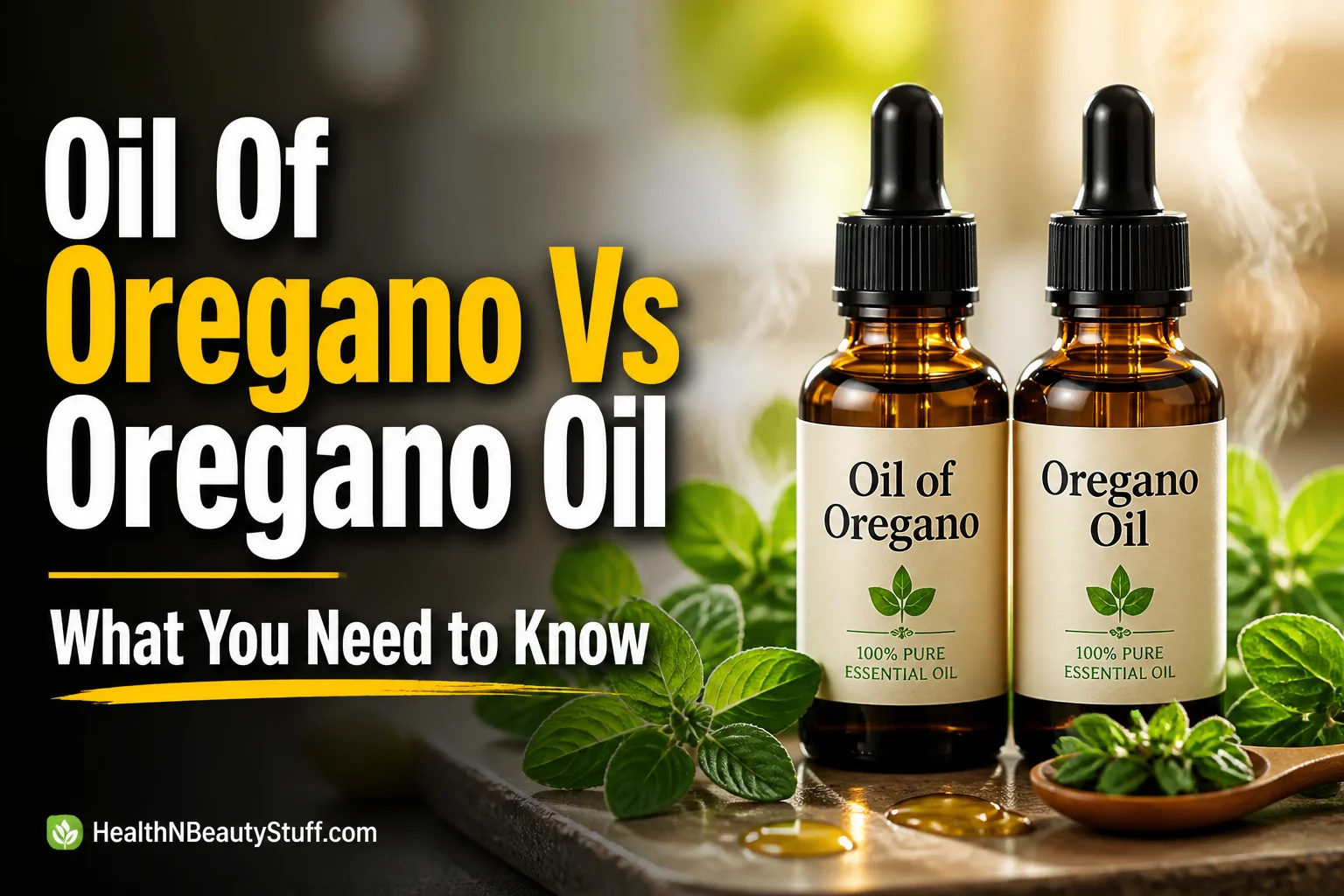
You are standing in the supplement aisle with two oregano products. One is a small amber bottle. The other holds soft capsules.
Both smell sharp and herbal. Both claim to support wellness. Yet one may burn your throat if swallowed, while the other is made for internal use.
Oil of oregano is usually a diluted supplement for internal use. Oregano essential oil is a concentrated, steam-distilled oil for topical or aromatic use. It should not be swallowed.
That difference matters. A wrong choice can mean skin irritation, stomach pain, or a frightening burning feeling in your mouth.
But product labels are inconsistent. Always check for words like “supplement,” “essential oil,” “steam distilled,” and “carvacrol percentage.” Never decide based on the product name alone.
Quick Verdict: If you want an internal supplement for immune or gut support, choose oil of oregano (usually diluted in a carrier oil or sold in capsules). If you need a concentrated oil for aromatherapy, diffusing, or topical use, choose oregano essential oil, and do not swallow it. They are not interchangeable.
| Comparison | Oil of Oregano | Oregano Essential Oil |
|---|---|---|
| What it is | Oregano extract mixed with a carrier oil, or placed in a supplement capsule | Highly concentrated volatile oil made through steam distillation |
| Typical label | “Oil of oregano,” “oregano extract,” or “dietary supplement” | “100% pure oregano essential oil” or “Origanum vulgare oil” |
| Intended route | Capsules or diluted drops taken by mouth as directed | Diffusion or carefully diluted topical use |
| Potency | Diluted to a supplement-style concentration | Highly concentrated and irritating when used undiluted |
| Common uses | Immune, cold-season, or gut support | Aromatherapy, cleaning, or localized topical blends |
| Main safety risk | Nausea, heartburn, diarrhea, or medicine interactions | Burns, skin reactions, and mouth or throat irritation |
| Common forms | Softgels, capsules, and liquid supplement droppers | Small amber essential oil bottles with dropper inserts |
What Is Oil of Oregano?
Oil of oregano is a diluted oregano extract sold as a dietary supplement. It often comes mixed with olive oil or another carrier oil.
A carrier oil is a mild plant oil that spreads and dilutes stronger ingredients. This makes the oregano extract easier to use.
You may find oil of oregano as:
- Liquid drops intended for internal use
- Softgels filled with oregano extract and carrier oil
- Powdered extract inside capsules
Its best-known compounds are carvacrol and thymol. These natural chemicals help protect the oregano plant. They also show antimicrobial activity in laboratory studies.
Some labels call the product “oregano oil.” That wording creates confusion. The important clue is whether the label clearly says dietary supplement and provides serving instructions.
What Is Oregano Essential Oil?
Oregano essential oil is a potent aromatic concentrate made by steam distillation. It is not the same as a ready-to-swallow supplement.
An essential oil contains concentrated scent compounds from a plant. During steam distillation, steam releases these volatile compounds. They are then collected as oil.
Oregano essential oil is commonly used for:
- Diffusing into the air
- Adding to household cleaning blends
- Highly diluted topical applications
The bottle may say “100% pure,” but that does not mean safe to swallow. In fact, “pure” often means the product is more concentrated.
Look for a dilution required warning. Never place undiluted oregano essential oil on your skin, gums, or under your tongue.
Oil of Oregano vs Oregano Oil: 4 Key Differences
The biggest difference is how each product is meant to enter your body. Oil of oregano is usually a supplement. Oregano essential oil is an aromatic concentrate.
- Purpose: Oil of oregano supports internal supplement use. Essential oil is intended for aromatic or diluted topical use.
- Processing: Supplements use an oregano extract with a carrier oil or capsule. Essential oil is produced through steam distillation.
- Safety: A labeled supplement can be taken as directed. Essential oil can injure the mouth and digestive tract if swallowed.
- Potency: Supplement products are diluted or formulated by serving. Essential oil contains a far denser mix of volatile compounds.
Confused by a bottle already in your cabinet? Read every panel. If it lacks supplement facts and oral directions, do not assume it is edible.
Is Oil of Oregano Safe to Take Internally?
Oil of oregano is usually safe to consume when the label identifies it as an internal supplement. Follow its serving directions exactly.
There is no universal dose for every oregano product. Concentrations and formulas vary. A drop count from a blog may be wrong for your bottle.
Liquid oil of oregano can taste intensely hot. It may also upset a sensitive stomach. Taking it with food may help if the product directions allow that.
Stop using it if you develop:
- Strong burning in your mouth or throat
- Persistent nausea or stomach pain
- Diarrhea that does not settle
- Hives, swelling, or trouble breathing
More is not better. Taking extra doses does not turn limited evidence into stronger results. It only raises your risk of side effects.
Can You Use Oregano Essential Oil Internally?
No, do not swallow oregano essential oil. It is stronger than oil of oregano supplements and is not considered safe to consume.
Diluting it in water does not solve the problem. Essential oils do not mix evenly with water. A concentrated drop can still touch your lips, mouth, or throat.
Possible effects include:
- Burning of the mouth and throat
- Coughing or choking
- Severe stomach irritation
- Vomiting or diarrhea
If someone swallows oregano essential oil, do not force vomiting. In the United States, call Poison Help at 1-800-222-1222. Call emergency services for breathing trouble, collapse, or seizures.
Active Compounds: Carvacrol and Thymol
Carvacrol and thymol are natural oregano compounds with antimicrobial effects in laboratory research. Human evidence is much more limited.
Carvacrol is a monoterpenoid phenol. That technical phrase describes a plant chemical found in oregano essential oil. Thymol is a related compound found in oregano and thyme.
Lab studies suggest these compounds can affect certain bacteria and fungi. However, a petri dish is not a human body.
Your digestive system, immune response, dose, and health history all change the result. Therefore, lab activity is not proof of a cure.
A high carvacrol percentage may help compare formulas. It does not prove that one product prevents colds, clears candida, or treats an infection.
Forms Compared: Capsules, Liquid Drops, and Essential Oil Bottles
Choose capsules or labeled supplement drops for internal use. Choose an essential oil bottle only for aromatic or carefully diluted topical use.
Oil of Oregano Capsules
Capsules hide the strong taste and provide a measured serving. They are often easier for people with a sensitive mouth or throat.
- Easy to carry and use
- No sharp oregano taste
- Serving amount listed on the label
- May still cause stomach upset
Liquid Oil of Oregano Drops
Liquid supplements allow flexible use within the label directions. However, the taste can be harsh and peppery.
- Useful for people who cannot swallow capsules
- Easy to mix as directed
- Strong taste and smell
- Greater chance of measuring errors
Oregano Essential Oil Bottles
These bottles contain a concentrated aromatic product. They are not an alternative to supplement drops.
Value depends on safe uses per bottle, not bottle price alone. Never buy by price without checking the product type.
Uses: Immune Support, Colds, Skin, and Aromatherapy
Evidence for oregano supplements in people remains limited. Use them as optional support, not as proven treatment.
Colds and Immune Support
Oil of oregano is marketed heavily during cold season. Its plant compounds look promising in lab research. Still, strong evidence that it shortens ordinary colds is lacking.
Rest, fluids, and symptom care remain the basics. Seek medical help for breathing trouble, dehydration, chest pain, or symptoms that keep worsening.
Gut Health and Candida
Online protocols often describe oregano oil as a “nuclear option.” That language sounds powerful, but testimonials cannot establish safety or effectiveness.
Do not self-treat a suspected infection with oregano oil alone. Gut symptoms can come from many causes and may need testing.
Acne and Localized Skin Problems
Diluted oregano essential oil may be used topically, but it can cause contact dermatitis. That means an itchy, red, or blistered skin reaction.
Patch-test a properly diluted product on a small area first. Stop if burning, swelling, or a rash develops. Do not apply it to broken skin, eyes, or sensitive areas.
Aromatherapy
Oregano essential oil has a strong, spicy scent. Use only the amount allowed by your diffuser instructions. Keep the room ventilated.
Some adults use a supplement internally and a separate diluted essential oil topically. This hybrid approach does not prove better results. Each product still needs its own safety rules.
Side Effects, Risks, and Drug Interactions
Common concerns include digestive upset, skin irritation, allergies, and possible medicine interactions.
Possible side effects include:
- Nausea, heartburn, cramps, or diarrhea
- Burning after poorly diluted liquid supplements
- Redness, itching, or blistering on the skin
- Allergic swelling, wheezing, or hives
Oregano belongs to the mint family, Lamiaceae. Use extra caution if mint, basil, sage, lavender, or thyme has caused an allergic reaction.
Oregano supplements may affect bleeding or interact with medicines. Evidence for specific interactions is limited, but the risk deserves caution.
Ask a pharmacist before combining it with blood thinners, diabetes medicines, or several other supplements. A pharmacist can check your exact products.
Who Should Avoid Oregano Products?
Ask a clinician first if you are pregnant, giving it to a child, taking blood thinners, or preparing for surgery.
- Pregnant or breastfeeding people: Avoid concentrated oregano supplements unless an obstetric clinician approves them.
- Children: Do not give internal oregano products without pediatric guidance. Essential oils can be especially risky around young children.
- People taking anticoagulants: Ask a pharmacist about possible bleeding risk.
- People awaiting surgery: Tell the surgical team about every supplement you use.
- People with plant allergies: Avoid use after prior reactions to oregano or related herbs.
- People with sensitive stomachs: Capsules may reduce taste and throat contact, but they can still cause digestive symptoms.
People with iron deficiency should also discuss regular use with a clinician. Oregano products may affect iron absorption, although the practical effect is uncertain.
It Depends: When to Choose Each, and When to Choose Neither
Choose by purpose, not by which bottle sounds stronger. Sometimes neither product is the safe or useful choice.
- Choose oil of oregano for short-term internal support when the label clearly permits oral use.
- Choose oregano essential oil for diffusion or a properly diluted topical blend.
- Choose dried oregano when you want flavor and the food benefits of a common herb.
- Choose medical care for a serious, spreading, painful, or persistent infection.
A painful skin infection, high fever, or worsening wound needs proper evaluation. So do ongoing gut symptoms, especially with weight loss, bleeding, or severe pain.
Oregano products should not replace prescribed antibiotics or antifungals. Stopping treatment early can allow an infection to return or worsen.
How to Buy a High-Quality Oil of Oregano Supplement
Look for clear ingredients, a listed serving, carvacrol information, and independent testing. Skip products that hide basic details.
Use this buying checklist:
- The label says “dietary supplement” or gives oral directions
- The oregano species is identified, often as Origanum vulgare
- The carrier oil, such as olive oil, is named
- The amount per serving is clearly stated
- Carvacrol content is listed or standardized
- The company reports third-party testing
- The seal and expiration date are intact
Third-party testing means an outside laboratory checks features such as identity, purity, or label accuracy. USP and NSF seals are useful examples, though not every sound product carries them.
Avoid vague proprietary blends that hide ingredient amounts. Also question promises to cure candida, detox the body, or replace medicine.
“Wild oregano” is a marketing phrase, not a quality guarantee. Clear testing and labeling matter more than dramatic front-label claims.
This comparison is a close call with a clear “it depends.” Each product has a different purpose.
- For an internal supplement, choose oil of oregano.
- For diluted topical use or aromatherapy, choose oregano essential oil.
- For cooking, choose dried or fresh oregano.
- For pregnancy, medicine interactions, or active infection, consult a healthcare provider first.
The safest choice starts with the back label. If the bottle does not clearly permit internal use, do not swallow it.
Frequently Asked Questions
Is oil of oregano the same as oregano oil?
No. Oil of oregano usually means a diluted extract or supplement. “Oregano oil” may mean oregano essential oil, but labels are inconsistent. Check the directions and supplement facts before use.
What is the best form of oil of oregano to take?
Capsules are easiest on the taste buds and provide a measured serving. Liquid supplement drops offer flexibility but taste strong. The best choice is a clearly labeled product you can use as directed.
Can I ingest oregano essential oil if I dilute it in water?
No. Essential oil does not mix evenly with water. Concentrated oil may still touch and burn your mouth or throat. Choose oil of oregano labeled for internal use instead.
Does oil of oregano flush out toxins?
No scientific evidence shows that oil of oregano “flushes toxins.” Your liver, kidneys, lungs, and digestive system already remove waste from the body.
Can I put oregano essential oil on my skin?
Only after proper dilution in a carrier oil. Patch-test it on a small area first. Stop if it causes burning, redness, itching, or swelling.
Can I use oil of oregano while pregnant?
Avoid concentrated oregano supplements during pregnancy unless your obstetric clinician approves them. Food amounts of oregano are different from concentrated extracts.
Does oregano oil interact with medications?
It may affect bleeding and could interact with some medicines or supplements. Ask a pharmacist to check your exact product, especially if you take anticoagulants or have surgery planned.