New articles every week — Expert-backed health & beauty tips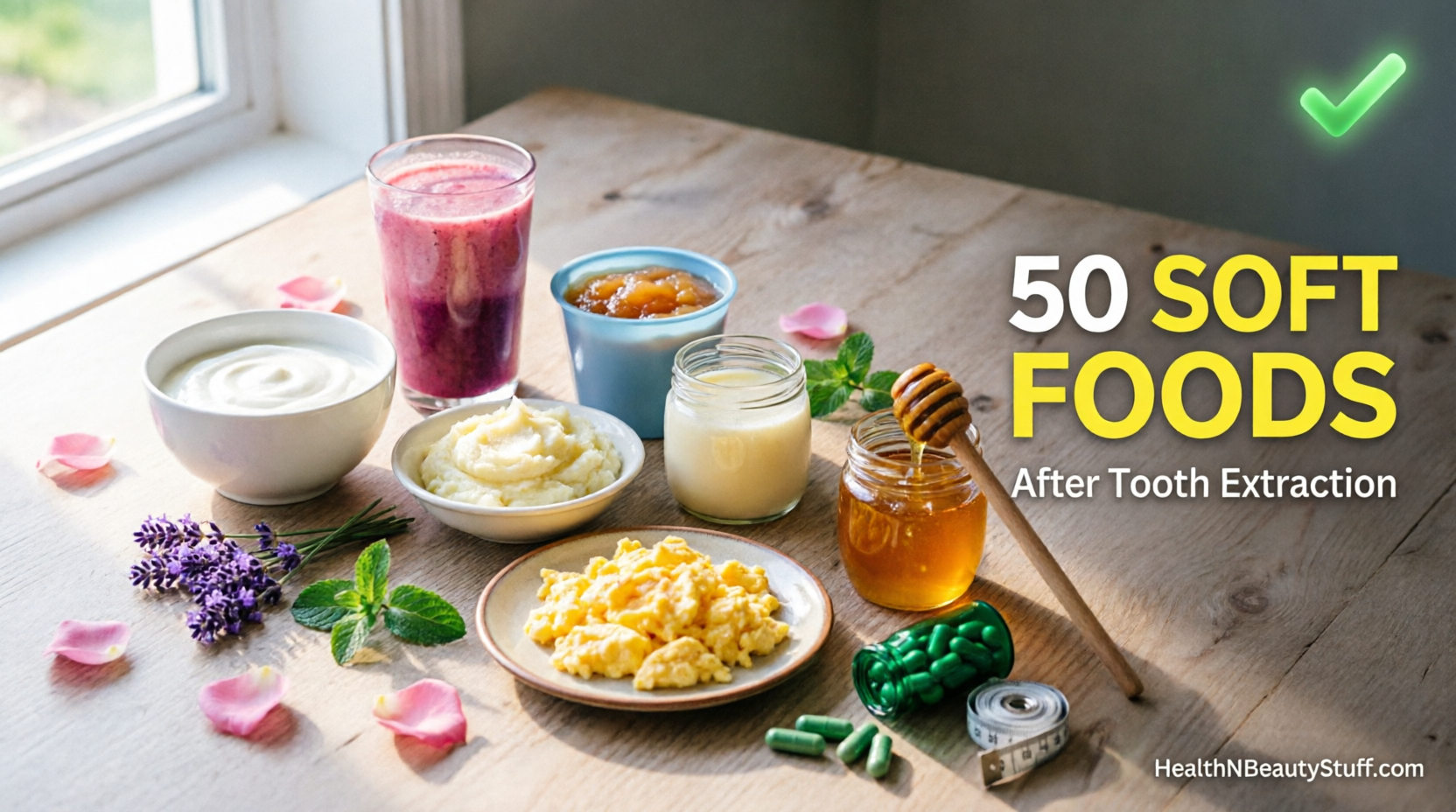
You just had a tooth extraction, and now the real question begins: what can I actually eat? Your mouth feels tender, you are protecting a delicate blood clot, and the last thing you want is to cause pain or delay healing.
That is where this guide comes in. Below, you will find 50 soft foods to eat after tooth extraction, organized by recovery stage, with practical tips for eating safely, staying nourished, and avoiding complications like dry socket.
Whether you are recovering from a simple extraction or wisdom teeth removal, these dentist-approved options will help you heal comfortably and confidently.
50 Soft Foods to Eat After Tooth Extraction: The Short Answer
After tooth extraction, focus on cool, soft, and nutrient-dense foods that require minimal chewing. In the first 24 to 48 hours, prioritize liquids and very soft items like yogurt, applesauce, and smoothies (no straw).
Days 3 to 7, introduce warmer, tender options like scrambled eggs, mashed potatoes, and blended soups. Avoid crunchy, spicy, hot, or chewy foods that could dislodge the blood clot. Most people resume normal eating within 1 to 2 weeks as healing progresses.
Understanding Post-Extraction Nutrition: Why Soft Foods Matter
Eating the right foods after extraction is not just about comfort: it is about protecting your healing site and supporting your body’s repair processes.
Protecting the Blood Clot and Preventing Dry Socket
After extraction, a blood clot forms in the socket to protect bone and nerves. Dislodging this clot can lead to dry socket, a painful condition that delays healing. Soft foods reduce chewing pressure, while avoiding straws, spitting, or vigorous rinsing prevents suction that could pull the clot loose.
Supporting Healing with Key Nutrients
Your body needs specific nutrients to heal efficiently:
- Protein: Supports tissue repair and immune function; aim for soft sources like Greek yogurt, cottage cheese, or blended beans
- Vitamin C: Essential for collagen formation; find it in blended citrus smoothies or mashed sweet potatoes
- Zinc: Supports wound healing; available in pureed lentils or fortified cereals
- Hydration: Critical for circulation and nutrient delivery; sip water, herbal tea, or electrolyte drinks
Timeline: Days 1 to 7 and Beyond
| Recovery Phase | Food Texture | Key Focus |
|---|---|---|
| Days 1 to 2 | Cool, liquid, very soft | Protect clot, reduce swelling, stay hydrated |
| Days 3 to 4 | Soft, room-temperature | Introduce gentle protein, maintain hydration |
| Days 5 to 7 | Warm, tender, minimally chewy | Expand variety, support tissue repair |
| Week 2+ | Gradual return to normal | Listen to your body; advance texture slowly |
The Ultimate List: 50 Soft Foods for Recovery
Here are 50 soft foods to eat after tooth extraction, organized by recovery stage for easy reference.
Days 1 to 2: Cool, Liquid, and Very Soft Options (1 to 15)
Focus on cool, soothing options that require zero chewing and help reduce swelling.
- 1. Water (room temperature or cool; avoid very cold if sensitive)
- 2. Electrolyte drinks (no citrus if extraction was near gums; avoid red dyes)
- 3. Apple juice (diluted with water, no pulp)
- 4. Coconut water (natural, unsweetened)
- 5. Herbal tea (cooled completely; caffeine-free options like chamomile)
- 6. Broth (chicken, beef, or vegetable; cooled to lukewarm)
- 7. Blended vegetable soup (smooth consistency, no chunks; cooled)
- 8. Plain yogurt (Greek or regular; no fruit chunks or granola)
- 9. Applesauce (unsweetened, smooth texture)
- 10. Mashed banana (very ripe, mashed until completely smooth)
- 11. Smoothies (no straw; blend spinach, banana, protein powder, milk; avoid seeds)
- 12. Protein shakes (pre-made or homemade; ensure no seeds or gritty additives)
- 13. Pudding (vanilla or chocolate; avoid varieties with nuts or mix-ins)
- 14. Jell-O (any flavor; avoid red if extraction site is visible to reduce staining concern)
- 15. Custard or flan (smooth, creamy, room temperature)
Days 3 to 4: Soft, Room-Temperature Choices (16 to 30)
As swelling decreases, introduce slightly more substantial options that still require minimal chewing.
- 16. Scrambled eggs (soft, moist; cook with extra milk for tenderness)
- 17. Cottage cheese (small curd; rinse if sodium is a concern)
- 18. Ricotta cheese (smooth, mild; pair with mashed fruit if desired)
- 19. Mashed potatoes (smooth, no skins; add butter or broth for creaminess)
- 20. Mashed sweet potatoes (naturally sweet; rich in vitamin A for healing)
- 21. Avocado (mashed or sliced very thin; healthy fats support tissue repair)
- 22. Hummus (smooth variety; eat with a spoon, no pita or crackers)
- 23. Refried beans (smooth, warm; choose low-sodium if possible)
- 24. Oatmeal (well-cooked, creamy consistency; avoid instant packets with added sugar)
- 25. Cream of wheat or farina (smooth, warm; enrich with milk for protein)
- 26. Grits (soft, buttery; cook until very tender)
- 27. Pureed butternut squash soup (warm, not hot; strain for extra smoothness)
- 28. Blended lentil soup (protein-rich; blend until completely smooth)
- 29. Soft tofu (silken or soft variety; season mildly with herbs)
- 30. Blended pea soup (cool or room temperature; strain if needed)
Days 5 to 7: Warm, Tender, and More Substantial (31 to 50)
As healing progresses, expand to warm, tender foods that provide more sustained nutrition.
- 31. Soft-cooked pasta (small shapes like orzo or stars; cook until very tender)
- 32. Macaroni and cheese (very soft, no crunchy topping; blend extra milk for creaminess)
- 33. Soft polenta or mashed cauliflower (creamy texture; season gently)
- 34. Steamed and mashed carrots (cook until very soft; mash with a little butter)
- 35. Steamed and mashed zucchini (peel first; mash until smooth)
- 36. Soft-cooked rice (congee or rice porridge; cook with extra liquid until mushy)
- 37. Soft fish (baked cod or tilapia; flake finely and check for bones)
- 38. Shredded chicken (slow-cooked until very tender; shred finely and moisten with broth)
- 39. Ground turkey (well-cooked, moist; avoid browning too much to keep tender)
- 40. Soft meatloaf (moist, finely textured; avoid crusty edges)
- 41. Soft pancakes (no syrup pools; cut into tiny pieces; avoid crispy edges)
- 42. French toast (soft, custardy interior; avoid crispy exterior)
- 43. Soft muffins (no nuts or seeds; moisten with milk if slightly dry)
- 44. Soft-cooked quinoa (cook with extra water until very tender; rinse well)
- 45. Blended bean dip (smooth black bean or white bean; eat with spoon, no chips)
- 46. Soft-cooked barley or farro (cook until very soft; rinse to remove excess starch)
- 47. Mashed parsnips (sweet, tender; mash with potatoes for variety)
- 48. Soft-cooked spinach or kale (blend into soups or mash with potatoes)
- 49. Soft-cooked pear (peeled, very ripe; mash or blend if needed)
- 50. Soft-cooked peach (peeled, blended if needed; naturally soothing)
Important reminders: Always let food cool to room temperature before eating. Cut food into tiny pieces to minimize chewing. Chew on the opposite side of the extraction site. Rinse gently with warm salt water after eating (after the first 24 hours). Stop immediately if you feel pain or pressure at the extraction site.
- Always let food cool to room temperature before eating
- Cut food into tiny pieces to minimize chewing
- Chew on the opposite side of the extraction site
- Rinse gently with warm salt water after eating (after 24 hours)
- Stop if you feel pain or pressure at the extraction site
Foods to Avoid After Tooth Extraction
Protect your healing site by steering clear of these items for at least 7 to 10 days:
| Category | Examples | Why Avoid |
|---|---|---|
| Crunchy or hard | Chips, nuts, popcorn, raw vegetables | Can dislodge blood clot or irritate socket |
| Chewy or sticky | Caramel, gum, taffy, tough meats | Requires vigorous chewing; may pull at clot |
| Spicy or acidic | Hot sauce, citrus, tomato sauce | Can sting extraction site or delay healing |
| Very hot | Hot coffee, soup, tea | Heat can increase bleeding or dissolve clot |
| Small particles | Seeds, rice grains, popcorn hulls | Can lodge in socket and cause infection |
| Straws or suction | Drinking through straws, spitting | Suction can dislodge blood clot, causing dry socket |
Eating Techniques: How to Eat Safely During Recovery
How you eat matters as much as what you eat. Follow these tips to protect your extraction site:
- Use a spoon, not a straw: Suction from straws can dislodge the blood clot; sip directly from a cup
- Take small bites: Cut food into pea-sized pieces to minimize chewing effort
- Chew on the opposite side: Keep food away from the extraction site to avoid irritation
- Eat slowly: Rushing increases risk of accidentally biting the extraction area
- Rinse gently after eating: After 24 hours, use warm salt water (1/2 teaspoon salt in 8 oz water) to keep the area clean; do not swish vigorously
- Avoid touching the site: Do not probe the extraction area with your tongue, fingers, or utensils
Hydration Tips: What to Drink and What to Skip
Staying hydrated supports healing, but beverage choices matter:
- Best choices: Water, electrolyte drinks, cooled herbal tea, diluted apple juice, milk (if tolerated)
- Limit initially: Caffeinated drinks (can dehydrate), carbonated beverages (bubbles may irritate), citrus juices (acidic)
- Avoid completely: Alcohol (delays healing, interacts with medications), very hot liquids (can dissolve clot), straws (suction risk)
- Temperature tip: Keep drinks cool or room temperature for the first 48 hours to reduce swelling
Sample 3-Day Meal Plan for Easy Recovery
Use this simple plan to stay nourished without stress:
| Day | Breakfast | Lunch | Dinner | Snacks |
|---|---|---|---|---|
| Day 1 | Greek yogurt + applesauce | Blended vegetable soup (cooled) | Mashed potatoes + broth | Jell-O, pudding, smoothie (no straw) |
| Day 3 | Scrambled eggs + mashed banana | Creamy oatmeal + cottage cheese | Soft pasta + pureed butternut squash | Avocado mash, protein shake, custard |
| Day 5 | Soft pancakes + mashed pear | Shredded chicken + soft-cooked rice | Baked flaked fish + mashed sweet potato | Hummus (spoon), soft muffin, blended soup |
Preparing Ahead: Soft Food Prep Tips Before Surgery
Make recovery easier by preparing in advance:
- Batch-cook soft meals: Make extra mashed potatoes, soups, or oatmeal to freeze in portions
- Pre-portion smoothie ingredients: Freeze banana, spinach, and protein powder in bags for quick blending
- Stock your pantry: Keep yogurt, applesauce, broth, and pudding on hand before surgery
- Prep utensils: Have small spoons, soft-tipped utensils, and easy-grip cups ready
- Label and date: Mark containers with preparation dates to track freshness during recovery
When to Resume Normal Eating: Signs You Are Ready
Listen to your body and your dentist’s guidance. General signs you can advance textures:
- No pain or bleeding at the extraction site for 24 to 48 hours
- Ability to open your mouth comfortably without stiffness
- No swelling or tenderness when gently pressing near the site
- Dentist clearance at follow-up appointment (typically 7 to 10 days post-op)
- Gradual introduction: start with soft solids, then tender meats, then normal textures over 1 to 2 weeks
If you experience increased pain, bleeding, or a bad taste after introducing new foods, return to softer options and contact your dentist.
Frequently Asked Questions
▸
What can I eat immediately after tooth extraction?
In the first 24 hours, focus on cool, liquid, or very soft foods that require no chewing: water, electrolyte drinks, broth, yogurt, applesauce, mashed banana, smoothies (no straw), pudding, or Jell-O. Avoid hot liquids, straws, and anything crunchy or chewy to protect the blood clot.
▸
How long should I eat soft foods after tooth extraction?
Most people eat soft foods for 3 to 7 days after extraction, gradually advancing textures as healing progresses. Simple extractions may allow normal eating in 1 week; wisdom teeth or surgical extractions may require 10 to 14 days. Follow your dentist’s specific guidance and advance textures slowly based on comfort.
▸
Can I eat scrambled eggs after tooth extraction?
Yes, scrambled eggs are an excellent soft food option starting around day 3 of recovery. Make them soft and moist, cut into tiny pieces, and chew on the opposite side of the extraction site. Eggs provide high-quality protein to support tissue healing.
▸
What foods cause dry socket after extraction?
Foods that require vigorous chewing (nuts, chips, tough meats), contain small particles (seeds, rice, popcorn), or create suction (drinking through straws) can dislodge the blood clot and cause dry socket. Also avoid very hot, spicy, or acidic foods that may irritate the extraction site during early healing.
Final Thoughts: Nourish Your Healing with Confidence
Recovering from tooth extraction does not mean sacrificing nutrition or flavor. With this list of 50 soft foods to eat after tooth extraction, you can stay nourished, support healing, and avoid complications like dry socket.
Remember: healing takes time, and your body will tell you when it is ready for the next step. Be patient, prioritize gentle foods, and celebrate small milestones. You have got this: one soft bite at a time.
Sources:
● American Dental Association — Post-Extraction Care and Dietary Guidelines
● Journal of Oral and Maxillofacial Surgery — Nutrition and Wound Healing After Tooth Extraction Research
● Mayo Clinic — Tooth Extraction Recovery: What to Eat and Avoid