New articles every week — Expert-backed health & beauty tips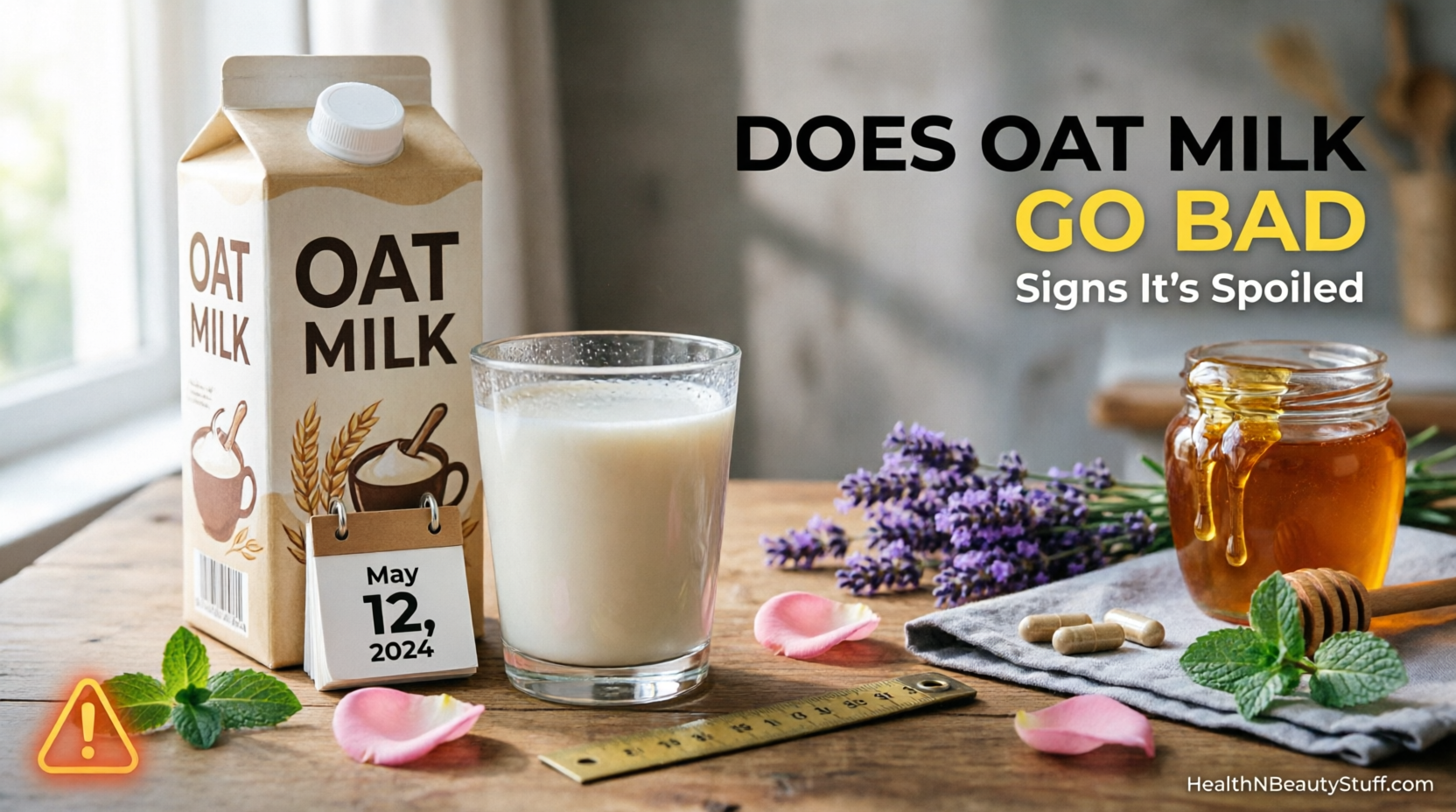
You pour oat milk into your morning coffee, take a sip, and pause. Does that taste right? If you have ever wondered does oat milk go bad, you are not alone.
As plant-based milks grow in popularity, knowing how to store them, spot spoilage, and use them safely becomes essential.
The good news is that oat milk, when handled properly, stays fresh and delicious for a predictable amount of time.
Let me walk you through everything you need to know about oat milk shelf life, spoilage signs, storage tips, and smart habits that help you enjoy every drop without worry.
Does Oat Milk Go Bad: The Short Answer
Yes, oat milk does go bad. Unopened shelf-stable cartons can last 3 to 6 months at room temperature, while refrigerated varieties should be used by the printed date.
Once opened, all oat milk lasts about 7 to 10 days in the refrigerator. Signs of spoilage include a sour smell, curdled texture, off taste, or visible mold. When in doubt, throw it out: consuming spoiled oat milk can cause digestive discomfort.
Understanding Oat Milk: Types and Shelf Life Basics

Not all oat milk is packaged or processed the same way. Understanding the differences helps you manage shelf life effectively.
Shelf-Stable vs Refrigerated Oat Milk
Shelf-stable oat milk is processed using ultra-high temperature (UHT) treatment and sealed in aseptic cartons.
This allows it to remain unrefrigerated until opened, with a shelf life of 3 to 6 months. Refrigerated oat milk is pasteurized but not UHT-treated, so it must stay cold from purchase to consumption and typically has a shorter unopened shelf life.
Homemade vs Commercial Oat Milk
Homemade oat milk lacks commercial preservatives and sterile packaging, so it spoils faster. Store it in a sealed container in the refrigerator and use within 3 to 5 days for best quality and safety.
What Affects Oat Milk Shelf Life?
- Temperature: Consistent refrigeration at 40°F or below slows bacterial growth
- Exposure to air: Each time you pour, oxygen enters and accelerates spoilage
- Cross-contamination: Using dirty glasses or pouring back unused milk introduces bacteria
- Light exposure: Storing cartons in dark cabinets or the fridge door reduces light-induced degradation
- Added ingredients: Flavored or barista-style oat milks with oils or emulsifiers may have slightly different spoilage patterns
How Long Does Oat Milk Last?
Shelf life depends on packaging, storage, and whether the carton is opened.
Unopened Shelf-Stable Oat Milk
| Storage Condition | Typical Shelf Life | Notes |
|---|---|---|
| Pantry, unopened | 3 to 6 months | Check “best by” date; store in cool, dark place |
| Refrigerator, unopened | Up to printed date + 1 week | Refrigeration extends freshness but is not required until opened |
Unopened Refrigerated Oat Milk
Refrigerated oat milk must stay cold from purchase. Use by the printed “use by” or “best by” date for optimal quality.
If unopened and consistently refrigerated, it may remain good for a few days past the date, but always check for spoilage signs first.
Opened Oat Milk: All Types
Once opened, all oat milk should be refrigerated and used within 7 to 10 days. Write the opening date on the carton with a marker to track freshness.
Even if it looks fine after 10 days, flavor and nutrient quality decline, and bacterial risk increases.
Signs Your Oat Milk Has Gone Bad
Trust your senses. Spoiled oat milk usually gives clear warning signs before it becomes unsafe.
Smell, Taste, and Texture Changes
- Sour or off smell: Fresh oat milk has a mild, slightly sweet, oaty aroma. A sour, yeasty, or rancid odor signals spoilage.
- Unusual taste: If it tastes tangy, bitter, or “off,” do not swallow. Spit it out and discard the carton.
- Thick or curdled texture: Oat milk should be smooth and pourable. Clumps, separation that does not re-mix, or slimy texture indicate bacterial growth.
Visual Cues: Color, Clumps, and Mold
| Visual Sign | What It Means | Action |
|---|---|---|
| Yellowing or darkening | Oxidation or microbial activity | Discard if accompanied by off smell or taste |
| Visible clumps or curds | Protein breakdown or bacterial growth | Do not consume; discard immediately |
| Mold spots (fuzzy, colored) | Fungal contamination | Discard entire carton; do not salvage |
Packaging Clues: Swelling or Leaks
If a shelf-stable carton appears swollen, bloated, or leaking, do not use it. Swelling can indicate gas production from bacterial growth inside the sealed package.
Similarly, dents or punctures in aseptic cartons compromise sterility and increase spoilage risk.
How to Store Oat Milk Properly
Proper storage extends freshness and reduces waste.
Refrigeration Best Practices
- Store opened oat milk in the main body of the refrigerator, not the door, where temperatures fluctuate.
- Keep the carton tightly sealed to minimize air exposure.
- Write the opening date on the carton with a permanent marker to track the 7 to 10 day window.
- Avoid pouring unused milk back into the carton to prevent cross-contamination.
- Keep the refrigerator at or below 40°F (4°C) for optimal food safety.
Freezing Oat Milk: Pros and Cons
| Aspect | Details |
|---|---|
| Can you freeze oat milk? | Yes, for up to 3 months in a freezer-safe container |
| Texture changes | May separate or become grainy; shake or blend after thawing |
| Best uses after freezing | Smoothies, baking, or cooking where texture is less critical |
| Thawing method | Thaw in refrigerator overnight; do not refreeze |
Avoiding Cross-Contamination
- Use clean glasses and utensils when pouring oat milk
- Do not drink directly from the carton to avoid introducing oral bacteria
- Wipe the carton spout after each use to prevent residue buildup
- Keep oat milk away from strong-smelling foods that can transfer flavors
Can You Drink Expired Oat Milk?
Expiration dates are quality guidelines, not absolute safety cutoffs. Oat milk that is a few days past its “best by” date may still be safe if unopened, properly stored, and shows no spoilage signs. However:
- Opened oat milk: Discard after 10 days regardless of printed date
- Unopened shelf-stable: May be safe shortly after date if packaging is intact and storage was cool/dark
- Always check first: Smell, look, and taste a tiny amount before using expired product
- When in doubt: Throw it out. Foodborne illness is not worth the risk
Consuming spoiled oat milk can cause nausea, stomach cramps, or diarrhea, especially in sensitive individuals.
Oat Milk vs Dairy Milk: Spoilage Comparison
Understanding how plant-based and dairy milks differ helps set realistic expectations.
| Factor | Oat Milk | Dairy Milk |
|---|---|---|
| Unopened shelf life | 3 to 6 months (shelf-stable) | 1 to 2 weeks refrigerated |
| Opened shelf life | 7 to 10 days refrigerated | 5 to 7 days refrigerated |
| Spoilage signs | Sour smell, curdling, off taste | Sour smell, curdling, slimy texture |
| Freezing suitability | Yes, with texture changes | Yes, but may separate |
Oat milk often lasts slightly longer after opening than dairy milk due to its plant-based composition and added stabilizers, but both require careful refrigeration and timely use.
Reducing Waste: Tips for Using Oat Milk Before It Spoils
Make the most of every carton with these practical strategies:
- Buy smaller cartons if you use oat milk slowly
- Freeze portions in ice cube trays for smoothies or coffee
- Use slightly older oat milk in baking, oatmeal, or savory sauces where subtle flavor changes matter less
- Set a phone reminder for 7 days after opening to check freshness
- Share excess with neighbors or friends before it expires
When to Toss It: Safety First Guidelines
Follow these rules to protect your health:
- Discard opened oat milk after 10 days, even if it looks and smells fine
- Toss any carton with sour smell, curdled texture, or off taste immediately
- Do not consume oat milk from swollen, leaking, or damaged packaging
- When uncertain, err on the side of caution and throw it out
- Teach household members to check dates and spoilage signs before use
Frequently Asked Questions
▸
Does trout taste like salmon?
Trout and salmon are related and share some similarities, but trout has a milder, more delicate flavor with subtle nutty notes. Salmon is richer, oilier, and more distinctive. If you enjoy salmon but want something lighter, trout is an excellent alternative.
▸
Is trout a strong-tasting fish?
No, trout is generally mild and approachable. Rainbow trout, the most common variety, has a delicate, slightly sweet flavor that is not overpowering. Wild brown or brook trout may have earthier notes, but even these are less intense than strong-tasting fish like mackerel or sardines.
▸
What is the best way to cook trout?
Pan-searing, grilling, and baking are all excellent methods. For beginners, pan-searing skin-side down creates a crispy crust and moist interior. Season simply with salt, pepper, lemon, and herbs. Cook until flesh flakes easily and reaches 145°F internally to avoid drying out.
▸
Does trout taste fishy?
Fresh trout should not taste fishy. A clean, mild, slightly sweet aroma indicates quality. Strong, ammonia-like, or sour smells suggest the fish is past its prime. Always buy from reputable sources, check for freshness signs, and cook promptly for the best flavor.
Final Thoughts: Enjoy Oat Milk with Confidence
Knowing does oat milk go bad and how to manage its shelf life empowers you to enjoy this versatile plant-based milk safely and sustainably.
With proper storage, mindful tracking, and attention to spoilage signs, you can reduce waste and savor every glass. Oat milk is a delicious, nutritious choice for coffee, cereal, baking, and beyond.
Treat it with care, and it will reward you with creamy satisfaction every time.
Sources:
● U.S. Food and Drug Administration — Food Storage and Shelf Life Guidelines for Plant-Based Beverages
● Institute of Food Technologists — Spoilage Indicators and Safety in Refrigerated Plant Milks
● USDA FoodData Central — Nutrient Stability and Storage Recommendations for Oat Milk