New articles every week — Expert-backed health & beauty tips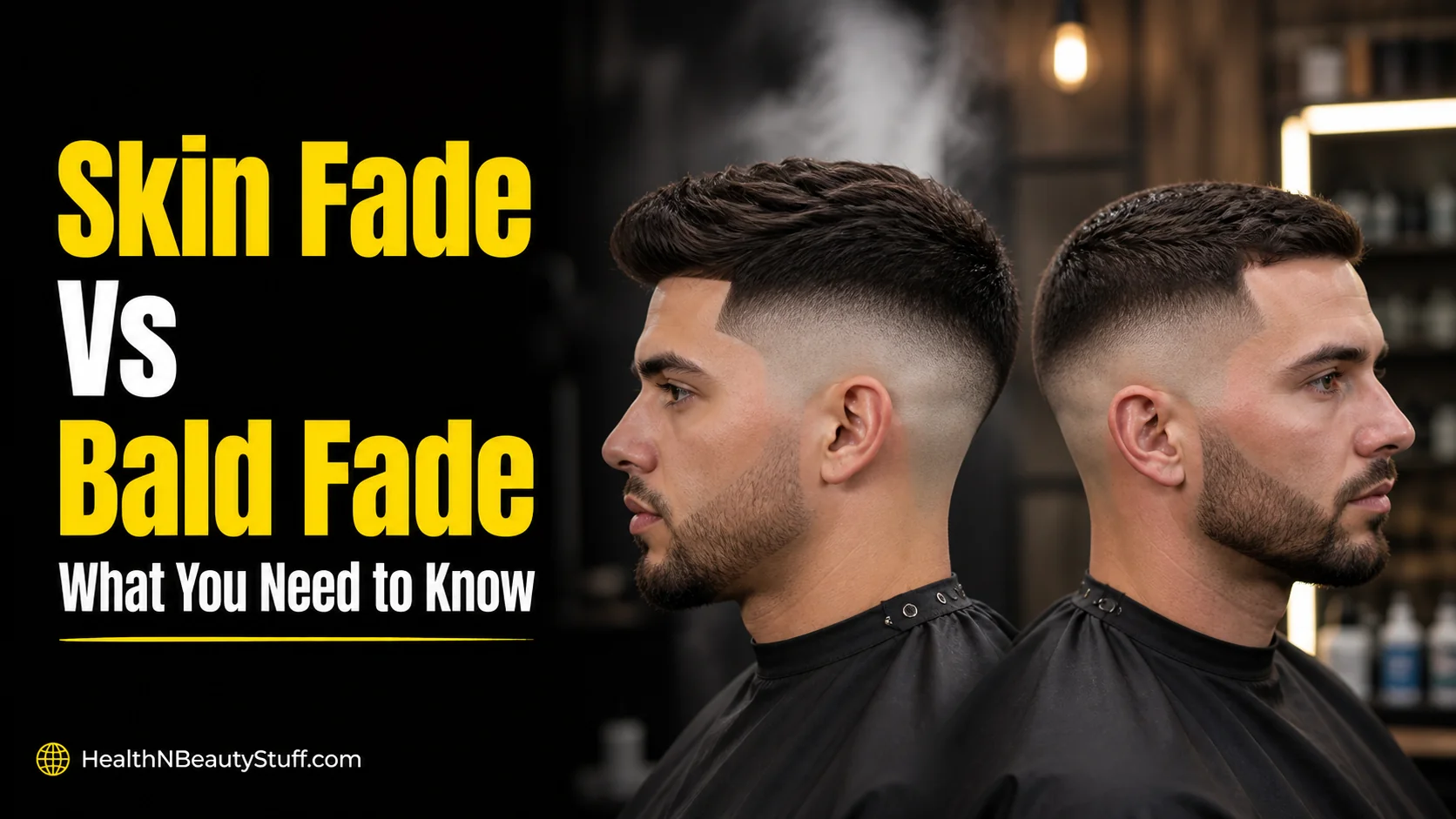
You’re in the barber chair with two photos open on your phone. One says “skin fade.” The other says “bald fade.” Your barber asks which one you want, and suddenly the difference feels very important.
That uncertainty makes sense. Nobody wants to nod confidently, then watch the clippers reveal a much shorter cut than expected.
In most barbershops, a skin fade and a bald fade are the same haircut. Both remove the hair at the bottom of the sides and back, creating a clean transition from bare skin to longer hair.
Quick Verdict: Ask for either name in most shops and you will get the same basic cut. However, some barbers use “skin fade” for a foil-shaved finish and “bald fade” for a no-guard clipper finish. Fade height, finishing tool, and blending matter more than the label.
Here is the comparison at a glance:
| Feature | Skin fade | Bald fade |
|---|---|---|
| Meaning | Sides and back fade down to bare skin | Usually another name for the same bare-skin fade |
| Finish | Often finished with a foil shaver or razor | May finish with no-guard clippers in some shops |
| Height | Low, mid, or high | Low, mid, or high |
| Regrowth | Stubble returns in a few days | Same rate as a skin fade |
| Cost | Depends on the shop, barber, and local market | Usually priced the same as a skin fade |
| Main decision | Choose the fade height and confirm how close the bottom will be | Same decision: pick the height and finish |
What Is a Skin Fade?
A skin fade takes the sides and back down to bare skin. The barber then blends that short area into longer hair above it.
The fade does not cover your whole head. “Skin” describes the shortest point near the neckline and around the ears. The hair on top can remain long, textured, curly, cropped, or slicked back.
A barber may begin with clippers and different guard lengths. Each section becomes slightly longer as the barber moves upward.
The closest part may then be finished with a foil shaver or razor. This removes visible stubble and produces the smooth contrast people expect from a skin fade.
A skin fade can be low, mid, or high. That placement changes the look far more than many clients realize.
- Low skin fade: The bare section stays close to the ears and neckline.
- Mid skin fade: The transition begins around the middle of the sides.
- High skin fade: The short area rises toward the upper sides of the head.
What Is a Bald Fade?
In most barbershops, a bald fade is the same as a skin fade. The word “bald” simply stresses that the bottom reaches bare skin.
It does not mean the hair on top must be bald. You can pair a bald fade with curls, a pompadour, a crop, braids, or several inches of hair.
Why use two names for one cut? Barber terms often develop by region and shop culture. One barber may say “skin,” while another naturally says “bald.”
There is one possible wrinkle. Some barbers use “bald fade” for a no-guard clipper finish. They may reserve “skin fade” for a closer foil-shaved finish.
That distinction is shop-specific, not universal. A photo and a short conversation are safer than relying on one term.
Skin Fade vs Bald Fade: Is There a Difference?
No, there is usually no meaningful difference between a skin fade and a bald fade. Both names commonly describe a fade that reaches bare skin.
“Bald fade” can sound more extreme. Yet the final haircut may look identical to a skin fade at the same height.
If a shop treats them differently, the practical difference is often the finishing tool:
- No-guard clippers: Leave very short stubble that can still feel slightly rough.
- Foil shaver: Cuts closer and creates a smoother, cleaner-looking base.
- Razor: Can also remove stubble closely, depending on the barber’s method.
A typical service may include a consultation, clipper work, blending, close finishing, outlining, and styling. There is no single required workflow followed by every barber.
Want to avoid confusion? Ask, “When you say bald fade, does that include the foil shaver?” That one question tells you more than the haircut name.
Low, Mid, or High? The Fade Height That Matters More Than the Name
Fade height matters more than whether you say skin fade or bald fade. It controls how much scalp shows and where the sharp contrast begins.
Low fade
A low fade creates the softest transition. The shortest section stays near the ears and neckline, leaving more weight on the sides.
This option often balances long or oval faces. It can also feel safer for a first skin fade because less scalp is exposed.
Mid fade
A mid fade is the most adaptable choice. It gives clear contrast without removing as much side coverage as a high fade.
It works with many face shapes and top styles. If you are unsure where to begin, a mid fade gives your barber room to adjust the blend.
High fade
A high fade creates the boldest contrast. The transition starts farther up the head and draws attention toward the top.
It can make the face appear longer. It also exposes more scalp, so thinning areas or head shape may become more noticeable.
Show your barber where you want the transition to start. A finger placed near the temple is clearer than saying “not too high.”
Pros and Cons of a Skin/Bald Fade
A skin or bald fade offers a crisp look with little daily styling on the sides. The tradeoff is faster-looking regrowth and more exposed skin.
Pros
- Clean contrast: The bare base makes the blend look sharp.
- Flexible styling: It works with straight, curly, coarse, and textured hair.
- Less side styling: There is little hair near the ears to manage.
- Beard-friendly shape: A skilled barber can blend the fade into facial hair.
- Many height options: Low, mid, and high versions create different effects.
Cons
- Regrowth becomes visible quickly: Even short stubble reduces the bare-skin contrast.
- The scalp is exposed: Marks, bumps, and thinning may be easier to see.
- Blending errors stand out: Dark lines are obvious against bare skin.
- Close shaving can irritate skin: Sensitive areas may feel sore or develop bumps.
- Keeping it crisp takes commitment: Your schedule depends on how quickly your hair grows.
Is a Skin Fade Good for Balding or Thinning Hair?
A skin fade can suit thinning hair, but the best height depends on where the thinning appears. The goal is to manage contrast, not hide every patch.
A low skin fade may create a neat outline while preserving more hair along the sides. This can make the cut look intentional without placing too much focus on the scalp.
A high fade removes more side coverage. If your temples are receding or your crown is thin, that contrast may make those areas stand out.
Fine hair may also show scalp sooner as the cut grows. Coarse or curly hair often creates a darker transition above the fade.
Shaving does not make hair grow back thicker or darker. It cuts the visible hair shaft. It does not change the follicle beneath the skin.
Bring up your concern before the clippers start. Ask your barber to check how the fade height works with your hairline, crown, and head shape.
If thinning changed suddenly or comes with scalp symptoms, talk with a qualified health professional. A barber can shape the cut, but cannot diagnose hair loss.
Skin Fade Aftercare and Maintenance
A skin fade needs no medical recovery, but freshly shaved skin may feel sensitive. Gentle care can reduce dryness and irritation.
- Wash the area with a mild cleanser and lukewarm water.
- Apply a gentle, fragrance-free moisturizer if the skin feels dry.
- Use an alcohol-free aftershave balm if your skin tolerates it.
- Avoid scratching, picking, or shaving over irritated bumps.
- Keep dirty hats, pillowcases, and clipper tools away from fresh skin.
- Do not ask for a close shave over active acne or inflamed skin.
Close shaving can lead to razor bumps, especially when cut hairs curl back toward the skin. Tell your barber if this has happened before.
Average scalp hair grows about one-half inch per month. Your fade will not become long overnight, but the bare area can lose its sharp contrast as stubble appears.
There is no universal touch-up schedule. Hair growth, fade height, and personal taste all affect timing.
Ask your barber when they would refresh your specific cut. Some people return when the blend softens. Others are happy to let it grow into a short fade.
How to Ask Your Barber for a Skin Fade (Script)
Name the height, finish, and top length when asking for a skin fade. These details prevent most misunderstandings.
You can say: “I want a low skin fade. Take the bottom to bare skin with a foil shaver, then blend it into the length on top.”
For a mid or high fade, replace “low” with your preferred height. Show where you want the transition to begin.
If you are uncertain, try this: “I want the bottom shaved to skin, but keep the transition around my temples and above my ears.”
Then confirm these points:
- Will the bottom be finished with no-guard clippers or a foil shaver?
- Where will the fade begin?
- How much length will remain on top?
- Will the barber blend the fade into your beard or sideburns?
- Will the hairline be natural or sharply lined up?
Bring a photo of the exact result you like. Choose one showing the front, side, and fade height if possible.
You can also ask to see the planned clipper guard before cutting the longer sections. Just remember that guard numbers vary by clipper system and technique.
Skin Fade vs Bald Fade vs Other Fades: When to Choose Neither
Choose neither if you want softer contrast, less exposed skin, or easier grow-out. A taper or zero fade may fit better.
Taper fade
A taper keeps most of the sides longer. It shortens the hair mainly around the temples and neckline.
Choose it when you want a tidy result that feels less dramatic. It also works well in settings where a high-contrast cut may feel too sharp.
Zero fade
A zero fade often stops at no-guard clippers rather than bare skin. However, barbers do not all use the term the same way.
Always ask what “zero” means in that shop. It may leave fine stubble, or the barber may still use a foil shaver.
Buzz cut or longer clipper fade
A buzz cut keeps the length more even across the head. A longer clipper fade blends the sides without revealing bare skin.
These options can reduce strong scalp contrast. They may feel more comfortable if a skin fade highlights thinning, bumps, scars, or an uneven head shape.
Which Fade Should You Choose?
The right fade depends on local language, hair texture, skin sensitivity, and face shape. There is no single version that suits everyone.
- Regional language: One shop’s skin fade may be another shop’s bald fade.
- Hair texture: Coarse or curly hair can create a strong, dark blend. Fine hair may reveal scalp sooner.
- Skin sensitivity: A foil-shaved finish may irritate active acne, razor bumps, or sensitive skin.
- Face shape: High fades can lengthen the face. Low fades tend to preserve balance.
- Hairline: A sharp lineup can define the front, but it cannot replace a naturally receding edge.
- Lifestyle: A very crisp fade may need more barber visits than you want.
- Personal taste: Some people like bare skin. Others prefer a little shadow at the bottom.
For a teenager’s first fade, a low version or clipper-only finish can feel less severe. The barber can always take more off, but cannot put hair back.
Before the cut begins, agree on the height and shortest length. That small check prevents the dreaded mirror moment.
Skin fade vs bald fade is usually a vocabulary debate, not a haircut debate. In most barbershops, both terms mean fading the sides and back to bare skin.
The choices that shape the final look are fade height, finishing tool, top length, and blend quality. Cost also depends on the shop, not the word used on its service menu.
If you want certainty, skip the terminology debate. Show a photo and say exactly where the fade should start. Then confirm whether you want no-guard clippers or a foil-shaved finish.