New articles every week — Expert-backed health & beauty tips
You have seen the photos: electric pink streaks against inky black, soft rose balayage melting into charcoal, or bold split-dye halves that command attention.
Pink and black hair is one of the most striking color combinations in modern hair art. But beyond the stunning visuals, there are practical questions.
How do you achieve this look without damaging your hair? Which pink shade works with your skin tone? How do you maintain that vibrant pink against fading black?
Let me walk you through everything you need to know—from technique options and shade selection to maintenance routines and styling tips—so you can embrace this bold transformation with confidence and care.
Pink and Black Hair: The Short Answer
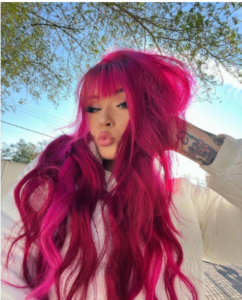
Pink and black hair combines vibrant pink tones with deep black for high-contrast, expressive color. Popular techniques include ombre (pink ends fading from black roots), split dye (one side pink, one side black), balayage (hand-painted pink highlights on black base), or money pieces (face-framing pink sections).
Achieving vibrant pink typically requires bleaching dark hair first. Maintenance involves color-safe products, minimal washing, and regular touch-ups every 4 to 8 weeks for pink.
With proper planning and aftercare, pink and black hair can be a stunning, wearable expression of your style.
Why Pink and Black Hair Captivates: Edge, Contrast, and Expression
Pink and black hair is more than a trend. It is a statement of creativity, confidence, and individuality.
Bold Aesthetic and Alternative Style Statement
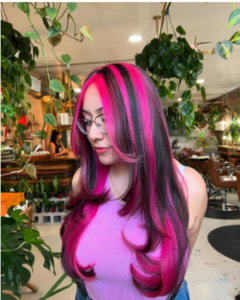
The contrast between soft pink and deep black creates visual drama that draws attention.
This combination appeals to those who embrace alternative fashion, artistic expression, or simply want to break from conventional hair norms. It is playful yet edgy, feminine yet powerful.
Versatility: From Subtle to Dramatic Applications
Pink and black can be adapted to any comfort level. Subtle pink highlights on a black base offer a hint of color. Bold split-dye or all-over pink with black roots makes an undeniable statement.
The combination works with short pixies, long waves, curls, or straight styles.
Cultural and Fashion Influences
Pink and black hair draws from punk, emo, kawaii, and e-girl aesthetics, as well as high-fashion runways and celebrity styles. Understanding these roots helps you tailor the look to your personal inspiration while honoring its creative heritage.
Popular Pink and Black Hair Techniques
How you apply pink and black determines the overall impact and maintenance needs.
Ombre and Balayage: Soft Blends and Gradients
Ombre features a gradual fade from black roots to pink ends, creating a low-maintenance grow-out. Balayage uses hand-painted pink highlights throughout black hair for a sun-kissed, dimensional effect.
Both techniques minimize root touch-ups and allow natural regrowth to blend seamlessly.
Split Dye and Color Blocking: High-Contrast Statements
Split dye divides hair vertically (one side pink, one side black) or horizontally (top black, bottom pink) for maximum impact. Color blocking uses geometric sections of pink and black for an artistic, graphic look.
These styles require precise application and regular root maintenance but deliver unforgettable visual punch.
Highlights, Lowlights, and Money Pieces: Strategic Placement
Pink highlights woven through black hair add pops of color without full commitment. Money pieces (face-framing sections) in pink brighten the complexion and draw attention to your features.
Lowlights of black through pink hair add depth and dimension. These techniques offer flexibility and easier maintenance than all-over color.
All-Over Color with Dimension: Base and Accent Approaches
Some prefer a black base with pink accents throughout, or vice versa. This approach allows for creative placement—pink underlayers that peek through black top layers, or black tips on pink hair for a dipped effect.
Discuss placement strategy with your colorist to match your lifestyle and styling preferences.
- Bring reference photos showing your desired pink intensity and black depth
- Discuss your natural hair color and history to determine bleaching needs
- Ask about bond-building treatments (like Olaplex) to protect hair during lightening
- Consider your styling routine: some techniques look better with specific cuts or textures
- Plan for maintenance: vibrant pink requires more frequent touch-ups than black
Choosing Your Pink and Black: Shades and Combinations
The specific shades you choose dramatically affect the final look and how it complements your features.
Pink Shades: Pastel, Hot, Rose, Magenta, and Neon
| Pink Shade | Characteristics | Best For |
|---|---|---|
| Pastel Pink | Soft, muted, requires very light base | Ethereal, kawaii, or soft alternative styles |
| Hot Pink | Vibrant, bold, high-impact | Bold statements, punk or pop aesthetics |
| Rose Pink | Warm, romantic, universally flattering | Subtle glamour, everyday wearability |
| Magenta/Fuchsia | Deep, rich, blue-based pink | Dramatic contrast with black, cool undertones |
| Neon Pink | Electric, attention-grabbing, fades quickly | Festival looks, temporary bold statements |
Black Variations: Jet, Soft Black, Blue-Black, and Charcoal
Not all black is the same. Jet black is the deepest, most intense shade. Soft black has subtle warmth for a more natural look. Blue-black adds cool dimension that complements cool-toned pinks.
Charcoal is a softened black with gray undertones, offering a modern, edgy alternative. Choose based on your skin tone and desired contrast level.
Pairing Principles: Complementary and Contrasting Combos
For maximum impact, pair cool-toned pinks (magenta, pastel) with blue-black or jet black. Warm pinks (rose, coral) harmonize with soft black or charcoal.
For a balanced look, match the intensity: vibrant hot pink with intense jet black, or muted pastel with softened charcoal. Your colorist can help customize the perfect pairing for your features.
Skin Tone and Eye Color Guide for Pink and Black Hair
Choosing shades that complement your natural coloring enhances the overall effect.
Cool Undertones: Best Pink and Black Pairings
If your skin has pink, red, or blue undertones (veins appear blue/purple, silver jewelry flatters you):
- Best pinks: Pastel pink, magenta, fuchsia, cool rose
- Best blacks: Jet black, blue-black, charcoal
- Eye color enhancement: Blue, gray, or cool green eyes pop against cool pink/black combos
Warm Undertones: Flattering Shade Adjustments
If your skin has yellow, golden, or peach undertones (veins appear green, gold jewelry flatters you):
- Best pinks: Rose pink, coral-pink, peachy pink, warm magenta
- Best blacks: Soft black, warm black, charcoal with brown undertones
- Eye color enhancement: Brown, hazel, or warm green eyes glow with warm pink/black pairings
Neutral Undertones: Maximum Flexibility
If your skin has balanced undertones (veins appear blue-green, both metals suit you):
- You can experiment with both cool and warm pink/black combinations
- Focus on intensity matching: vibrant with vibrant, muted with muted
- Let your personal style preference guide shade selection
The Coloring Process: What to Expect
Achieving pink and black hair requires careful planning, especially if starting from dark natural hair.
Consultation and Strand Testing
A professional consultation is essential. Your colorist will:
- Assess your natural hair color, texture, and history
- Discuss your desired pink intensity and black depth
- Perform a strand test to predict bleaching results and hair reaction
- Recommend a timeline (may require multiple sessions for dark hair)
- Discuss aftercare and maintenance expectations
Bleaching Requirements and Hair Health Prep
To achieve vibrant pink on dark hair, bleaching is typically required:
| Starting Color | Target Level for Pink | Sessions Needed |
|---|---|---|
| Dark Brown/Black | Level 9-10 (pale blonde) | 2 to 3 sessions, spaced 4-6 weeks apart |
| Medium Brown | Level 8-9 (light blonde) | 1 to 2 sessions |
| Light Brown/Blonde | Level 9-10 (pale blonde) | 1 session, possibly with toner |
Hair health prep is critical: protein treatments, bond builders (like Olaplex or K18), and deep conditioning in the weeks before coloring minimize damage and improve color uptake.
Application Techniques: Professional vs DIY Considerations
While DIY kits exist, pink and black hair is complex:
- Professional advantages: Precise placement, customized color mixing, damage mitigation, and corrective expertise if needed
- DIY risks: Uneven bleaching, brassiness, patchy pink, or over-processing leading to breakage
- Hybrid approach: Some get black base professionally and add pink with semi-permanent dye at home (after proper lightening)
- Temporary testing: Try clip-in extensions or wash-out pink sprays before committing to permanent color
Maintenance and Aftercare for Pink and Black Hair
Vibrant pink requires dedicated care to maintain its vibrancy alongside black.
Washing and Product Recommendations
- Wash less frequently: Aim for 2 to 3 times weekly to preserve pink pigment
- Use sulfate-free, color-safe shampoo: Prevents stripping color and drying hair
- Cold water rinses: Hot water opens cuticles and accelerates fading
- Pink-depositing products: Color-depositing shampoos or conditioners (like Overtone or Keracolor) refresh pink between salon visits
- Separate care for sections: If possible, focus color-safe products on pink sections while using gentle cleansers on black
Color-Protecting Routines and Touch-Up Schedules
| Maintenance Task | Frequency | Purpose |
|---|---|---|
| Pink touch-up (semi-permanent) | Every 4 to 6 weeks | Refresh vibrant pink as it fades |
| Black root touch-up | Every 6 to 8 weeks | Maintain seamless black base as hair grows |
| Deep conditioning treatment | Weekly | Repair damage from bleaching and maintain hair health |
| UV protectant spray | Before sun exposure | Prevent sun fading of pink pigment |
Heat Styling and Sun Protection Strategies
- Heat protectant is non-negotiable: Always apply before blow-drying, curling, or straightening
- Lower heat settings: High heat accelerates color fading and damages already-processed hair
- Sun protection: Wear hats or use UV-protectant hair sprays when in direct sunlight
- Chlorine and saltwater caution: Rinse hair with fresh water before swimming; wear a cap if possible
Transitioning and Fading: Managing the Evolution
Pink fades gracefully if planned for; black is more stable but requires care.
Embracing the Fade: Pastel Phases and Toning
As vibrant pink fades, it often transitions through beautiful pastel phases. Some embrace this evolution, while others prefer consistent vibrancy.
Toning with a diluted pink conditioner can refresh color between full applications. If pink fades to brassy or orange tones, a purple or blue toner can neutralize unwanted warmth.
Color Refresh Options and Professional Maintenance
Options for maintaining your look:
- Semi-permanent pink refresh: At-home application of direct dyes (like Arctic Fox or Manic Panic) to revive faded pink
- Professional gloss treatment: Salon service that deposits fresh pigment while conditioning hair
- Black root maintenance: Touch up regrowth with permanent black dye to keep base seamless
- Full color refresh: Every 3 to 4 months for all-over vibrancy and even tone
Removing or Changing Pink and Black Hair Safely
If you decide to change your look:
- Consult a professional: Removing black dye is complex and can damage hair if done incorrectly
- Fade pink naturally: Clarifying shampoos, vitamin C treatments, or dandruff shampoo can speed pink fading
- Transition gradually: Consider moving to darker pinks, burgundy, or purple before going fully neutral
- Prioritize hair health: Bond-building treatments and deep conditioning are essential during color removal
Cost and Time Considerations
Pink and black hair is an investment in time and money:
| Service | Estimated Cost | Time Required |
|---|---|---|
| Initial consultation | $0 to $50 (often applied to service) | 30 to 60 minutes |
| Bleaching (dark to light) | $150 to $400+ per session | 2 to 4 hours per session |
| Pink and black application | $200 to $600+ | 3 to 6 hours |
| Pink touch-up (semi-permanent) | $50 to $150 | 1 to 2 hours |
| Black root touch-up | $75 to $200 | 1 to 2 hours |
Prices vary by location, salon prestige, and hair length/thickness. Budget for initial transformation plus ongoing maintenance.
Final Tips: Making Your Pink and Black Hair Uniquely Yours
Personalize your pink and black hair with these thoughtful touches:
- Incorporate personal symbols: Add subtle charms, hair jewelry, or braided accents that reflect your personality
- Coordinate with your wardrobe: Choose pink shades that complement your most-worn clothing colors
- Test with temporary options first: Try clip-in extensions, wash-out sprays, or chalk before permanent commitment
- Document your journey: Take photos during the process and as your color evolves; share with your colorist for future reference
- Trust your instincts: If a shade or placement doesn’t feel right, pause and reconsider. Your confidence is the best accessory
Frequently Asked Questions
▸
What are easy crazy hair day ideas?
Easy crazy hair day ideas include gravity-defying spikes with gel, colorful temporary color spray with fun accessories, themed looks like unicorns or aliens, and silly styles using socks, pipe cleaners, or balloons. For busy mornings, focus on accessory-heavy styles or quick braids with colorful accents.
▸
How do you do crazy hair for school?
For school Crazy Hair Day, choose styles that are fun but classroom-appropriate: avoid excessive glitter that sheds, secure accessories well to prevent distractions, and use wash-out temporary color. Prep the night before, keep a small touch-up kit in your backpack, and prioritize comfort so you can focus on learning and fun.
▸
What can I use for crazy hair day at home?
Household items work great for Crazy Hair Day: pipe cleaners for antennae or curls, socks for voluminous buns, aluminum foil for metallic accents, ribbons or yarn for colorful wraps, and temporary color sprays or chalks from craft stores. Get creative—your kitchen and craft drawer are full of hair art supplies!
▸
How do you make crazy hair last all day?
Make crazy hair last by prepping with texturizing spray for grip, using strong-hold gel for structure, setting with flexible-hold hairspray, and avoiding humidity when possible. Pack a mini touch-up kit with travel hairspray, extra pins, and wet wipes. For temporary color, choose quality wash-out sprays and avoid touching hair frequently to prevent fading.
Final Thoughts: Confidence and Creativity in Color
Pink and black hair is more than a color combination. It is a declaration of creativity, a celebration of contrast, and a canvas for self-expression.
By understanding technique options, shade selection, maintenance realities, and aftercare essentials, you can approach this transformation with clarity and excitement.
Remember: your hair is a living accessory. Choose shades that resonate with your spirit, a colorist who respects your vision, and a care routine that honors your hair’s health.
With thoughtful planning and joyful commitment, your pink and black hair can be a source of confidence, conversation, and creative joy for as long as you love it.
Sources:
● American Academy of Dermatology — Hair Coloring Safety and Aftercare Guidelines
● Journal of Cosmetic Science — Hair Dye Chemistry and Color Longevity Research
● Professional Beauty Association — Colorist Best Practices and Client Consultation Standards