New articles every week — Expert-backed health & beauty tips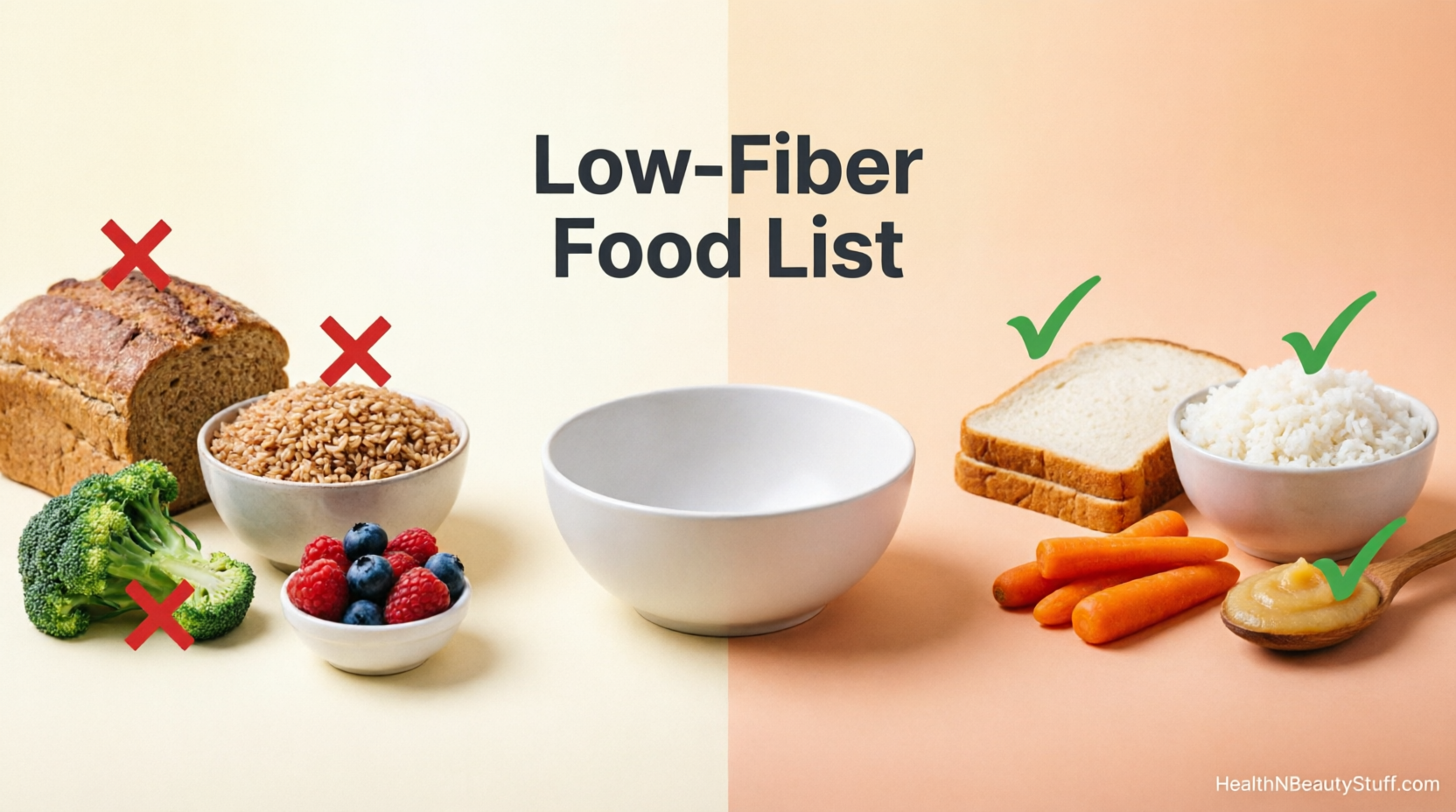
If you’re dealing with a digestive flare-up, preparing for a colonoscopy, or recovering from bowel surgery, your body needs a break. That’s where a low fiber food list pdf becomes more than just a handout—it becomes your roadmap to feeling better.
With over 3 million Americans managing inflammatory bowel disease and countless others navigating temporary digestive challenges, knowing exactly what to eat can make all the difference.
This guide gives you a complete, printable food list, simple meal ideas, and expert tips to help you heal with confidence. Let’s make your recovery journey a little easier, one gentle bite at a time.
What Is a Low-Fiber Diet? (And When You Need One)
A low-fiber diet limits your daily fiber intake to 10-15 grams, compared to the 25-38 grams recommended for most adults. The goal isn’t to restrict forever—it’s to give your digestive system a chance to rest and heal.
Who might benefit from this approach? People managing:
- Inflammatory bowel disease (IBD) flare-ups like Crohn’s or ulcerative colitis
- Diverticulitis episodes
- Preparation for colonoscopy or bowel surgery
- Recovery from bowel resection or ostomy surgery
- Radiation therapy to the abdomen or pelvis
- Bowel obstruction or narrowing
Important: Always work with your healthcare provider before starting a low-fiber diet. This guide is educational, not medical advice.
Low-Fiber vs. Low-Residue: What’s the Difference?
These terms are often used interchangeably, but there’s a subtle difference:
- Low-fiber diet: Limits fiber to under 15g daily; focuses on refined grains and cooked vegetables
- Low-residue diet: Stricter version; also limits dairy, seeds, nuts, and foods that leave undigested material in the colon
Your doctor or dietitian will tell you which approach fits your situation. When in doubt, start with the more restrictive option and relax as tolerated.
Your Complete Low Fiber Food List (Downloadable PDF)
Use this table to build meals that support healing. All foods listed contain less than 2 grams of fiber per typical serving.
✅ Foods to Embrace (Low-Fiber Options)
| Category | Food Examples | Fiber (approx) | Why It Works |
|---|---|---|---|
| Grains & Starches | White bread, white rice, white pasta, couscous, refined cereals (Corn Flakes, Cream of Wheat), saltines, white potatoes (no skin) | 0.5-2g per serving | Provides energy without adding bulky fiber |
| Proteins | Tender beef, pork, lamb; chicken, turkey; fish, shellfish; eggs; silken tofu; smooth peanut butter; deli meats | 0-1g per serving | Supports healing with easily digested protein |
| Dairy | Milk, yogurt (no seeds/granola), cheese, cottage cheese, ice cream (no nuts), pudding | 0g | Provides calcium and protein; limit to 2 servings/day on strict low-residue |
| Fruits | Ripe bananas, applesauce (smooth), canned peaches/pears (no skin), cantaloupe, honeydew, fruit juice (no pulp) | 0-2g per serving | Offers vitamins without irritating fiber |
| Vegetables | Carrots (cooked), green beans (cooked, no skins), yellow squash (no seeds), pumpkin, mushrooms, asparagus tips, spinach (cooked), tomato sauce (sieved) | 0-2g per ½ cup cooked | Adds nutrients while keeping fiber low |
| Fats & Sweets | Butter, oils, mayonnaise, smooth dressings, jelly (no seeds), honey, plain cookies, angel food cake, gelatin, popsicles | 0-1g per serving | Adds flavor and calories without fiber |
❌ Foods to Avoid (High-Fiber)
| Category | Examples | Why Avoid |
|---|---|---|
| Whole Grains | Whole wheat bread, brown rice, quinoa, bran cereals, granola, popcorn | High in insoluble fiber that can irritate sensitive bowels |
| Raw Produce | All raw fruits and vegetables, berries, dried fruit, coconut | Skins, seeds, and raw fiber are hard to digest during flare-ups |
| Cruciferous Veggies | Broccoli, cauliflower, cabbage, Brussels sprouts, kale | Can cause gas and bloating even when cooked |
| Legumes | Beans, lentils, chickpeas, peas (all forms) | Very high in fiber and can trigger discomfort |
| Nuts, Seeds & Add-Ins | All nuts, seeds, chunky peanut butter, granola bars, foods with added fiber | Small pieces can irritate healing tissue; high fiber content |
🌍 Comfort Foods, Low-Fiber Style
Healing doesn’t mean giving up flavor. Try congee (Asian rice porridge) with tender chicken, creamy polenta with smooth tomato sauce (Italian), or soft tacos with white corn tortillas and seasoned ground beef (Latin). These globally inspired options provide comfort while staying gentle on your digestive system.
Smart Swaps: High-Fiber → Low-Fiber Alternatives
| Instead Of | Try This | Fiber Saved |
|---|---|---|
| Whole wheat bread | White bread or sourdough | ~3g per slice |
| Brown rice | White rice or rice noodles | ~3g per cup |
| Raw apple | Smooth applesauce | ~3g per serving |
| Raw broccoli | Well-cooked carrots or yellow squash | ~2g per ½ cup |
| Black beans | Tender chicken or baked fish | ~15g per cup |
7-Day Low-Fiber Meal Plan (Under 15g Daily Fiber)
Use this simple template to reduce decision fatigue while healing. All meals stay within safe fiber limits.
- Breakfast: Scrambled eggs, white toast with butter, smooth applesauce (~3g fiber)
- Lunch: Chicken noodle soup (white noodles), saltine crackers, ripe banana (~4g)
- Dinner: Baked white fish, white rice, well-cooked carrots (~3g)
- Snacks: Plain yogurt, cheese stick, gelatin, or vanilla wafers (~1-2g each)
Prep tip: Cook grains and proteins in batches. Peel and cook vegetables ahead of time. Keep your printable low fiber food list on the fridge for quick reference.
Essential Tips for Success on a Low-Fiber Diet
- Peel and cook: Always remove skins from fruits and vegetables; cook until very tender
- Choose refined grains: White bread, white rice, regular pasta over whole grain
- Read every label: Check fiber content; avoid “added fiber,” “inulin,” or “chicory root”
- Stay hydrated: Drink 8-10 glasses of water daily to prevent constipation
- Eat small, frequent meals: Easier on digestion than three large meals
- Chew thoroughly: Helps break down food before it reaches your sensitive gut
- Dining out: Request vegetables well-cooked with no skins; choose grilled over fried
- Track symptoms: Keep a simple food diary to identify personal triggers
Preventing Nutrient Deficiencies on a Low-Fiber Diet
Restricting fiber long-term can lead to gaps in certain nutrients. Here’s how to stay nourished:
- Choose enriched grains: Refined cereals and breads fortified with B vitamins and iron
- Include dairy or alternatives: For calcium and vitamin D (if tolerated)
- Eat allowed fruits and vegetables: For vitamin C and other micronutrients
- Consider a multivitamin: Ask your doctor if supplementation is right for you
- Keep it temporary: Most low-fiber diets last 2-6 weeks; longer use requires medical supervision
Frequently Asked Questions
Clear answers for your digestive health journey
What foods are low in fiber?
+
How much fiber is allowed on a low-fiber diet?
+
How long can you stay on a low-fiber diet?
+
Can I eat bananas on a low-fiber diet?
+
Is yogurt OK on a low-fiber diet?
+
Can I eat oatmeal on a low-fiber diet?
+
What’s the difference between low-fiber and low-residue?
+
Are eggs OK on a low-fiber diet?
+
Ready to simplify your low-fiber journey?
Download your free printable low fiber food list PDF + meal planner below.
When to Call Your Doctor
A low fiber food list pdf is a helpful tool, but it’s not a substitute for medical care. Contact your healthcare provider if you experience:
- Severe abdominal pain or cramping
- Inability to pass stool or gas
- Blood in stool
- Persistent diarrhea, vomiting, or inability to keep food down
- Unintended weight loss
- Symptoms that worsen despite following the diet
Working with a registered dietitian who specializes in digestive health can help you create a personalized, sustainable eating plan that supports healing without unnecessary restriction.
Navigating a low-fiber diet doesn’t have to feel overwhelming. With this low fiber food list pdf as your guide, you can make informed choices that support your digestive health while still enjoying satisfying meals.
Remember: this is a temporary tool for healing, not a lifelong restriction. Be patient with your body, celebrate small wins, and trust the process. You’re taking an important step toward feeling better.
Sources:
Mayo Clinic — https://www.mayoclinic.org
American Cancer Society — https://www.cancer.org
Johns Hopkins Medicine — https://www.hopkinsmedicine.org