New articles every week — Expert-backed health & beauty tips
You’ve probably seen the term hyper ketosis food list popping up in fitness circles, promising faster fat loss and deeper metabolic shifts. But here’s what most articles won’t tell you upfront: “hyper ketosis” isn’t a recognized medical term.
What people usually mean is deep nutritional ketosis, a state where your body efficiently burns fat for fuel. The challenge? Pursuing deeper ketosis without proper guidance can lead to confusion, frustration, or even health risks.
That’s why we created this science-backed, safety-first hyper ketosis food list. Whether you’re new to keto or looking to optimize your results, this guide gives you the foods, the facts, and the framework to move forward with confidence.
First, a Critical Safety Note: Ketosis ≠ Ketoacidosis

Before we dive into foods, let’s clear up a vital distinction that could protect your health.
Nutritional ketosis is a safe, natural metabolic state where your blood ketones range from 0.5 to 3.0 mmol/L, your blood sugar stays normal, and your body’s pH remains balanced.
This is the goal of a well-formulated ketogenic diet food list.
Diabetic ketoacidosis (DKA), on the other hand, is a medical emergency. It happens when ketones rise above 3.0 mmol/L plus blood sugar exceeds 250 mg/dL plus blood pH drops below 7.3.
This primarily affects people with Type 1 diabetes or those on certain medications like SGLT2 inhibitors.
⚠️ Who Should Talk to a Doctor First
If you have Type 1 diabetes, take SGLT2 inhibitors, or have kidney or liver conditions, please consult your healthcare provider before pursuing deeper ketosis. Safety always comes before optimization.
What “Deep Ketosis” Really Means (And When It Helps)
When your liver converts fat into fuel, it produces three ketone bodies: beta-hydroxybutyrate, acetoacetate, and acetone. Beta-hydroxybutyrate is the one we measure in blood tests.
- 0.5-1.5 mmol/L: Light nutritional ketosis
- 1.5-3.0 mmol/L: Optimal range for most people seeking fat loss and mental clarity
- 3.0-5.0 mmol/L: May occur during fasting or very strict keto; monitor context
- Above 5.0 mmol/L: Requires careful evaluation, especially if you have diabetes
Reaching deeper ketosis isn’t always better. For most people, the sweet spot is 1.0-3.0 mmol/L. Benefits in this range may include reduced appetite, steady energy, and improved focus.
But chasing higher numbers without purpose can lead to unnecessary restriction or stress.
The Safe Deep Ketosis Foods List (Printable)
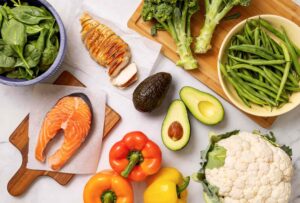
Use this table to build meals that support ketone production while keeping nutrition balanced. All values are approximate net carbs per typical serving.
✅ Prioritize These Foods
| Category | Food Examples | Net Carbs (approx) | Why It Helps |
|---|---|---|---|
| Fats for Ketones | MCT oil, coconut oil, avocado oil, olive oil, grass-fed butter | 0g | MCT oil converts rapidly to ketones; other fats support satiety |
| Proteins (Moderate) | Salmon, sardines, eggs, pasture-raised chicken, grass-fed beef | 0-1g per 3-6 oz | Preserves muscle without spiking glucose; omega-3s reduce inflammation |
| Very Low-Carb Veggies | Spinach, kale, zucchini, cauliflower, asparagus, celery | 1-4g per cup raw | Fiber and micronutrients without disrupting net carbohydrates limits |
| Strategic Additions | Bone broth, lemon water, herbal teas, sea salt | 0-2g per serving | Replenishes electrolytes lost during ketosis; supports hydration |
| Optional Accelerators | Exogenous ketones, extended fasting (16:8), cold exposure | Varies | May temporarily raise ketones; use with caution and medical guidance |
⚠️ Limit or Avoid on a Hyper Ketosis Food List
| Category | Examples | Why Limit |
|---|---|---|
| Hidden Carbs | Sauces, dressings, “keto” snacks with maltitol or dextrose | Can spike glucose or trigger insulin, slowing ketone production |
| High-Sugar Fruit | Bananas, mangoes, grapes, dried fruit | High natural sugar disrupts ketosis; limit berries to ¼-½ cup |
| Starchy Vegetables | Potatoes, corn, peas, carrots, beets | Higher net carbohydrates can push you out of ketosis |
| Alcohol | Beer, sweet cocktails, most wines | Liver prioritizes metabolizing alcohol over producing ketones |
| Artificial Sweeteners | Maltitol, dextrose, some “sugar-free” products | May trigger insulin response or cravings in sensitive individuals |
🌍 Global Flavors, Keto-Friendly

You don’t have to give up cultural favorites. Try coconut curry with cauliflower rice (Thai), zucchini noodles with olive oil and garlic (Italian), or spiced lamb with cucumber salad (Middle Eastern).
These dishes
You’ve probably seen the term hyper ketosis food list popping up in fitness circles, promising faster fat loss and deeper metabolic shifts. But here’s what most articles won’t tell you upfront: “hyper ketosis” isn’t a recognized medical term.
What people usually mean is deep nutritional ketosis, a state where your body efficiently burns fat for fuel.
The challenge? Pursuing deeper ketosis without proper guidance can lead to confusion, frustration, or even health risks. That’s why we created this science-backed, safety-first hyper ketosis food list.
Whether you’re new to keto or looking to optimize your results, this guide gives you the foods, the facts, and the framework to move forward with confidence.
First, a Critical Safety Note: Ketosis ≠ Ketoacidosis
Before we dive into foods, let’s clear up a vital distinction that could protect your health.
Nutritional ketosis is a safe, natural metabolic state where your blood ketones range from 0.5 to 3.0 mmol/L, your blood sugar stays normal, and your body’s pH remains balanced. This is the goal of a well-formulated ketogenic diet food list.
Diabetic ketoacidosis (DKA), on the other hand, is a medical emergency. It happens when ketones rise above 3.0 mmol/L plus blood sugar exceeds 250 mg/dL plus blood pH drops below 7.3. This primarily affects people with Type 1 diabetes or those on certain medications like SGLT2 inhibitors.
⚠️ Who Should Talk to a Doctor First
If you have Type 1 diabetes, take SGLT2 inhibitors, or have kidney or liver conditions, please consult your healthcare provider before pursuing deeper ketosis. Safety always comes before optimization.
What “Deep Ketosis” Really Means (And When It Helps)
When your liver converts fat into fuel, it produces three ketone bodies: beta-hydroxybutyrate, acetoacetate, and acetone. Beta-hydroxybutyrate is the one we measure in blood tests.
- 0.5-1.5 mmol/L: Light nutritional ketosis
- 1.5-3.0 mmol/L: Optimal range for most people seeking fat loss and mental clarity
- 3.0-5.0 mmol/L: May occur during fasting or very strict keto; monitor context
- Above 5.0 mmol/L: Requires careful evaluation, especially if you have diabetes
Reaching deeper ketosis isn’t always better. For most people, the sweet spot is 1.0-3.0 mmol/L. Benefits in this range may include reduced appetite, steady energy, and improved focus. But chasing higher numbers without purpose can lead to unnecessary restriction or stress.
The Safe Deep Ketosis Foods List (Printable)
Use this table to build meals that support ketone production while keeping nutrition balanced. All values are approximate net carbs per typical serving.
✅ Prioritize These Foods
| Category | Food Examples | Net Carbs (approx) | Why It Helps |
|---|---|---|---|
| Fats for Ketones | MCT oil, coconut oil, avocado oil, olive oil, grass-fed butter | 0g | MCT oil converts rapidly to ketones; other fats support satiety |
| Proteins (Moderate) | Salmon, sardines, eggs, pasture-raised chicken, grass-fed beef | 0-1g per 3-6 oz | Preserves muscle without spiking glucose; omega-3s reduce inflammation |
| Very Low-Carb Veggies | Spinach, kale, zucchini, cauliflower, asparagus, celery | 1-4g per cup raw | Fiber and micronutrients without disrupting net carbohydrates limits |
| Strategic Additions | Bone broth, lemon water, herbal teas, sea salt | 0-2g per serving | Replenishes electrolytes lost during ketosis; supports hydration |
| Optional Accelerators | Exogenous ketones, extended fasting (16:8), cold exposure | Varies | May temporarily raise ketones; use with caution and medical guidance |
⚠️ Limit or Avoid on a Hyper Ketosis Food List
| Category | Examples | Why Limit |
|---|---|---|
| Hidden Carbs | Sauces, dressings, “keto” snacks with maltitol or dextrose | Can spike glucose or trigger insulin, slowing ketone production |
| High-Sugar Fruit | Bananas, mangoes, grapes, dried fruit | High natural sugar disrupts ketosis; limit berries to ¼-½ cup |
| Starchy Vegetables | Potatoes, corn, peas, carrots, beets | Higher net carbohydrates can push you out of ketosis |
| Alcohol | Beer, sweet cocktails, most wines | Liver prioritizes metabolizing alcohol over producing ketones |
| Artificial Sweeteners | Maltitol, dextrose, some “sugar-free” products | May trigger insulin response or cravings in sensitive individuals |
🌍 Global Flavors, Keto-Friendly
You don’t have to give up cultural favorites. Try coconut curry with cauliflower rice (Thai), zucchini noodles with olive oil and garlic (Italian), or spiced lamb with cucumber salad (Middle Eastern). These dishes deliver big flavor while staying within your ketogenic diet food list guidelines.
How to Use This List: A 3-Phase Approach
Going deeper into ketosis works best with a structured plan. Here’s a simple framework to follow.
Phase 1: Foundation (Days 1-7)
- Keep net carbohydrates under 20g daily
- Prioritize electrolytes: add salt to food, drink bone broth, consider magnesium
- Monitor how you feel: energy, sleep, digestion
Phase 2: Optimization (Days 8-14)
- Introduce strategic fats like MCT oil (start with 1 tsp to avoid digestive upset)
- Consider time-restricted eating (e.g., 16:8 fasting window) if it fits your lifestyle
- Test ketones if desired: aim for 1.0-3.0 mmol/L as a sustainable target
Phase 3: Maintenance (Day 15+)
- Adjust carb tolerance: some people can increase to 30-50g net carbs and stay in ketosis
- Reintroduce limited higher-carb veggies like carrots or berries if blood ketones remain stable
- Focus on long-term habits: nutrient density, sleep, stress management, strength training
Monitoring Safely: Testing & Warning Signs
If you choose to track ketones, knowledge is your best tool.
- Best method: Blood beta-hydroxybutyrate meter (more accurate than urine strips)
- Safe range: 1.0-3.0 mmol/L is ideal for most; above 3.0 requires checking blood glucose and symptoms
- Red flags: Nausea, vomiting, confusion, rapid breathing, or blood sugar over 250 mg/dL with high ketones = seek medical care immediately
Remember: ketone numbers are just one piece of your health picture. How you feel, your energy levels, and your lab work matter just as much.
Frequently Asked Questions
Clear answers for safe, effective ketosis
What is the difference between ketosis and hyper ketosis?
+
What foods get you into deep ketosis faster?
+
Can you have too many ketones on keto?
+
Is fruit allowed on a strict keto diet?
+
How do I know if my high ketones are safe?
+
Can I exercise in deep ketosis?
+
How long can I stay in deep ketosis?
+
Ready to optimize your keto journey?
Download our free printable food checklist + ketone tracker below.
Beyond the List: Building a Sustainable Keto Fat Loss Lifestyle
Chasing deeper ketosis is just one piece of metabolic health. For lasting results, focus on these foundations:
- Nutrient density: Choose whole, minimally processed foods over “keto-labeled” packaged products
- Sleep and stress: Poor sleep or high cortisol can raise blood sugar and slow ketone production
- Strength training: Preserves muscle mass, which supports long-term metabolic rate
- Hydration and electrolytes: Ketosis increases fluid loss; replenish sodium, potassium, and magnesium daily
If you’re unsure how to personalize your approach, consider working with a registered dietitian or healthcare provider familiar with ketogenic nutrition.
Pursuing deeper ketosis can be a powerful tool when used wisely. With this hyper ketosis food list, you now have a safe, science-backed roadmap to support your goals.
Remember: consistency beats intensity. Focus on nourishing your body, listening to its signals, and building habits you can maintain for life. Your health journey is unique, and every step forward counts.
Sources:
Healthline — https://www.healthline.com
Superpower (Medical Context) — https://www.superpower.com
Diabetes Care Journal — https://care.diabetesjournals.org