New articles every week — Expert-backed health & beauty tips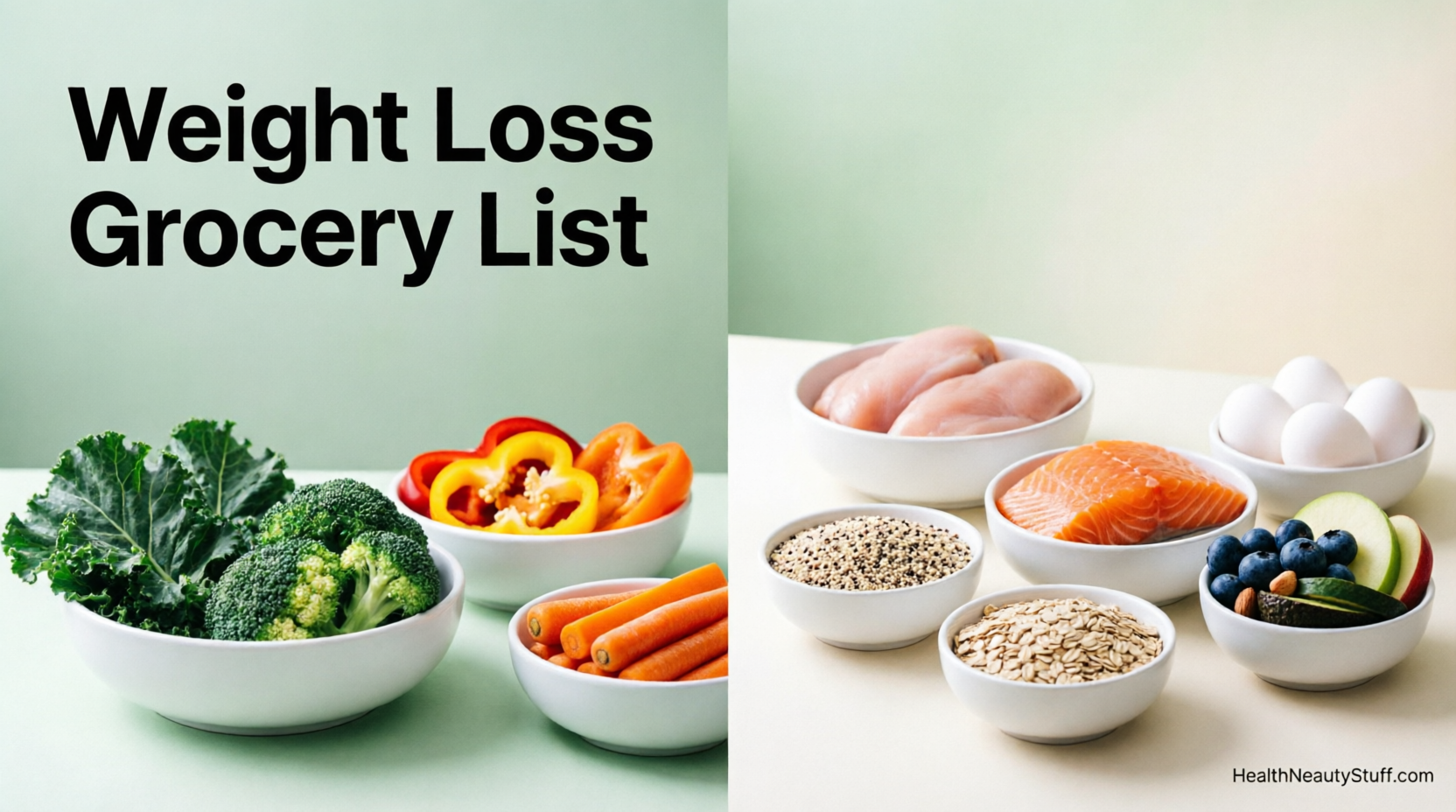
Ever walked into the grocery store with good intentions, only to leave with a cart full of foods you didn’t plan to buy? You’re not alone.
Research shows that 80% of weight loss success happens in the kitchen, and it all starts with what you put in your cart. If you’re looking for a clear, practical grocery list for weight loss that actually works, you’ve come to the right place.
This guide gives you a complete, printable shopping list organized by store section, budget-friendly tips, and simple meal ideas to make healthy eating feel easy.
Let’s turn your next grocery trip into a powerful step toward your goals.
Why Your Grocery List Matters for Weight Loss
What you buy is what you eat. It’s that simple. When your kitchen is stocked with nutrient-dense, satisfying foods, making healthy choices becomes automatic.
On the flip side, keeping tempting snacks and processed foods in the house makes willpower feel like an uphill battle.
Studies show that people who plan meals and shop with a healthy grocery list lose more weight, spend less money, and feel less stressed about food. A well-organized weight loss shopping list helps you:
- Avoid impulse purchases and emotional eating triggers
- Ensure healthy options are always available when hunger strikes
- Save time by reducing decision fatigue at the store
- Stick to your budget by buying only what you need
How to Use This Weight Loss Shopping List Effectively
Having the right foods is only half the battle. Here’s how to make this list work for you:
- Review and customize: Circle items you need; skip what you already have
- Plan ahead: Choose 3-5 dinners and 2-3 breakfasts before you shop
- Check your pantry: Avoid buying duplicates of staples you already own
- Shop after eating: Never go to the store hungry (it leads to impulse buys)
- Stick to the list: If it’s not written down, leave it on the shelf
Pro tip: Use grocery pickup or delivery to avoid in-store temptations. You’ll save time and stay on track.
The Ultimate Grocery List for Weight Loss (Downloadable PDF)

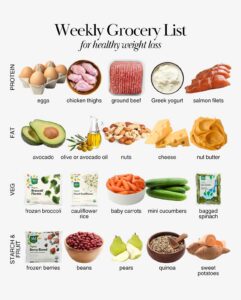
Use this categorized guide to shop efficiently. All foods listed support satiety, nutrition, and sustainable weight management.
🥬 Produce Section (Fresh or Frozen)
| Category | Food Examples | Why It Works |
|---|---|---|
| Leafy Greens | Spinach, kale, arugula, romaine, Swiss chard | Very low in calories (7-33 per cup); high in fiber and nutrients |
| Cruciferous Veggies | Broccoli, cauliflower, Brussels sprouts, cabbage | High fiber promotes fullness; versatile for roasting, steaming, or salads |
| Colorful Veggies | Bell peppers, carrots, zucchini, tomatoes, cucumbers | Add volume to meals with minimal calories; rich in antioxidants |
| Fruits | Berries, apples, pears, citrus, bananas, avocados | Natural sweetness satisfies cravings; fiber supports digestion |
| Frozen Options | Mixed vegetables, cauliflower rice, frozen spinach, berries | Often cheaper; flash-frozen at peak ripeness for maximum nutrition |
🥩 Protein Section
| Category | Food Examples | Why It Works |
|---|---|---|
| Lean Poultry | Chicken breast, turkey breast, ground turkey (93% lean) | High protein (31g per 100g chicken) supports muscle and satiety |
| Fish & Seafood | Salmon, cod, tilapia, shrimp, canned tuna (in water) | Omega-3s in salmon reduce inflammation; seafood is low-calorie and filling |
| Plant Proteins | Eggs, Greek yogurt, cottage cheese, tofu, tempeh, edamame | Greek yogurt has 17g protein per serving; plant proteins add variety |
| Legumes | Black beans, chickpeas, lentils, kidney beans (low-sodium canned) | Lentils provide 18g protein + 16g fiber per cup for lasting fullness |
🌾 Grains & Bread
- Quinoa: Complete protein with 8g protein and 5g fiber per cooked cup
- Brown or wild rice: More fiber than white rice for better blood sugar control
- Oats: Old-fashioned or steel-cut (not instant) for steady energy
- Whole wheat or chickpea pasta: Higher protein and fiber than regular pasta
- 100% whole grain bread: Look for at least 3g fiber per slice, minimal added sugar
🥛 Dairy & Alternatives
- Plain Greek yogurt (0% or 2% fat): High protein, low sugar
- Cottage cheese (low-fat): Versatile for snacks or meals
- Milk: Skim, 1%, or unsweetened almond/soy milk
- Cheese: Feta, parmesan, or part-skim mozzarella (use sparingly for flavor)
- Tip: Choose plain varieties and add your own fruit to control added sugar
🥜 Healthy Fats & Pantry Staples
| Category | Smart Choices | Portion Guidance |
|---|---|---|
| Nuts & Seeds | Almonds, walnuts, chia seeds, pumpkin seeds (unsalted) | 1 oz (small handful) = ~160-200 calories |
| Nut Butters | Natural peanut or almond butter (ingredients: just nuts) | 2 tablespoons max; measure to avoid overdoing it |
| Oils | Extra virgin olive oil, avocado oil | 1 tablespoon = 120 calories; use for cooking, not pouring |
| Pantry Essentials | Low-sodium broth, diced tomatoes, herbs, spices, vinegar, mustard | Stock up once; these add flavor without calories |
🌍 Global Flavors, Weight-Loss Friendly
Healthy eating doesn’t mean bland food. Try chicken tikka with cauliflower rice (Indian), zucchini noodles with marinara and turkey meatballs (Italian), or black bean bowls with lime and cilantro (Latin). These globally inspired meals deliver big flavor while supporting your grocery list for weight loss goals.
🚫 Foods to Avoid (Don’t Buy These!)
- Sugary cereals, granola, and breakfast bars
- White bread, pasta, and rice (choose whole grain instead)
- Processed snacks: chips, cookies, crackers with added fats
- Sugary drinks: soda, juice, sweetened teas, energy drinks
- Frozen meals high in sodium and preservatives
- Processed meats: bacon, sausage, high-sodium deli meats
- “Diet” or “low-fat” packaged foods (often high in added sugar)
Budget-Friendly Weight Loss Shopping Tips
Eating healthy doesn’t have to break the bank. Try these money-saving strategies:
- Buy in bulk: Grains, legumes, nuts, and frozen foods cost less per serving in larger quantities
- Choose store brands: Often 20-30% cheaper than name brands with identical quality
- Shop seasonal produce: In-season fruits and vegetables cost less and taste better
- Frozen is fine: Frozen produce is often cheaper and just as nutritious as fresh
- Plan around sales: Check weekly ads and build meals around discounted proteins
- Buy whole foods: Pre-cut vegetables and pre-cooked grains cost significantly more
- Limit meat: Incorporate plant-based proteins (beans, lentils, eggs) 2-3 times per week
💰 Sample Weekly Budget (Per Person)
Produce: $25-35 | Proteins: $20-30 | Grains & Bread: $10-15 | Dairy: $10-15 | Pantry: $10-20 (occasional)
Total: $75-115/week (varies by location and choices)
Smart Shopping Strategies
- Make a meal plan first: Plan dinners, breakfasts, and snacks before you shop
- Shop the perimeter: Fresh produce, proteins, and dairy are on store edges; processed foods live in center aisles
- Never shop hungry: Eat a meal or snack beforehand to avoid impulse purchases
- Read labels carefully: Check serving size, added sugars, sodium, and fiber content
- Use online ordering: Order ahead for pickup to avoid in-store temptations
- Shop less frequently: 1-2 times per week maximum to reduce temptation and food waste
Meal Prep Tips for Success
- Wash and chop vegetables immediately after shopping for easy snacks and cooking
- Cook grains in batches: Make 3-4 cups quinoa or brown rice for the week
- Pre-portion snacks: Divide nuts, crackers, and other snacks into individual servings
- Hard-boil eggs: Cook 6-12 eggs for quick protein snacks
- Marinate proteins: Prepare chicken, fish, or tofu in advance for quick weeknight cooking
- Make overnight oats: Prepare 3-4 jars for grab-and-go breakfasts
Frequently Asked Questions
Clear answers for your weight loss journey
What should I buy at the grocery store to lose weight?
+
How much should I spend on groceries for weight loss?
+
Can I lose weight just by eating healthy groceries?
+
What foods should I avoid when grocery shopping?
+
How do I stick to my grocery list?
+
Should I buy organic?
+
Is frozen produce as healthy as fresh?
+
Can I eat pasta and still lose weight?
+
Ready to transform your grocery trips?
Download your free printable grocery list for weight loss + meal planner below.
Beyond the List: Building Sustainable Habits
A grocery list for weight loss is a powerful starting point, but lasting change comes from habits, not just handouts. Keep these principles in mind:
- Progress over perfection: One “off” meal won’t undo your progress. Return to your plan at the next meal.
- Listen to your body: Eat when hungry, stop when satisfied. Mindful eating supports long-term success.
- Stay flexible: Life happens. Adjust your list and meals as needed without guilt.
- Celebrate small wins: Every healthy choice adds up. Notice how you feel, not just the scale.
If you have specific health conditions or goals, consider working with a registered dietitian. They can help personalize your healthy grocery list for your unique needs.
Smart grocery shopping is the foundation of successful weight loss. With this grocery list for weight loss as your guide, you can fill your kitchen with foods that nourish your body and support your goals.
Remember: you don’t have to be perfect. Start with one or two changes, build momentum, and trust the process. You’ve got this.
Sources:
Healthline — https://www.healthline.com
EatingWell — https://www.eatingwell.com
Academy of Nutrition and Dietetics — https://www.eatright.org