New articles every week — Expert-backed health & beauty tips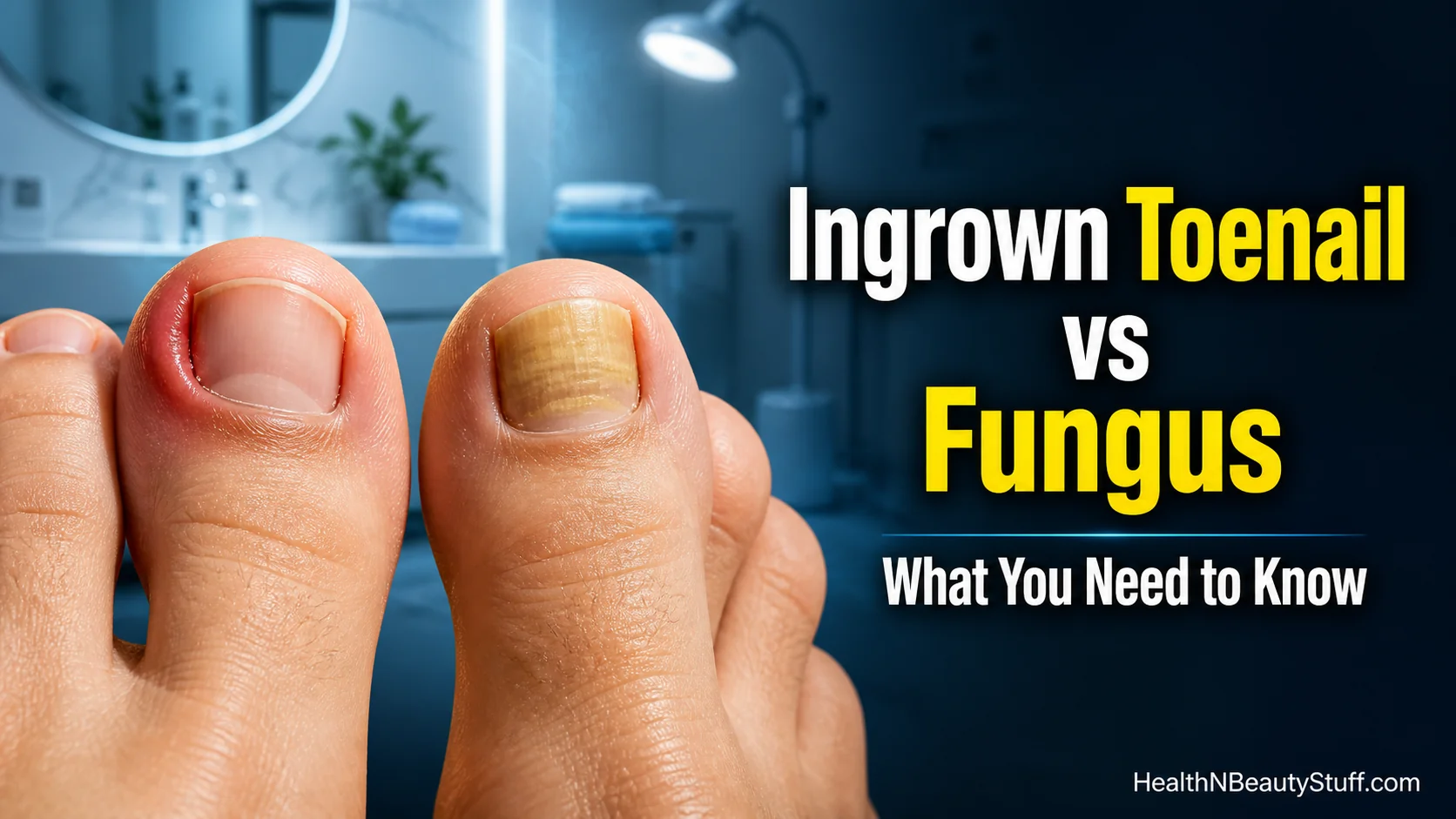
Ingrown Toenail vs Fungus: Which One Is Really Hurting Your Toe?
What if that painful, red toe is not a fungus at all, and you have been treating the wrong thing for weeks?
Maybe your big toe throbs inside your shoe. Maybe the corner looks swollen. Or perhaps the pain is mild, but the nail has turned yellow and thick. It is easy to worry when you cannot tell what is happening.
An ingrown toenail is not a fungus, and toenail fungus is not an ingrown toenail. However, fungus can thicken and distort a nail. That can push its edge into the skin and cause both problems at once.
Quick Verdict: Red, swollen skin that hurts when pressed points toward an ingrown toenail. A yellow, thick, brittle, or crumbly nail points toward fungus. If you have diabetes, poor circulation, severe pain, or spreading redness, skip home treatment and contact a podiatrist.
Ingrown toenail vs toenail fungus: At-a-glance comparison
The location of the problem offers the clearest clue. Ingrown toenails mainly hurt the skin beside the nail. Fungus changes the nail itself, often without sharp pain.
| Comparison point | Ingrown toenail | Toenail fungus |
|---|---|---|
| Medical name | Onychocryptosis | Onychomycosis |
| What happens | The nail edge presses or cuts into nearby skin | Fungus infects the nail |
| Main symptom | Pain at a nail corner or side | Discoloration and thickening |
| Appearance | Red, swollen skin, sometimes with drainage | White, yellow-brown, thick, brittle, or crumbly nail |
| Pain | Sharp, throbbing, or tender under pressure | Often painless, with discomfort possible as the nail thickens |
| Contagious | No | Yes, it can spread between nails or people |
| Common triggers | Rounded trimming, tight shoes, injury, or repeated pressure | Warm damp areas, sweaty shoes, age, athlete’s foot, or diabetes |
| Home care | Warm soaks, roomy shoes, and careful nail care | Dry feet, trimmed nails, clean tools, and antifungal treatment |
| Medical care | Lifting or removing the embedded nail edge | Testing, prescription medicine, or thinning the nail |
| Urgent concern | Fever, red streaks, pus, or spreading redness | An open sore, swelling, or pain in someone with diabetes |
What is an ingrown toenail (onychocryptosis)? Causes and first signs
An ingrown toenail grows or presses into the surrounding skin. The medical name is onychocryptosis. It usually affects a corner or side of the big toenail.
The first clue is often tenderness when your shoe touches the toe. Pressing the skin beside the nail may cause a sharp sting. As irritation grows, that small area can become red and swollen.
Common causes
- Cutting the nail too short or rounding its corners
- Wearing tight shoes with a narrow toe box
- Stubbing or injuring the toe
- Repeated pressure from running, sports, or long walks
- A thick fungal nail pushing into the skin
Early signs
- Pain when pressing one side of the nail
- Redness around a nail corner
- Swelling where the nail meets the skin
- Clear fluid, pus, or extra tissue if irritation worsens
Active teens, runners, and older adults commonly develop ingrown nails. People with diabetes also need to take toe changes seriously because small wounds can become harder to manage.
A mild case may settle with careful home care. A podiatrist should assess a nail that stays painful, appears infected, or keeps growing into the same spot.
What is toenail fungus (onychomycosis)? Causes and first signs
Toenail fungus is an infection that slowly changes the nail’s color, shape, and texture. Its medical name is onychomycosis. It often starts as a white or yellow-brown spot under the nail tip.
Unlike an ingrown nail, fungus may not hurt at first. You might notice it while trimming your nails or putting on sandals. Over time, the nail can become harder to cut and more uneven.
Common risk factors
- Walking barefoot in shared showers or locker rooms
- Keeping feet in damp, sweaty shoes
- Having athlete’s foot
- Getting older, especially beyond age 60
- Living with diabetes or a weakened immune system
Early signs
- A white or yellow-brown spot under the nail tip
- A thickened toenail
- Brittle, ragged, or crumbly edges
- A nail lifting away from the skin below it
- Odor or debris beneath the nail
Toenail fungus can spread. It may move to nearby nails or pass through shared nail tools and contaminated surfaces. Still, exposure does not mean every person will develop an infection.
Several conditions can resemble fungus, including nail injury. A clinician may take a clipping or scraping for lab testing before prescribing treatment.
Can toenail fungus cause an ingrown toenail?
Yes, fungus can make an ingrown toenail more likely. The infection can thicken the nail and alter its shape. A curved or bulky edge may then press into the nail fold.
The overlap usually follows a simple pattern:
- Fungus infects the nail.
- The nail becomes thick or distorted.
- The altered edge presses against the skin.
- The edge irritates or breaks the skin.
- Pain, redness, swelling, or bacterial infection follows.
This explains why toenail fungus vs ingrown toenail is not always an either-or choice. A yellow, thick nail with painful red skin may mean both conditions are present.
How to tell if it’s an ingrown toenail or fungus
Check whether the change begins in the skin or the nail. Painful skin beside the nail suggests an ingrown edge. Slow changes across the nail plate suggest fungus.
Use this symptom checklist
- Pain: An ingrown nail causes sharp or throbbing pain, especially when touched. Fungus is often painless early on.
- Color: An ingrown nail may look normal beside red skin. Fungus may turn the nail white, yellow-brown, or darker.
- Texture: An ingrown nail can stay smooth. Fungus often makes it thick, brittle, ragged, or crumbly.
- Swelling: An ingrown nail causes focused swelling along one edge. Swelling is not a usual early fungus sign.
- Odor: Either problem may smell if infection or debris is present. Odor alone cannot confirm the cause.
- Spread: An ingrown edge usually stays on one side of one toe. Fungus can slowly affect other nails.
- Timing: Ingrown nail pain may appear quickly. Fungal changes often build over weeks or months.
Still wondering, “How do I know if I have an ingrown toenail or fungus?” Try pressing gently beside the nail. Focused skin pain points toward an ingrown nail. Do not press if there is an open sore or severe pain.
A thickened toenail can hide both conditions. If the pattern is unclear, a podiatrist can examine the skin, trim the nail safely, and test for fungus when needed.
Ingrown toenail vs fungus treatment: What works
Ingrown toenail treatment removes pressure from the skin, while toenail fungus treatment targets the infection. Using the wrong approach can delay relief.
Ingrown toenail home care
- Soak the foot in warm water several times during the day.
- Dry the toe well after each soak.
- Wear wide shoes or open footwear that avoids pressure.
- Gently lift a mild nail edge with clean cotton or dental floss if it moves without force.
- Let the nail grow beyond the irritated corner.
Do not dig into the corner or cut a V-shaped notch. Bathroom surgery can tear the skin, leave a sharp nail spike, and worsen the problem.
Medical care for an ingrown nail
A podiatrist may lift the edge and place material beneath it. For a severe or recurring case, partial nail removal, also called partial nail avulsion, may be recommended.
The ingrown section is removed rather than automatically taking the whole nail. In recurring cases, treatment may also stop that narrow section from growing back. Antibiotics may be prescribed when a bacterial infection needs them.
Toenail fungus home care
- Keep feet clean and dry.
- Trim nails straight across with clean tools.
- Wear breathable socks and rotate damp shoes.
- Avoid sharing clippers, files, socks, or footwear.
- Skip cosmetic nail polish if it hides treatment progress.
Over-the-counter products tend to require patience. Creams work well on skin fungus, but reaching an infection through a thick nail is harder. Ask a pharmacist or clinician which product suits your nail.
Medical treatment for toenail fungus
Options can include prescription oral medicine, medicated nail products, and debridement. Debridement means thinning or trimming the thick nail. A clinician may test a sample first because injury and other nail disorders can look similar.
A clearer nail must grow out from the base. Even successful treatment may not produce a normal-looking nail right away because toenails grow slowly.
What about cost and effort?
Home care costs less upfront, but repeated products can add up. Medical costs vary by location, insurance, testing, and the procedure needed. Ask for the visit, lab, medicine, and procedure costs before treatment.
Diagnosis can prevent wasted spending. This matters when a discolored nail is not fungal or when an embedded edge needs physical relief rather than another cream.
Ingrown toenail or fungus: When to see a podiatrist
See a podiatrist for severe pain, infection signs, high-risk health conditions, or symptoms that do not improve. Do not wait several weeks if the toe is getting worse.
Get medical care promptly for these signs
- Red streaks moving from the toe toward the foot
- Fever or unusual warmth
- Pus or heavy drainage
- Redness or swelling that keeps spreading
- Pain that makes walking or wearing shoes difficult
- An open sore or broken skin
- Fungus spreading across several nails
Diabetes, poor circulation, or a weakened immune system changes the advice. Contact a clinician early for any wound, redness, swelling, or drainage. Do not cut an embedded nail yourself.
Worried that you will lose the nail? Most visits do not begin with full nail removal. The podiatrist first checks the skin, nail shape, circulation, and infection risk. Then you can discuss the least invasive suitable option.
For a cost-conscious older adult, ask whether medically necessary foot care is covered by your plan. For a teen, pain that stops running or prevents normal shoes is reason to book a visit.
Spreading bacterial infection is not a choice between fungus cream and a foot soak. It needs medical care, especially when diabetes or poor circulation is involved.
It depends: What if you have both toenail fungus and an ingrown toenail?
When both are present, address the painful ingrown edge first, then treat the fungus. The skin problem is more urgent, while the fungal nail needs longer-term care.
A practical treatment order
- Relieve nail pressure: Use roomy footwear and warm soaks for a mild case. A podiatrist may lift or remove the embedded section.
- Manage bacterial infection: Keep the area clean and follow any prescribed treatment.
- Begin antifungal care: Start the recommended medicine when the clinician says the injured skin is ready.
- Control nail thickness: Safe trimming or debridement can reduce pressure as healthy nail grows.
- Prevent another episode: Cut straight across, avoid tight toe boxes, and let damp shoes dry fully.
The more active problem decides what needs attention first. Sharp skin pain means the ingrown edge takes priority. A painless but thick, yellow toenail still needs fungus care so it does not keep pressing into the skin.
The bottom line: Ingrown toenail or fungus?
Painful skin means think ingrown, while a discolored and thick nail means think fungus. Those two clues carry more weight than odor or appearance alone.
- Red, swollen skin at the nail edge: An ingrown toenail is more likely.
- Yellow, thick, brittle, or crumbling nail: Toenail fungus is more likely.
- Both patterns together: Treat the painful edge first, then address the fungus.
- Diabetes or poor circulation: Seek early medical advice instead of testing home remedies.
Neither condition is a sign of poor character or something to feel ashamed about. Both are common. The key is matching the treatment to the actual cause.
Ingrown Toenail vs Fungus FAQ
The answers below cover the most common concerns about ingrown toenail vs fungus. A clinician should assess severe, spreading, or high-risk symptoms.