New articles every week — Expert-backed health & beauty tips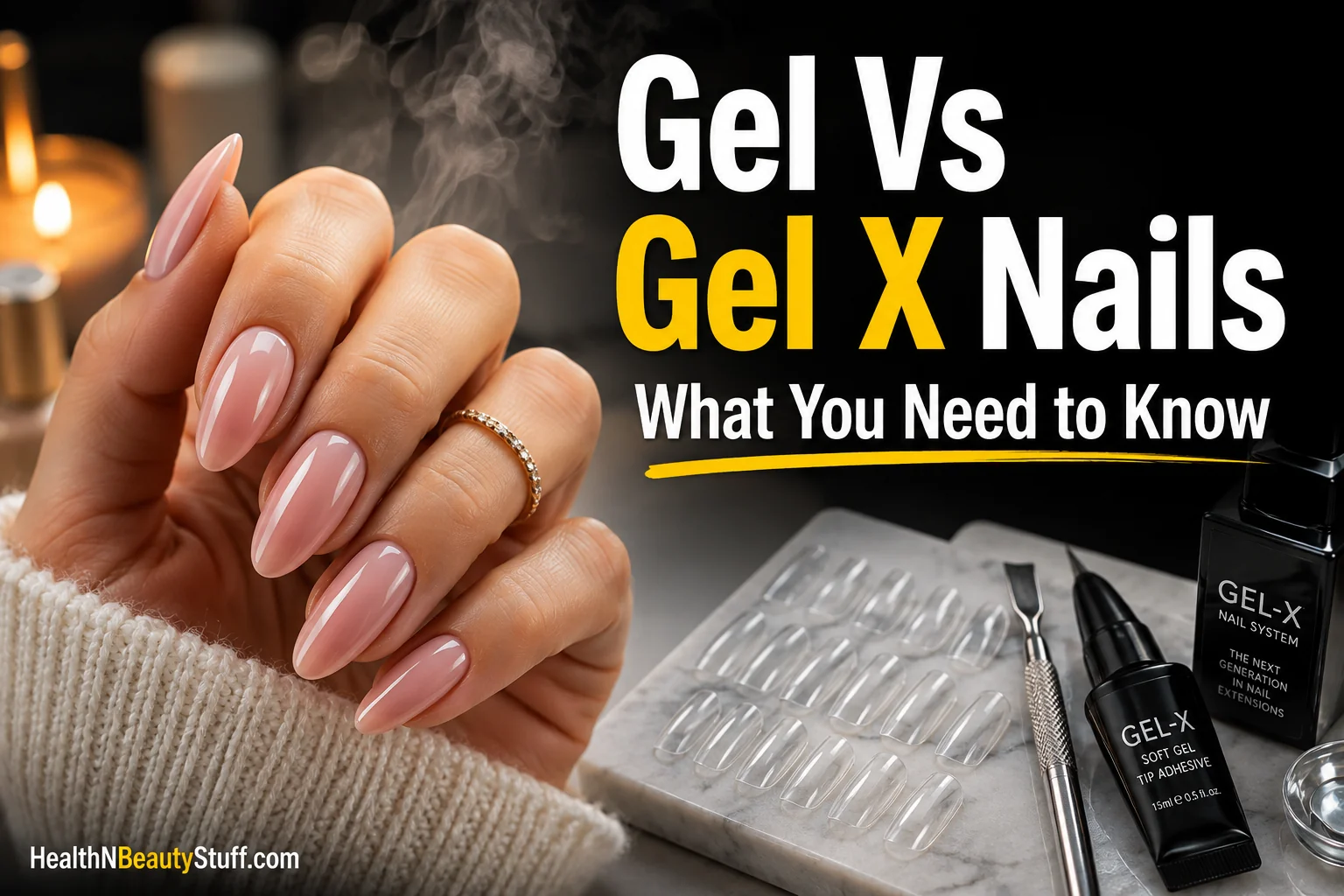
What if the gel service you’re about to book is the wrong one entirely? Gel-X vs gel nails isn’t really a brand battle, it’s a difference between color and structure, and most people pick wrong because the salon menu never explains that.
Gel vs Gel-X Nails: Which One Should You Actually Ask For?
You are staring at the booking screen. One service says “gel manicure.” Another says “Gel-X full set.” The prices differ, but the descriptions barely help. That uncertainty is frustrating, especially when your natural nails are involved.
Here is the key distinction. Gel-X adds length with full-cover soft gel tips. Regular gel polish adds color and shine to your existing nails. In this article, “gel” means soak-off gel polish, not sculpted hard gel.
If you like your natural length, regular gel is usually enough. If you want longer nails without acrylic, Gel-X may fit better. Either service can cause damage when prep or removal is too aggressive.
Quick Verdict: Choose regular gel polish for color, lower cost, and simpler upkeep. Choose Gel-X for immediate length and more shape options. Choose neither if you have an infection, painful or badly thinned nails, broken skin, or signs of a gel allergy.
What is Gel-X? What is a regular gel manicure?
Gel-X is an extension, while a regular gel manicure is a color coating. Both use gel products cured under a UV or LED nail lamp, but they do different jobs.
A regular gel manicure places base coat, color, and top coat over your natural nail plate. Each layer is cured under a lamp. The finished coating adds shine and some surface strength, but it cannot extend past your natural nail.
Gel-X uses a pre-shaped, full-coverage tip made from soft gel. A nail tech attaches the tip with gel adhesive and cures it. The tip covers the whole nail and creates instant length.
Gel-X is a system associated with Aprés Nail, although some salons use the name loosely for similar soft gel tips. Ask which product they use if that matters to you.
“Gel nails” can also mean builder gel or sculpted hard gel. Builder gel is a thicker gel used for structure. Hard gel is a rigid enhancement that usually must be filed off rather than soaked off. When booking, ask exactly what the salon means.
| Feature | Regular gel polish | Gel-X nails |
|---|---|---|
| What it is | Cured color coating over your natural nail | Full-cover soft gel tip that adds length |
| Adds length | No, stays on your natural nail | Yes, instant length in one appointment |
| Best for | Color, shine, and low upkeep | Longer nails and new shapes |
| Maintenance | Soak off or file off color each visit | Fills, rebalancing, or full replacement |
| Removal | Simpler, less product to remove | More involved, more product to reduce |
| Typical cost | Usually lower | Usually higher |
| Damage risk | Lower when prep and removal are gentle | Higher if tips catch, lift, or are pried off |
The #1 question this whole decision comes down to: Do you want length?
If you want longer nails, you need an extension. Regular gel polish cannot create length. If your nails are already long enough, you probably do not need Gel-X.
Think about what you want your nails to do. Are you trying to turn short nails into long almond tips before a party? Gel-X makes sense. Do you only want a glossy red finish on your current nails? Regular gel does that with less product.
People sometimes book Gel-X because they saw a glazed or chrome design online. But those finishes can often go over natural nails. A trendy finish does not require an extension.
- Choose gel polish when your main goal is color and shine.
- Choose Gel-X when your main goal is added length or a new shape.
- Ask about builder gel when you want structure without a full-cover tip.
The second deal-breaker is maintenance. Can you return for fills, repairs, or safe removal? If not, the longer option may not be the better one.
Which is healthier: Gel polish or Gel-X?
Regular gel polish is generally easier on the natural nail. It uses less product and needs less filing. However, technique matters more than marketing labels.
Gel-X covers more surface area and creates leverage beyond the fingertip. It also needs more prep and removal work. That can raise the chance of thinning when a tech files too deeply.
There is a useful exception. Someone who repeatedly bends or breaks short nails may find that Gel-X offers protection. The extension can absorb some everyday knocks, provided it fits correctly and is not overly long.
The real damage happens during prep and removal, not while wearing them
Peeling, prying, and over-filing remove nail layers. The gel product does not need to feel painful to leave damage behind. Trouble often appears when someone rushes removal or picks at a lifted edge.
A skilled tech should remove shine without digging into the nail plate. Product should never touch broken skin. Uncured gel should also be kept off the surrounding skin because acrylate ingredients can trigger allergic contact dermatitis.
Nail thinning from over-filing
A sore, flexible nail may have been filed too thin. Other warning signs include redness, tenderness, or a burning feeling when pressure is applied.
Do not cover a painful nail with another enhancement to hide it. Let a qualified tech or medical professional assess it first.
What “nail rest” actually means
A break does not make nails breathe. Nails are made of keratin, not living lung tissue. Instead, a break stops repeated prep and removal while damaged nail grows forward.
Moisturizing can improve flexibility and comfort, but it cannot glue removed nail layers back on. Healthy replacement must grow from the nail matrix beneath the skin.
Heat spike or burning during curing
Remove your hand from the lamp if curing feels sharply hot. A heat spike can happen as gel hardens, especially with thicker layers or a thin nail plate.
Brief warmth may occur, but intense burning is not something to push through. Tell the nail tech immediately. They can check the product amount, lamp setting, and condition of your nail.
Durability and wear: Does Gel-X last longer than gel polish?
Gel-X often provides more structural wear than gel polish. The full tip resists ordinary polish chipping, but it still grows out, lifts, or breaks.
Typical salon guidance often places gel polish wear near two to three weeks. Gel-X may be worn for several weeks before a fill or rebalance. These are salon ranges, not medical facts. Your growth rate and daily habits matter.
- Typing: Short or medium shapes usually feel easier than very long tips.
- Weightlifting: Long nails can catch around plates, bars, and machine pins.
- Swimming: Repeated water exposure can worsen an edge that already lifts.
- Dishes and cleaners: Gloves reduce prolonged water and chemical contact.
- Picking: Using nails as tools can lift either service.
What “lifting” is and why it ruins both manicures
Lifting means product has separated from the natural nail. You may see a pale pocket near the sidewall or cuticle. Hair can also snag beneath the raised edge.
Do not glue down a lifted Gel-X tip at home. Moisture and debris can become trapped underneath. Have the loose area repaired or removed.
Weak nails: when Gel-X protects, and when it makes things worse
Gel-X may protect a sound but breakable nail from small impacts. It can make things worse when the nail is painfully thin, split, bruised, infected, or too short to hold the tip safely.
More length creates more leverage. A dramatic extension can pull harder on a weak nail if it catches on clothing or gym equipment.
Removal is where nails get wrecked: Gel vs Gel-X aftercare
Both services can damage nails when peeled or drilled off aggressively. Gel-X removal is more involved because there is more product to reduce and soak.
Safe removal routine for regular gel polish
A tech usually files away the shiny topcoat, applies acetone with wraps, and waits for the soak-off product to soften. Loosened gel should slide away with gentle pressure.
Never scrape hard gel from a resistant spot. It may need more soaking. Some products do not soak off, so confirm what was applied before trying home removal.
Safe removal routine for Gel-X
A tech first shortens the extensions and carefully files down much of the soft gel. The remaining soak-off product is wrapped with acetone, softened, and gently removed.
The goal is not to grind down to bare nail at high speed. Professional removal is the safer choice when you cannot identify the product or control the file.
What to do if a nail physically hurts or came off with nail layers attached
Stop filing and avoid adding new gel. Keep the area clean and protect it from further catching. Seek medical care for severe pain, bleeding, swelling, pus, spreading redness, or a dark injury under the nail.
Do not put gel over suspected infection. Covering the area can delay proper assessment.
How long can it take to regrow healthy nails?
Fingernails grow slowly, so visible thinning can take months to move from the cuticle to the free edge. The exact timeline varies by person, health, age, and which part of the nail was injured.
Keep nails short while the weak area grows out. Use cuticle oil or fragrance-free moisturizer, and avoid repeated buffing.
Appointment time, upkeep, and fills: Gel-X is a system, not a one-time coat
A regular gel manicure is a color service, while Gel-X is an enhancement service. Gel-X takes more fitting, shaping, and long-term planning.
The Gel-X maintenance workflow top pages miss
- A full Gel-X set creates the initial length.
- Your natural nail grows, leaving a gap near the cuticle.
- The salon may remove lifting and fill the regrowth with builder gel.
- The structure is rebalanced so the nail does not become front-heavy.
- Eventually, the set is soaked off and replaced.
Not every salon fills Gel-X. Some remove and replace each set. Ask about the salon’s maintenance method before booking. This affects cost, appointment time, and how often your nails face complete removal.
What regular gel maintenance looks like
- The old color is soaked or filed away safely.
- The nail and cuticle area are prepared.
- Base coat, color, and topcoat are applied and cured.
- The next visit follows once growth, chips, or lifting appear.
Cost comparison: What does gel vs Gel-X really cost over time?
Gel-X almost always costs more than regular gel polish. It includes tip sizing, adhesive, shaping, added product, and more detailed maintenance.
Pricing in your city may vary. Nail length, art, removal, repairs, and the tech’s experience can change the total. A low menu price may not include removing your current set.
Cost categories to compare
- Regular gel manicure price
- Initial Gel-X full-set price
- Builder gel fill or rebalance price
- Removal and replacement price
- Charges for length, shape, art, or repairs
- Home removal supplies, if the product is suitable for home removal
Ask for the full maintenance price, not just the first visit. A beautiful set is not a bargain if you cannot afford safe removal later.
Pros and cons: Regular gel manicure
Regular gel is the simpler choice for natural-length color. It suits people who want shine without turning their manicure into an extension system.
Pros
- Usually costs less than Gel-X
- Needs less filing and product
- Provides a natural-looking finish
- Can be soaked off when a soak-off formula is used
- Works well for many colors and nail-art styles
Cons
- Cannot add length
- Offers limited support for very weak nails
- Can chip or lift
- Still causes damage if peeled off
- Requires repeated lamp curing and gel exposure
Pros and cons: Gel-X nails
Gel-X offers instant length and a consistent shape. The tradeoff is higher cost, more upkeep, and a more involved removal process.
Pros
- Adds length in one appointment
- Can make uneven nails look more consistent
- Offers many pre-shaped styles
- Feels lighter than acrylic to many wearers
- Avoids the liquid monomer odor linked with traditional acrylic services
Cons
- Usually costs more than gel polish
- Requires fills, rebalancing, or full replacement
- Can lift if sizing or prep is poor
- Creates damaging leverage when a long tip catches
- Has a higher damage risk if bitten or pried off
- May not suit badly bitten, infected, or injured nails
When the best answer is “neither”: Choose this option instead
Choose neither when your nails or skin need time to heal. Also skip Gel-X if you cannot commit to safe maintenance and removal.
Choose regular lacquer first
Traditional nail polish provides color without gel adhesive or lamp curing. Removal is simpler, and you can change colors at home. It is a useful baseline if you are unsure how your skin reacts to gel products.
Choose builder gel or hard gel instead of Gel-X
Builder gel can strengthen and shape the natural nail without adding a full pre-shaped tip. Hard gel can create rigid structure and extensions, but it usually needs filing for removal.
Neither option is automatically healthier. Product chemistry, nail condition, application, and removal still matter.
Choose acrylic instead of Gel-X
Acrylic may suit someone seeking extreme length or a very rigid feel. It may also fit people who already follow a reliable acrylic maintenance routine. It still requires skilled prep, fills, and removal.
Choose nothing right now
- Skin around the nail is red, itchy, swollen, or blistered.
- The nail is green, yellow, painful, or separating.
- The nail plate is bruised, split, or severely thinned.
- You recently tore off an enhancement.
- You have a known allergy to gel or acrylate products.
Itching and blisters can signal an acrylate allergy. Stop using the product and speak with a dermatologist. Once sensitized, future exposure may cause another reaction.
Who should choose which? Persona map
Your goal and maintenance habits should decide the service. Match yourself to the closest real-life example.
- Short-Nail Sam: She wants length before a party. Gel-X fits if her nails and skin are healthy.
- Color-First Cara: She likes her natural length. Regular gel gives her the shine she wants.
- Thin-Nail Tina: She is recovering from rough acrylic removal. A break, regular polish, or carefully assessed builder overlay may be wiser.
- Hands-On Hannah: She lifts weights, washes dishes, types, and handles kids. She needs practical length and reliable maintenance more than dramatic tips.
- Budget Bella: She wants polished nails with lower ongoing costs. Regular gel wins, while traditional polish costs even less.
Still stuck? Ask yourself two questions. Do I need added length? And can I return when the product lifts or grows out? Those answers matter more than online trends.
Gel vs Gel-X nails: the honest answer
If your goal is added length, Gel-X wins. It creates a full shape immediately and offers more structure than a thin polish layer.
If your goal is color at your natural length, regular gel wins. It usually costs less, uses less product, and requires a simpler removal process.
The healthiest choice is no enhancement. But wanting a manicure is not a failure of nail care. Choose a service that fits your current nail condition, keep uncured gel off your skin, and plan safe removal before the first coat goes on.