New articles every week — Expert-backed health & beauty tips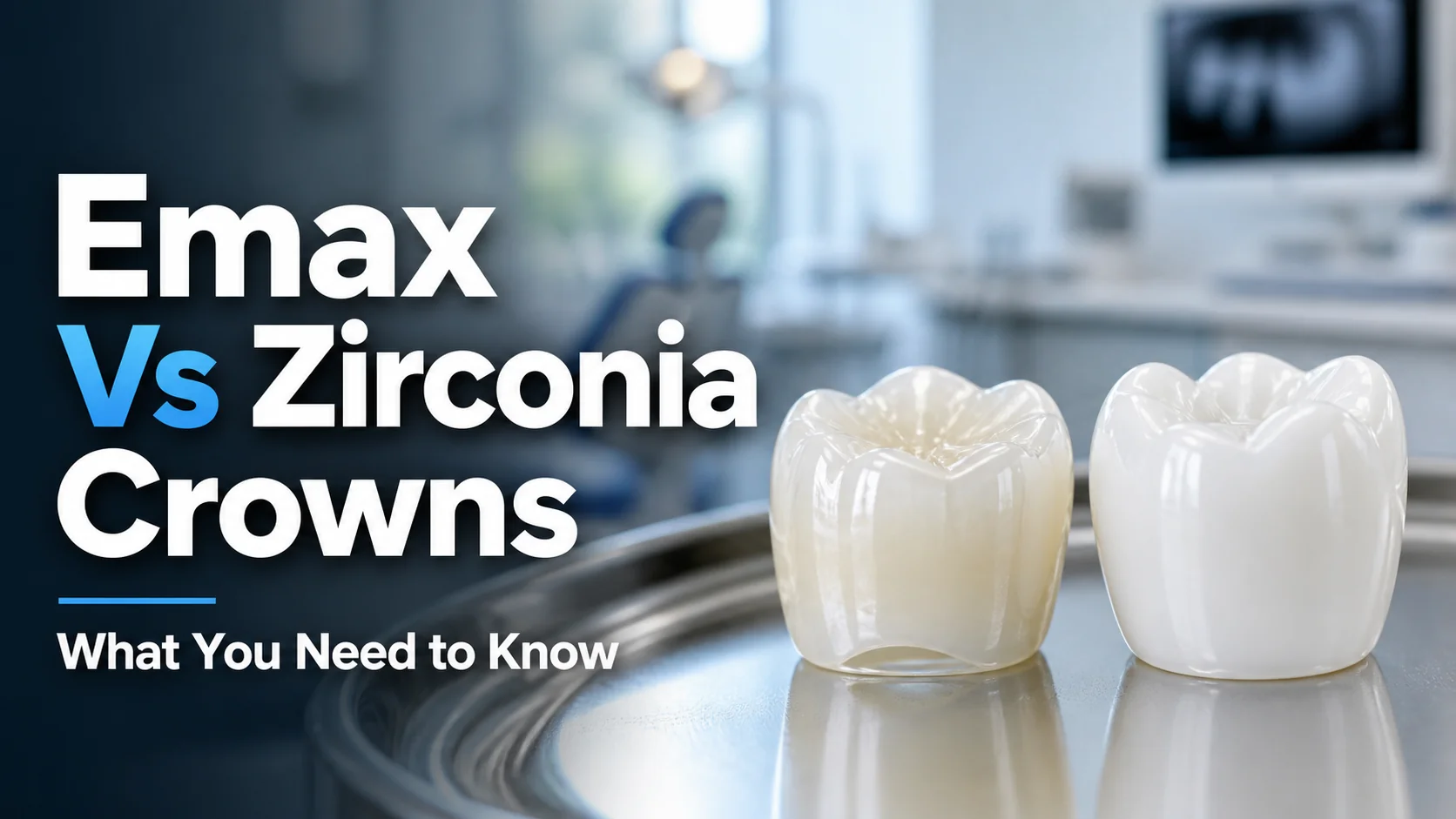
You are sitting in the dental chair, staring at two crown samples while your numb jaw starts to tingle. What if the strongest crown is actually the wrong crown for your smile?
Zirconia is stronger. E.max is more beautiful. The hard part is figuring out which one your tooth actually needs.
When comparing e.max vs zirconia crowns, zirconia wins on strength and durability, while e.max wins on aesthetics and translucency. The right choice depends on tooth location, bite force, and cosmetic priority.
If you need a crown on a back molar or grind your teeth, zirconia is usually safer. If the crown is for a front tooth and looking natural matters most, e.max is the winner.
Quick Verdict: Zirconia wins on strength, chipping resistance, and durability. E.max wins on translucency and natural aesthetics. For molars and grinders, choose zirconia. For front teeth and cosmetic priorities, choose e.max. Both are metal-free, and neither is universally “better.”
Which Crown Is Stronger? Zirconia Wins on Raw Strength
Zirconia has greater flexural strength and better resistance to cracks. E.max remains strong enough for many normal bites, but zirconia handles heavy pressure better.
Flexural strength means how well a material resists bending before it breaks. Teeth do not visibly bend, but every bite puts small forces through a crown.
Zirconia is a dense dental ceramic. A monolithic zirconia crown is carved from one solid piece. That design removes the weaker outer porcelain layer found on some older crowns.
This makes zirconia useful when pressure is the main concern. Dentists often consider it for:
- Back molars that handle hard chewing
- People who clench or grind their teeth
- Teeth with limited room for crown material
- Crowns supported by dental implants
E.max is made from lithium disilicate, a glass-ceramic strengthened with crystals. That may sound fragile, but it is not ordinary glass.
E.max is strong enough for many normal-bite situations. Still, it is less forgiving when exposed to repeated grinding or sharp impact.
Strength is not the whole story, though. Would you choose body armor to replace a highly visible front tooth? That is where appearance changes the decision.
Which Crown Looks More Natural? e.max Wins on Translucency
E.max usually looks more like natural enamel. It allows light to pass through instead of reflecting it as a flat, solid color.
This property is called translucency. It means a material lets some light through without being fully transparent.
Natural teeth are translucent near their edges. They also contain small shifts in shade and brightness. E.max can copy these details well, especially in skilled hands.
One useful comparison calls zirconia the armor and e.max the artist. In practical terms, zirconia focuses on force resistance. E.max gives the dentist and lab more control over light and color.
E.max is often favored for:
- Highly visible front teeth
- Matching one crown to nearby natural teeth
- Patients who want a bright but realistic result
- Cases where the tooth edge shows while smiling
Zirconia does not always look fake. Newer translucent zirconia can look very good. A dental lab can also add porcelain layers to improve color and depth.
However, layered zirconia may chip more easily than a solid monolithic crown. The outer porcelain can fracture even if the zirconia base stays intact.
The color underneath matters too. A more opaque zirconia crown may hide a dark tooth or metal post better. E.max can reveal underlying discoloration unless the dentist plans for it.
Molars vs Front Teeth: Match the Material to the Tooth
E.max is typically preferred for visible front teeth. Zirconia is often recommended for molars and other high-pressure areas.
Your incisors cut food and shape your smile. Your molars crush food under far greater pressure. Asking one crown material to excel at both jobs may not make sense.
For a front tooth, e.max often provides the best balance of strength and beauty. Its light response helps the crown blend with nearby enamel.
For a back molar, zirconia often has the advantage. It resists cracks and chipping when chewing tough food or during nighttime grinding.
Premolars sit between these two zones. Either material may work there. Your dentist should consider visibility, remaining tooth structure, and bite contact.
Location is only the starting point. Ask these questions:
- Does this tooth take the main force of my bite?
- Do I clench or grind while sleeping?
- How much healthy tooth remains?
- Will the crown show when I smile?
- Is the tooth darker than its neighbors?
Your tooth position matters more than brand preference. A beautiful material can fail in the wrong setting. A strong material can also disappoint if it looks too opaque beside natural teeth.
Which Crown Lasts Longer? Zirconia Has the Edge, but Evidence Is Not Equal
Zirconia has the mechanical edge, but no material comes with a guaranteed lifespan. Fit, bite, hygiene, and tooth health can matter just as much.
Zirconia is more resistant to force and surface cracks. That supports its reputation as the more durable choice, especially for grinders and molars.
E.max also performs well in suitable cases. Dentists report good results on both front teeth and molars when the bite is controlled. However, clinician reports are not the same as direct long-term comparisons.
There is no clear universal lifespan winner. The available evidence does not prove that every zirconia crown will outlast every e.max crown.
A crown may fail because of problems unrelated to its ceramic:
- New decay forms at the crown edge
- The cement seal breaks down
- The tooth cracks under the crown
- Gum disease weakens its support
- Grinding overloads the crown or opposing tooth
A well-fitted e.max crown can be a better choice than a poorly fitted zirconia one. Fit and bite adjustment are critical.
If you grind, ask about a night guard. It cannot remove every risk, but it may protect both the crown and the teeth biting against it.
e.max vs Zirconia Crowns: Cost Differences and Insurance Reality
Both are premium all-ceramic crowns. Your actual price depends more on the clinic, lab, tooth condition, and insurance contract than on the material name alone.
Reliable national prices for one specific material are hard to apply to an individual case. Fees vary by location and by the work needed before crown placement.
Your bill may include:
- The crown and dental lab fee
- Examination and X-rays
- A core build-up beneath the crown
- Root canal treatment, if needed
- A temporary crown
- Extra work for damaged gums or deep decay
Many dental plans cover part of a standard crown fee. If your chosen material costs more than the plan allowance, you may pay the difference.
Do not accept a vague total. Request a written estimate showing the procedure codes, insurance estimate, lab fee, and expected balance.
If you are paying out of pocket on a fixed income, ask one direct question: Will the more expensive option improve the outcome for this tooth?
For dental tourism, compare more than the advertised crown price. Ask who makes the crown, what happens if it fails, and whether follow-up care is included.
Crown Procedure and Recovery: Same Steps, Different Sensitivities
Placement feels much the same for both materials. You will notice the numbing, tooth preparation, temporary crown, and possible sensitivity, not whether the final ceramic is e.max or zirconia.
A common crown workflow includes:
- Examining the tooth and taking images
- Completing a root canal if the nerve cannot be saved
- Building a core when much of the tooth is missing
- Shaping the tooth for the crown
- Taking a digital scan or physical impression
- Placing a temporary crown
- Cementing the final crown after checking the fit
Some clinics use digital equipment to make a crown in one visit. Others send the scan to a dental lab. The best method depends on the case and the skill of the team.
A temporary crown may feel strange at first. Mild gum irritation or short-term hot and cold sensitivity can happen after the tooth is prepared.
A temporary can also loosen. If that happens, call the dental office rather than using household glue. The exposed tooth may shift or become sensitive.
Contact your dentist if the bite feels high, pain is worsening, or swelling develops. A crown should not leave you unable to chew comfortably.
If you already had a root canal, ask whether e.max or zirconia better suits your remaining tooth structure. Root canal-treated teeth often need careful support because less natural tooth may remain.
Pros and Cons of e.max Crowns
E.max offers excellent natural beauty, but it gives up some impact resistance compared with zirconia.
Advantages of e.max
- Lifelike translucency that resembles enamel
- Excellent shade matching for front teeth
- Strong performance in suitable normal bites
- Metal-free construction
- Useful for crowns and other cosmetic restorations
Downsides of e.max
- Less resistant to heavy grinding than zirconia
- May chip or fracture under repeated overload
- Can show a dark tooth underneath
- May not suit every molar or implant crown
E.max is not weak. It simply has a different balance of beauty and strength. Case selection makes the difference.
Pros and Cons of Zirconia Crowns
Zirconia provides outstanding strength for demanding areas, but some versions look less natural than e.max.
Advantages of zirconia
- High resistance to cracks and chipping
- Excellent support for molars
- A practical option for heavy bite pressure
- Metal-free construction
- Can hide dark tooth structure well
Downsides of zirconia
- May look more opaque in bright light
- Can be harder to match beside natural front teeth
- Layered versions may have surface porcelain that chips
- Good cosmetic results require careful design and lab work
Could zirconia wear the tooth opposite it? Any rough or poorly polished crown may contribute to wear. A smooth finish and correct bite adjustment matter more than the material label alone.
So Which Is Better? It Depends on Three Things
Start with tooth location. Then consider bite force. Use cosmetic priority as the tie-breaker.
1. Where is the tooth?
Front teeth usually favor e.max. Molars often favor zirconia. Premolars may suit either material.
2. How hard do you bite?
If you clench or grind, zirconia is generally safer. Your dentist should also check whether a night guard is appropriate.
3. How much do cosmetics matter?
If matching natural enamel is the main goal, e.max has the aesthetic edge. If hiding a dark base matters more, zirconia may help.
If you hate dental visits, take a breath. Both procedures feel nearly the same. You will feel the numbness, temporary crown, and short-term sensitivity, not the final material difference.
If money is tight, ask about the lab fee difference and insurance allowance. Do not pay for an upgrade without understanding why it benefits your specific tooth.
If your child is in pain, this adult comparison is not enough. Pediatric treatment depends on age, tooth development, and whether the tooth is primary or permanent. Ask a pediatric dentist before choosing a crown material.
When to Choose Neither: Extraction, Implant, or No Treatment
A crown cannot save every tooth. Severe cracks, deep decay, or poor bone support may make another option more honest.
A crown may not hold if the tooth has:
- A vertical root fracture
- Decay extending too far below the gumline
- Too little sound tooth structure for support
- Advanced bone loss or severe mobility
- An infection that cannot be predictably treated
An extraction followed by an implant may be considered when the tooth cannot be restored. This is not automatically better. It requires its own surgery, healing, cost, and risk review.
Doing nothing can also be an option when a tooth is stable and low risk. Yet a cracked tooth may worsen without warning. Ask what could happen if treatment is delayed.
Gold is another strong option for molars if metal-free treatment is not a priority. It is durable and can work well in demanding bites, though its color is obvious.
Before accepting a crown, ask your dentist to show you the crack, decay, or missing structure. A second opinion is reasonable when the tooth’s outlook is unclear.
The result is a close call. It depends on tooth location, bite force, cosmetic priority, and clinical condition.
Choose zirconia when durability and heavy-force resistance lead the decision. Choose e.max when a natural front-tooth appearance matters most.
Neither choice can overcome poor fit, an untreated bite problem, or a tooth that cannot support a crown. You’re not choosing a brand; you’re choosing a material that fits your teeth, your bite, and your goals.
Frequently Asked Questions
Are e.max crowns stronger than zirconia?
No. Zirconia has higher flexural strength and generally resists chipping better. E.max is still strong enough for many normal-bite cases.
Which crown is best for a front tooth?
E.max is often best because it is more translucent and lifelike. Zirconia may be considered when the tooth is dark or bite pressure is unusually high.
Which crown is best for a molar?
Zirconia is commonly preferred because it handles heavy chewing pressure well. E.max may still work when there is enough space and the bite is controlled.
Do zirconia crowns look fake?
Not necessarily. Modern zirconia can look natural, but it may appear more opaque than e.max. This difference is most noticeable on visible front teeth.
How can I tell if a crown is zirconia or e.max?
You usually cannot confirm the material by looking at it. Check your treatment record, dental lab certificate, or invoice. Your dentist can also contact the lab.
Which crown lasts longer, zirconia or e.max?
Zirconia appears more mechanically durable, but there is no guaranteed lifespan difference for every patient. Fit, hygiene, grinding, and tooth health strongly affect survival.
What is the healthiest type of crown?
There is no single healthiest crown. A precise fit, healthy gums, and a material suited to your bite matter most. Both e.max and zirconia are biocompatible, metal-free options.