New articles every week — Expert-backed health & beauty tips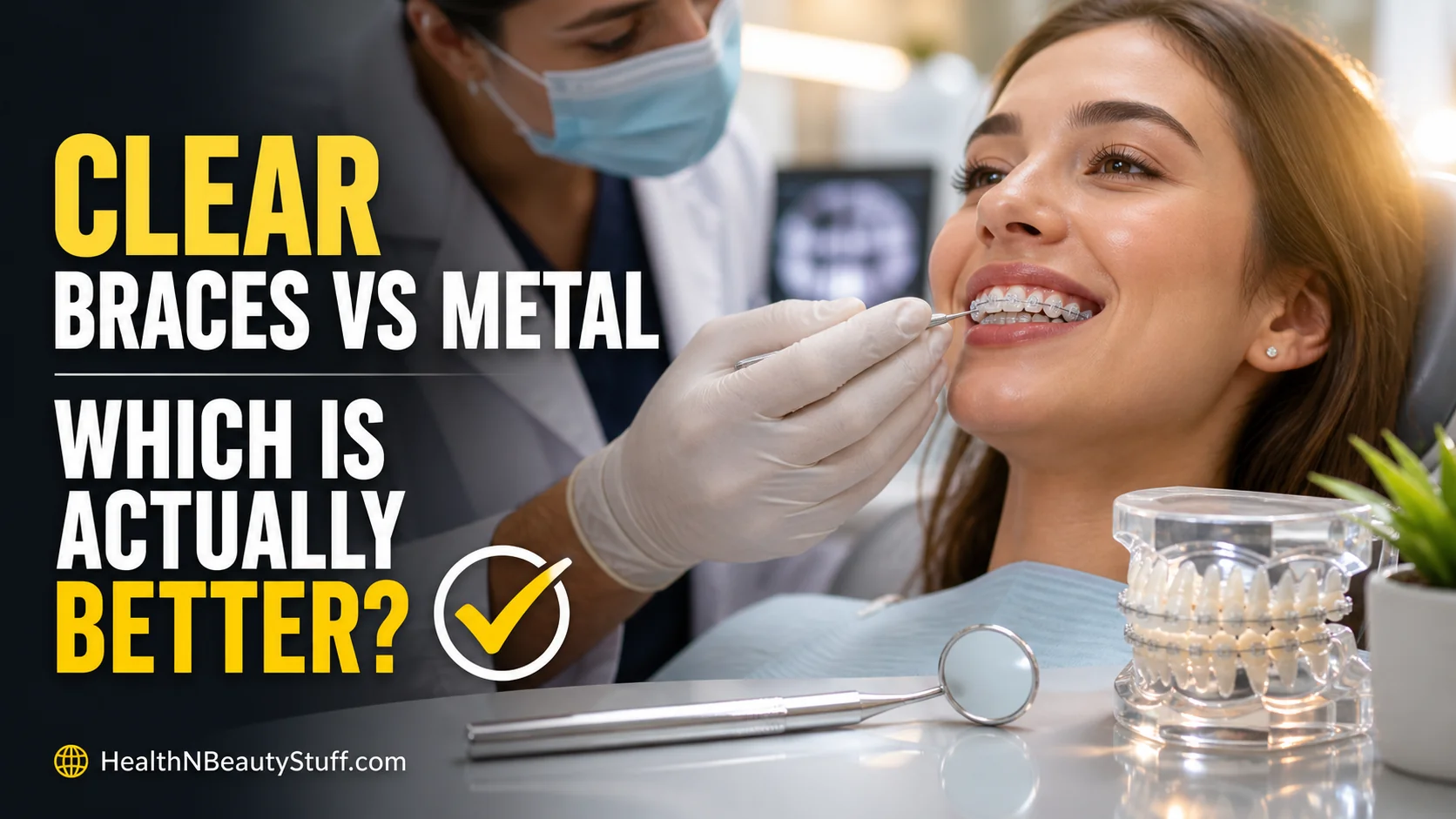
You just left the orthodontist with two options: clear braces that hide your treatment, or metal braces that save you money. Which one actually straightens teeth better?
The honest answer surprises most people. Both systems use the same basic setup: brackets bonded to your teeth, connected by a metal archwire. The only real difference is what the brackets are made of. That's it.
Quick Verdict
For most people, metal braces are the better choice. They cost less, break less often, and handle complex cases more reliably.
Clear braces are a premium aesthetic upgrade, not a clinical one. Choose them only if you strongly want to hide your braces and you're willing to pay $500-$1,500 more and maintain them carefully.
Metal wins on value and durability. Clear wins on looks. Everything else is nuance worth understanding before you spend thousands of dollars.
At a Glance: Clear Braces vs Metal Braces
| Feature | Metal Braces | Clear (Ceramic) Braces |
|---|---|---|
| Bracket material | Stainless steel | Polycrystalline alumina (tooth-colored) |
| Cost (no insurance) | $3,000–$7,000 | $4,000–$8,500 |
| Durability | Very durable | More delicate, can chip |
| Best for | Most cases, especially complex | Mild-to-moderate + aesthetic priority |
What's the Actual Difference? (It's Only the Bracket)
Here's what no one tells you clearly: clear braces and metal braces are the same treatment. Same archwire. Same bonding process. Same adjustment schedule.
The bracket is the only thing that changes. Metal braces use stainless steel brackets. Clear braces use tooth-colored brackets made from polycrystalline alumina, a ceramic-like material that blends with your tooth color.
That wire connecting the brackets? It's still metal in both systems. So clear braces are less noticeable, not invisible. Up close, you can absolutely see them.
Both systems work by applying steady pressure to shift teeth into alignment. Neither system is clinically superior to the other. The bracket material does not change how your teeth move.
Clear Braces vs Metal: Cost Comparison
Bottom line upfront: metal braces cost $3,000–$7,000 without insurance. Clear (ceramic) braces run $4,000–$8,500. You're paying roughly $500–$1,500 more for the aesthetic upgrade.
Why the price difference? A few reasons:
- Ceramic brackets cost more to manufacture than steel
- They require more careful placement to avoid breakage
- More delicate materials mean more chairtime if something chips
- Replacement brackets cost more if one breaks mid-treatment
Insurance can help with both options. Most orthodontic coverage applies a lifetime maximum, typically $1,000–$2,500. A solid PPO plan can roughly halve your out-of-pocket cost. But that maximum applies whether you pick metal or clear.
The price gap between the two stays the same regardless of your insurance situation. You're still paying more for clear. Make sure that aesthetic benefit is worth it for your budget.
Which Is More Visible? (The Aesthetic Question)
Clear braces are less noticeable, not invisible. That distinction matters before you pay more for discretion.
From across a room or in a profile photo, ceramic brackets blend in well. Most people won't clock them immediately. But in conversation, up close, or in direct lighting, you'll see the metal wire and the bracket outline.
Metal braces are obviously visible in nearly any lighting. They're the classic look most people picture when they think "braces."
Who tends to care most about this?
- Adults in professional or public-facing roles
- Teens with social anxiety about their appearance
- Anyone with an upcoming event (wedding, job interview) mid-treatment
- People who simply hate the idea of visible hardware on their teeth
If appearance is a low priority for you, metal is the easier call. If hiding your treatment matters deeply, clear is the right upgrade.
Treatment Time: Does One Work Faster?
For most cases, treatment time is similar. The American Association of Orthodontists (AAO) is clear on this: duration depends on case complexity and patient compliance, not the bracket material.
That said, metal does have a small edge in complex situations. Metal brackets create less friction, meaning the archwire can exert force more efficiently. They also break less often. A broken bracket can set you back weeks if you're waiting for an emergency appointment.
General ranges:
- Metal braces: 12–30 months depending on complexity
- Clear braces: 18–30 months, similar for routine cases
The overlap is significant. For mild crowding or minor spacing issues, you're unlikely to notice a meaningful time difference. For severe bite problems or heavy tooth movement, metal tends to perform more consistently.
The bigger variable is you. Keeping appointments, avoiding hard foods, and following your orthodontist's instructions matters far more than your bracket choice.
Durability and Maintenance: The Staining Problem
Metal braces are tougher. Ceramic brackets can chip or crack, especially under force. If you play contact sports, bite into hard foods frequently, or are prone to grinding your teeth, metal is the more reliable option.
The bigger issue with clear braces is staining. The ceramic material is porous. Certain foods and drinks can discolor the brackets over time, turning them from tooth-colored to yellowish or brown.
Common stain culprits:
- Coffee and tea
- Turmeric and curry
- Red wine
- Tomato-based sauces
- Smoking or tobacco use
To keep clear brackets looking clean, you need to brush after every meal and rinse immediately after drinking anything dark. That's a real commitment for two-plus years.
Metal brackets don't stain. They look exactly the same on day one as day 600. Less maintenance burden, full stop.
Which Works for Complex Cases?
Metal handles severe cases more reliably. If your treatment involves significant crowding, large bite corrections, rotations, or multiple tooth movements happening at once, your orthodontist will likely recommend metal.
Clear braces work well for mild-to-moderate cases: minor crowding, small gaps, slight misalignment. Many orthodontists offer clear brackets only on the upper front teeth for exactly this reason (the most visible area, lower complexity).
For truly complex orthodontic work, ceramic brackets can add friction and risk. More friction means the wire has to work harder. That can slow tooth movement and require more frequent adjustments.
Ask your orthodontist directly: "Would my case work equally well with clear brackets?" Their honest answer will tell you more than any comparison article can.