New articles every week — Expert-backed health & beauty tips
You look in the mirror and notice something about your eyes. Maybe the outer corners seem to slope downward, or your eyes appear tired even when you feel rested.
If you have been researching negative canthal tilt, you likely want to understand what it means, whether it matters, and what options exist if you want to change it.
The truth is, eye shape varies widely across people and cultures, and most variations are completely normal. But if negative canthal tilt affects your confidence or causes functional concerns, knowing your options empowers you to make informed choices.
Let me walk you through the anatomy, the aesthetics, and the practical steps you can take, whether you choose to embrace your natural features or explore enhancement options.
Negative Canthal Tilt: The Short Answer
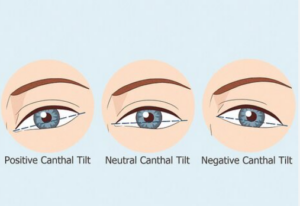
Negative canthal tilt describes an eye shape where the outer corner sits slightly lower than the inner corner when viewed straight ahead.
This is a normal anatomical variation affecting approximately 15 to 20% of people. While often discussed in aesthetic contexts, negative canthal tilt is rarely a medical concern. Most people with this feature have perfectly healthy eyes and vision.
However, if you feel self-conscious or experience functional issues like dry eye, understanding your options can help you decide whether to pursue enhancement or simply embrace your unique look.
Understanding Canthal Tilt: Anatomy Basics
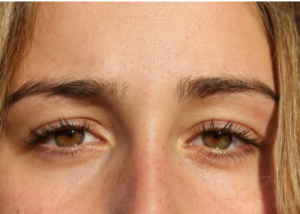
To understand negative canthal tilt, it helps to know the basic anatomy of the eye area.
What Is Canthal Tilt and How Is It Measured?
Canthal tilt refers to the angle formed by an imaginary line connecting the inner corner (medial canthus) and outer corner (lateral canthus) of your eye.
When this line angles upward from inner to outer corner, it is called positive tilt. When it angles downward, it is negative tilt.
When the corners sit at roughly the same height, it is neutral tilt. This measurement is typically assessed in degrees during facial analysis.
Positive, Neutral, and Negative Tilt Explained
Each tilt type creates a distinct eye appearance:
- Positive tilt: Outer corner higher than inner corner; often described as “upturned” or “almond-shaped”
- Neutral tilt: Inner and outer corners at similar height; balanced, symmetrical appearance
- Negative tilt: Outer corner lower than inner corner; may create a “downturned” or “sad” appearance
All three variations are normal and found across diverse populations worldwide.
Why Eye Shape Varies: Genetics and Aging
Your orbital anatomy is largely determined by genetics. Bone structure, soft tissue distribution, and ligament attachments all influence your natural eye shape.
Additionally, aging can alter canthal tilt over time. As skin loses elasticity and supporting tissues weaken, the outer eye corner may gradually descend, creating or worsening negative tilt. This is a normal part of aging, not a defect.
Is Negative Canthal Tilt a Problem?
For most people, negative canthal tilt is simply a facial feature, like eye color or nose shape. However, perceptions and experiences vary.
Aesthetic Perceptions and Cultural Trends
In some aesthetic circles, positive canthal tilt is associated with youth, alertness, and certain beauty ideals popularized in media. This has led some people to view negative tilt as less desirable.
However, beauty standards differ widely across cultures and eras. Many celebrated faces feature negative or neutral tilt, and what matters most is how you feel in your own skin.
Functional Concerns: Dry Eye and Eye Health
In rare cases, significant negative canthal tilt may contribute to functional issues. If the lower eyelid does not support the eye properly, tears may not distribute evenly, potentially leading to dry eye symptoms.
If you experience persistent dryness, irritation, or excessive tearing, consult an ophthalmologist to rule out underlying conditions.
Psychological Impact and Self-Confidence
If negative canthal tilt affects your self-image or confidence, your feelings are valid. Aesthetic concerns can impact quality of life, and seeking change for personal satisfaction is a reasonable choice.
The key is pursuing options that align with realistic expectations and your overall well-being.
Non-Surgical Options to Enhance Eye Appearance
If you want to soften the appearance of negative canthal tilt without surgery, several approaches may help.
Makeup Techniques for Visual Correction
Strategic makeup can create the illusion of lifted eyes:
- Apply eyeliner with a slight upward flick at the outer corner
- Use eyeshadow to create depth above the outer eye and brightness below
- Curl lashes and apply mascara focusing on the outer upper lashes
- Shape eyebrows with a gentle arch to draw attention upward
- Highlight the inner corner to balance the outer descent visually
These techniques are temporary but effective for daily confidence boosts.
Dermal Fillers and Botox Approaches
Some practitioners use injectables to subtly influence eye appearance:
| Treatment | How It Works | Limitations |
|---|---|---|
| Dermal fillers | Add volume to support lower lid or temple area | Temporary results; requires skilled injector near eyes |
| Botox | Relax muscles that pull outer eye downward | Subtle effect; results last 3 to 4 months |
| Thread lifts | Temporary sutures lift outer eye area | Short-term results; not suitable for everyone |
These options offer temporary enhancement with minimal downtime but require maintenance and carry risks if performed by inexperienced providers.
Skincare and Lifestyle Support
Healthy skin and tissues support overall eye appearance:
- Use sunscreen daily to protect delicate eye area skin from aging
- Apply gentle eye creams with peptides or retinol to support skin elasticity
- Stay hydrated and maintain a balanced diet rich in antioxidants
- Avoid rubbing your eyes, which can weaken supporting tissues over time
- Manage allergies to reduce puffiness that may accentuate tilt
These habits support long-term eye health regardless of your chosen aesthetic path.
Surgical Corrections: Canthoplasty and Canthopexy
For those seeking permanent change, surgical options exist to alter canthal tilt.
What Is Canthoplasty and How Does It Work?
Canthoplasty is a surgical procedure that repositions and tightens the lateral canthus (outer eye corner). The surgeon makes a small incision, adjusts the supporting ligaments and tissues, and secures the outer corner at a higher position.
This can create a more uplifted eye shape and address functional issues like eyelid laxity. Results are permanent, though natural aging continues.
What Is Canthopexy and When Is It Used?
Canthopexy is a less invasive technique that supports and lifts the lateral canthus without full reconstruction.
It is often used when mild elevation is needed or when combined with other procedures like blepharoplasty. Recovery is typically faster than canthoplasty, but results may be more subtle.
Recovery, Risks, and Realistic Expectations
Both procedures require careful consideration:
- Recovery typically takes 1 to 2 weeks for initial healing, with full results visible after several months
- Potential risks include asymmetry, scarring, dry eye, or changes in eye shape that do not meet expectations
- Realistic goals focus on subtle enhancement, not dramatic transformation
- Choose a board-certified oculoplastic or facial plastic surgeon with specific experience in canthal procedures
Surgery is a personal decision that should align with your health, goals, and informed understanding of outcomes.
Choosing the Right Specialist for Your Goals
If you are considering professional consultation, look for:
- Board certification in oculoplastic surgery, facial plastic surgery, or ophthalmology
- Portfolio of before-and-after photos showing canthal tilt corrections
- Willingness to discuss both surgical and non-surgical options openly
- Clear communication about risks, recovery, and realistic outcomes
- Comfort level: you should feel heard and respected throughout the process
A great specialist helps you clarify your goals and choose the path that best serves your well-being.
Tracking Your Concerns to Share with Your Doctor
Preparing for a consultation helps you make the most of your time. Note:
- What specifically bothers you about your eye appearance
- Any functional symptoms like dryness, irritation, or vision changes
- Photos showing your concerns from different angles and lighting
- Your goals: subtle enhancement, functional improvement, or both
- Questions about procedures, recovery, costs, and alternatives
Frequently Asked Questions
▸
What causes negative canthal tilt?
Negative canthal tilt is primarily determined by genetics and orbital bone structure. Aging can also contribute as skin elasticity decreases and supporting tissues weaken over time. It is a normal anatomical variation, not a defect or disease.
▸
Is negative canthal tilt unattractive?
Beauty is subjective and varies across cultures and individuals. While some aesthetic trends favor positive canthal tilt, many people with negative tilt are considered attractive. What matters most is how you feel about your appearance and whether it aligns with your personal confidence and well-being.
▸
Can negative canthal tilt be fixed naturally?
Makeup techniques, skincare, and lifestyle habits can enhance the appearance of eyes but cannot permanently change canthal tilt. Non-surgical injectables offer temporary subtle improvements. Permanent alteration requires surgical procedures like canthoplasty or canthopexy performed by a qualified specialist.
▸
Does negative canthal tilt affect vision?
In most cases, negative canthal tilt does not affect vision. However, if eyelid position interferes with tear distribution or eye protection, it may contribute to dry eye symptoms. If you experience persistent eye discomfort, consult an ophthalmologist to evaluate functional concerns.
Final Thoughts: Embracing Your Unique Features
Negative canthal tilt is one of many natural variations that make faces interesting and human. While aesthetic trends come and go, your worth is not defined by a single feature.
If you choose to explore enhancement, do so from a place of self-care, not self-criticism. If you choose to embrace your natural look, know that confidence and kindness shine far brighter than any anatomical detail.
However you move forward, may you feel empowered, informed, and at peace with the face that carries your story.
Sources:
● American Society of Ophthalmic Plastic and Reconstructive Surgery — Canthal Tilt and Eyelid Surgery Guidelines
● Aesthetic Surgery Journal — Outcomes and Patient Satisfaction in Canthoplasty Procedures
● American Academy of Ophthalmology — Eyelid Anatomy and Functional Considerations