New articles every week — Expert-backed health & beauty tips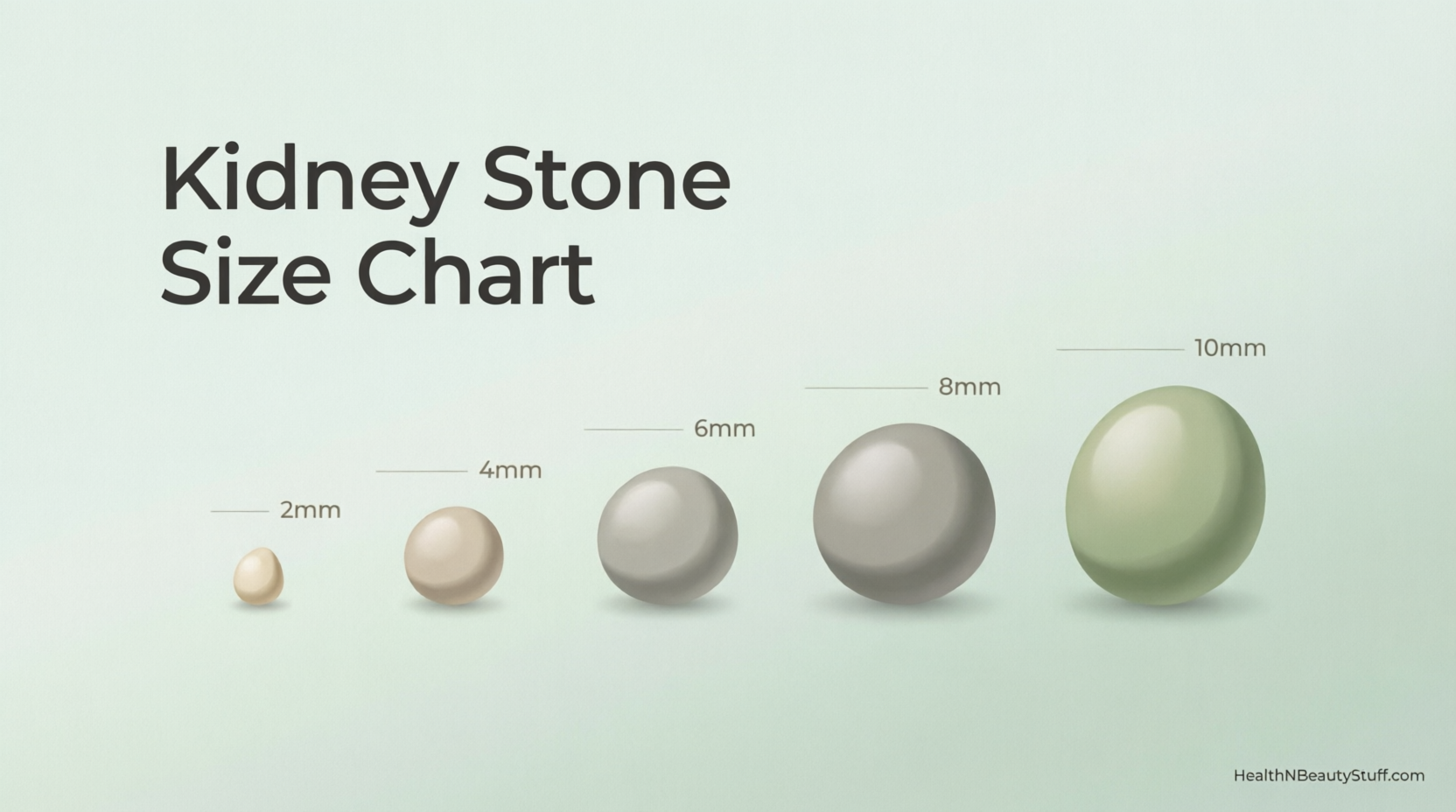
Looking at your diagnostic report, you see a number that stops your heart: 4mm, 6mm, maybe even 8mm. Your immediate question isn’t about medical terminology or stone composition. You want to know one thing: how big is this kidney stone, and can it pass on its own?
Kidney stones affect nearly 1 in 10 people, and the size of your stone largely determines your treatment path. A tiny 2mm stone might slip away unnoticed, while a 10mm stone could mean surgery. Understanding the kidney stone size chart helps you make informed decisions about your care and sets realistic expectations for recovery.
This guide breaks down exactly what different stone sizes mean, how long passage takes, and when medical intervention becomes necessary. Whether you’re dealing with a 4mm kidney stone or something larger, you’ll find clear, actionable information to navigate this painful journey.
Quick Answer: Can Your Kidney Stone Pass Naturally?
Before diving into details, here’s what you need to know about kidney stone sizes and passage rates:
| Stone Size | Pass Rate | Average Time | Typical Treatment |
|---|---|---|---|
| 2mm kidney stone | 98% | 8-12 days | Hydration, pain management |
| 4mm kidney stone | 80-90% | 12-31 days | Conservative care, medications |
| 5mm kidney stone | 50-60% | 31-45 days | Medical expulsive therapy |
| 6mm stone size | 20-40% | 45+ days | ESWL or ureteroscopy |
| 8mm stone size | <20% | Unlikely to pass | Surgical intervention |
| 10 mm kidney stone | <10% | Won’t pass naturally | PCNL or ureteroscopy |
Understanding Kidney Stone Measurements
Why Millimeters (mm) Matter More Than Centimeters
When your urologist discusses stone size in mm, they’re using the most precise measurement for these small but mighty troublemakers.
Most kidney stones range from 1mm to 20mm, making millimeters the practical unit. A kidney stone size chart in mm gives you the granularity needed to understand your specific situation.
Think of it this way: the difference between a 4mm and 6mm stone might seem small on paper, but it dramatically changes your treatment options.
That’s why doctors rarely use a kidney stone size chart in cm unless dealing with exceptionally large stones.
How Doctors Measure Stone Size
Medical professionals use several imaging techniques to determine kidney stone sizes:
- CT Scan (Non-contrast): The gold standard for measuring stone size accurately. It shows exact dimensions and location.
- Ultrasound: Safe for pregnant patients but less precise for 4mm kidney stone actual size measurements.
- X-ray (KUB): Quick and accessible, though it can miss smaller stones or those that don’t show up well on X-ray.
Complete Kidney Stone Size Chart in MM
Small Stones (<4 mm): High Natural Passage Rate
If you’re wondering how big is a 2mm kidney stone or how big is a 3mm kidney stone, you’re in luck. These tiny stones have excellent passage rates.
2mm kidney stone actual size equals roughly a grain of sand. About 98% of these pass spontaneously within 20 weeks, usually much sooner.
The 4mm kidney stone size represents the upper limit of what we consider “small,” and even at this size, you still have an 80-90% chance of natural passage.
Management typically involves:
- Drinking 2.5-3 liters of water daily
- Pain control with NSAIDs
- Light physical activity to encourage movement
- Patience and monitoring
Medium Stones (4–6 mm): The “Gray Zone”
This is where decisions get interesting. A 4.6 mm kidney stone or 4.7 mm kidney stone sits right on the edge. The 5mm kidney stone size represents a critical threshold where natural passage becomes less certain.
How big is 4mm kidney stone in practical terms? About the size of a sesame seed. While it can pass naturally, you might need medical help. Doctors often prescribe alpha-blockers like tamsulosin to relax the ureter and improve your chances.
With a 5mm stone size, you’re looking at:
- 50-60% chance of natural passage
- Average passage time of 31-45 days
- Medical expulsive therapy strongly recommended
- Close monitoring for complications
Large Stones (6–10 mm): Low Spontaneous Passage
When you’re dealing with a 6mm stone size or 7 mm stone size, the odds shift dramatically. Only 20-40% of 6mm kidney stone cases pass without intervention.
How big is 7mm kidney stone? Think small pea or pencil eraser. At this size, the stone often gets stuck in the ureter’s narrow passages. An 8mm stone size or 8 mm stone size has less than 20% chance of natural passage.
Treatment options include:
- ESWL (Extracorporeal Shock Wave Lithotripsy): Uses sound waves to break stones into passable fragments
- Ureteroscopy: A scope removes or breaks up the stone
- Success rates of 60-94% depending on method
Very Large Stones (>10 mm / 1 cm+)
A 10 mm kidney stone or 10mm stone size almost never passes naturally. When you see measurements like 14mm stone size, surgical intervention becomes necessary.
These stones require:
- PCNL (Percutaneous Nephrolithotomy): Minimally invasive surgery through the back
- RIRS (Retrograde Intrarenal Surgery): Flexible scope through the urinary tract
- Open surgery (rare, reserved for complex cases)
Kidney Stone Size vs. Location: Why Both Matter
Ureteral Bottlenecks: Where Stones Get Stuck
Size isn’t everything. Location matters tremendously. Your ureter has three natural narrow points where stones commonly lodge:
- Ureteropelvic Junction: Where kidney meets ureter (2-3mm diameter)
- Mid-ureter: Where it crosses pelvic blood vessels
- Ureterovesical Junction: Where ureter enters bladder (3-4mm diameter)
A 4mm kidney stone might pass easily from the kidney but get stuck at the ureterovesical junction. This explains why some people with smaller stones experience more pain than those with larger ones.
Location-Based Passage Probability
Same Size, Different Outcomes
- 4mm stone in kidney: 90%+ passage rate
- 4mm stone in upper ureter: 70% passage rate
- 4mm stone in lower ureter: 95% passage rate (closest to exit)
- 6mm stone in kidney: May not need immediate treatment if asymptomatic
- 6mm stone in ureter: Likely requires intervention
Visual Size Guide: What Does Your Stone Actually Look Like?
One of the biggest challenges patients face is visualizing stone size in mm. Here’s how different measurements compare to everyday objects:
- 2mm kidney stone: Grain of sand or poppy seed
- 3mm kidney stone: Small sesame seed
- 4mm kidney stone: Sesame seed or pencil tip (0.16 inches)
- 5mm kidney stone: Pencil eraser tip or small grain of rice
- 6mm stone size: Small pea or standard pencil eraser
- 7mm kidney stone: Large pea
- 8mm stone size: Small blueberry or coffee bean
- 10 mm stone size: Blueberry or large coffee bean
- 14mm stone size: Large grape or small marble
- 20mm stone: Golf ball or large marble
Understanding 4mm kidney stone actual size or how big is a 4 mm kidney stone becomes much clearer with these comparisons. A 4mm stone size might seem tiny, but remember: your ureter is only 3-4mm wide at its narrowest points.
Treatment Options by Stone Size & Type
Conservative Management (Stones <5mm)
For normal kidney stone size in mm under 5mm, doctors typically recommend watchful waiting with supportive care:
Hydration Strategy:
- Target 2.5-3 liters of water daily
- Clear or light yellow urine indicates good hydration
- Spread intake throughout the day
Medications:
- Tamsulosin (Flomax): Relaxes ureter muscles, improving passage rates for 4-6mm stones
- NSAIDs: Control pain and reduce inflammation
- Antiemetics: Manage nausea if present
Minimally Invasive Procedures (5-20mm)
When conservative management fails or stones are too large, these options become necessary:
ESWL (Extracorporeal Shock Wave Lithotripsy):
- Best for stones 5-20mm in kidney or upper ureter
- 60-70% success rate
- Non-invasive, outpatient procedure
- May require multiple sessions
Ureteroscopy (URS/RIRS):
- Direct visualization and stone removal
- 90-94% clearance rate
- Works for stones anywhere in ureter or kidney
- Usually single procedure
Surgical Options (>20mm or Complex Cases)
PCNL (Percutaneous Nephrolithotomy):
- Gold standard for stones ≥20mm
- Excellent stone-free rates
- Requires small incision in back
- 1-2 day hospital stay typical
Pain & Symptoms: What to Expect by Stone Size
Here’s something counterintuitive: kidney stone sizes don’t always correlate with pain levels. A tiny 2mm stone moving through your ureter can cause excruciating pain, while a large 15mm stone sitting quietly in your kidney might cause no symptoms at all.
Small stones (2-4mm):
- Often cause severe colicky pain when moving
- Sharp, intermittent waves of discomfort
- Pain radiates from flank to groin
- Blood in urine common
Medium stones (4-8mm):
- Moderate to severe pain
- Higher chance of getting stuck
- Nausea and vomiting frequent
- Urinary urgency and frequency
Large stones (>8mm):
- May be asymptomatic if stationary
- Severe pain if obstructing
- Higher risk of infection
- Potential kidney damage if untreated
🚨 Red Flag Symptoms: Go to ER Immediately
Regardless of average kidney stone size, seek emergency care if you experience:
- Fever above 101.5°F with stone pain
- Inability to urinate
- Uncontrollable vomiting
- Severe pain unrelieved by medication
- Confusion or altered mental state
Prevention Strategies Based on Your Stone Type
Knowing your kidney stone sizes is only half the battle. Preventing recurrence is equally important, as 38-89% of people develop another stone within 10 years.
Calcium Oxalate Stones (70-80% of cases)
These are the most common stones. Prevention includes:
- Drink 2.5-3 liters of water daily
- Limit oxalate-rich foods (spinach, nuts, chocolate)
- Maintain normal calcium intake (don’t restrict calcium)
- Reduce sodium to 2,300mg daily
- Limit animal protein
Uric Acid Stones
- Alkalinize urine with potassium citrate
- Reduce purine-rich foods (red meat, organ meats)
- Limit alcohol, especially beer
- Maintain healthy weight
Struvite Stones
- Treat urinary tract infections promptly
- May require long-term antibiotics
- Complete stone removal essential
Cystine Stones
- Result from genetic disorder cystinuria
- Require very high fluid intake (4+ liters daily)
- Medications to reduce cystine in urine
- Urine alkalinization
Frequently Asked Questions
Understanding kidney stone size and clinical significance
When to See a Urologist: Decision Checklist
Use this checklist to determine if you need specialist care:
Schedule a urology appointment if:
- Stone is larger than 5mm
- Pain persists beyond 2-3 days
- Stone hasn’t passed after 4-6 weeks
- You have recurrent stones (2+ in one year)
- You have only one kidney
- You’re pregnant
- Stone is causing recurrent infections
- You have diabetes or compromised immune system
Key Takeaways
- Small stones (<4mm) pass naturally 80-98% of the time with hydration and patience
- Medium stones (4-6mm) have 50-60% passage rates and may benefit from medical expulsive therapy
- Large stones (>6mm) typically require intervention like ESWL or ureteroscopy
- Location matters as much as size—stones in the lower ureter pass more easily
- Time to passage ranges from 8 days (2mm) to 45+ days (5-6mm)
- Prevention is crucial—drink 2.5-3 liters of water daily and modify diet based on stone type
- Don’t ignore red flags—fever, inability to urinate, or severe pain need emergency care
Understanding the kidney stone size chart in mm and treatment options empowers you to make informed decisions about your care.
Whether you’re dealing with a tiny 2mm stone or a larger 10mm stone, knowing what to expect reduces anxiety and helps you work effectively with your healthcare team.
Remember, while this guide provides general information, your specific situation requires personalized medical advice. Always consult with a urologist to determine the best treatment path for your unique case.