New articles every week — Expert-backed health & beauty tips
You pop your retainer in after brushing and notice a faint odor or cloudy film. Maybe it feels rough, or you worry you are not cleaning it quite right.
If you are wondering how to clean retainers properly, you are not alone. Retainers are essential for keeping your smile aligned after braces, but they require consistent care to stay fresh, safe, and effective.
The good news is that cleaning your retainer is simple once you know the right steps. Let me walk you through daily routines, deep cleaning methods, and smart habits that protect your retainer and your oral health for years to come.
How to Clean Retainers: The Short Answer
Most retainers should be rinsed after every use, brushed gently with a soft toothbrush and mild soap or non-abrasive cleaner once daily, and soaked weekly in a retainer-safe solution.
Avoid hot water, toothpaste, and harsh chemicals that can damage the material. With consistent care, your retainer will stay clear, odor-free, and effective at protecting your smile.
Why Retainer Hygiene Matters for Your Smile
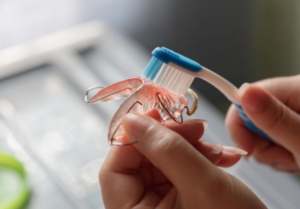
Your retainer spends hours each day in your mouth, collecting saliva, food particles, and bacteria. Without proper cleaning, this buildup can cause problems.
Preventing Bacteria, Odor, and Buildup
Plaque buildup on retainers can transfer to your teeth and gums, increasing cavity risk and causing bad breath. Regular cleaning removes this film before it hardens into stubborn calcium deposits that are harder to remove.
Protecting Your Retainer Investment
Retainers are a significant investment in your orthodontic results. Proper cleaning prevents scratches, warping, and discoloration that can shorten their lifespan. Most removable retainers last 2 to 10 years with good care, but neglect can lead to earlier replacement.
Supporting Overall Oral Health
A clean retainer supports a balanced oral microbiome, the community of bacteria that keeps your mouth healthy. Dirty retainers can disrupt this balance, potentially leading to infections, irritation, or persistent bad breath.
Daily Cleaning Routine: Step-by-Step Guide
Consistent daily care is the foundation of retainer hygiene. Follow these steps based on your retainer type.
For Clear Plastic Retainers (Essix, Vivera)
- Rinse your retainer under cool or lukewarm water immediately after removing it.
- Gently brush all surfaces with a soft-bristled toothbrush and a drop of mild, unscented dish soap or retainer-specific cleaner.
- Rinse thoroughly to remove all soap residue.
- Place in a clean, dry case until your next wear.
For Hawley Retainers (Wire and Acrylic)
- Rinse under cool water to remove loose debris.
- Brush the acrylic portions gently with a soft toothbrush and mild soap. Take extra care around the wire to avoid bending.
- Use a separate soft brush or cotton swab to clean hard-to-reach areas near clasps.
- Rinse well and store in a ventilated case.
For Fixed or Bonded Retainers
Fixed retainers are attached to the back of your teeth and cannot be removed. Clean them as part of your regular oral hygiene:
- Use a soft toothbrush and fluoride toothpaste, angling bristles toward the gumline
- Floss daily with a floss threader or water flosser to clean under the wire
- Consider an interdental brush to reach around the bonded wire
- Rinse with an alcohol-free mouthwash to reduce bacteria
Deep Cleaning Methods for Weekly Maintenance
Once a week, give your retainer a deeper clean to remove stubborn buildup and refresh the material.
Retainer Cleaning Tablets and Soaks
Commercial retainer tablets are formulated to dissolve calcium deposits and reduce bacteria without damaging the material.
Follow package directions: typically, dissolve one tablet in lukewarm water, soak your retainer for 15 to 30 minutes, then rinse thoroughly.
Natural Solutions: Vinegar and Baking Soda
If you prefer natural options, these methods are effective and gentle:
| Solution | How to Use | Best For |
|---|---|---|
| White vinegar (1:1 with water) | Soak 15 to 30 minutes, then rinse well | Removing mineral buildup and odor |
| Baking soda paste | Mix with water, gently brush, then rinse | Light scrubbing without abrasion |
| Diluted hydrogen peroxide (3%) | Soak 10 to 15 minutes, rinse thoroughly | Disinfecting and whitening |
Ultrasonic Cleaners: Do They Work?
Ultrasonic cleaners use sound waves to create tiny bubbles that lift debris from surfaces. They can be effective for retainers when used with water or a mild cleaning solution.
However, they are not necessary for most people and should not replace gentle brushing.
What to Avoid When Cleaning Retainers
Certain habits can damage your retainer or reduce its effectiveness. Steer clear of these common mistakes:
- Toothpaste: Most contain abrasives that scratch plastic and acrylic, creating rough surfaces where bacteria thrive
- Hot or boiling water: Can warp clear retainers and loosen wires on Hawley styles
- Bleach or harsh chemicals: May discolor, weaken, or leave toxic residues on your retainer
- Colored or scented soaps: Dyes and fragrances can stain or irritate oral tissues
- Dishwasher or washing machine: Extreme heat and agitation will damage retainers
Storing Your Retainer Safely When Not in Use
Proper storage protects your retainer from damage, loss, and contamination:
- Always use a hard, ventilated case designed for retainers
- Rinse and dry your retainer before storing to prevent bacterial growth
- Keep the case clean by washing it weekly with mild soap and water
- Store the case in a cool, dry place away from pets and small children
- Avoid wrapping retainers in napkins or tissues, which are easily discarded
Travel Tips: Keeping Retainers Clean on the Go
Maintaining retainer hygiene while traveling requires a little planning:
- Pack a small travel case with compartments for your retainer and a mini toothbrush.
- Bring travel-sized mild soap or retainer cleaning tablets for daily care.
- Use bottled water for rinsing if tap water quality is uncertain.
- Keep your retainer case in your carry-on, not checked luggage, to avoid loss.
- If you forget your case temporarily, rinse the retainer well and store it in a clean, sealed bag until you can place it in its case.
Signs Your Retainer Needs Professional Attention
Even with excellent home care, retainers may need professional evaluation. Contact your orthodontist or dentist if you notice:
- Persistent odor or discoloration that does not improve with cleaning
- Cracks, warping, or loose wires that affect fit or comfort
- Rough spots or buildup that you cannot remove gently
- Changes in how your retainer fits, which may indicate tooth movement
- Oral irritation, sores, or signs of infection while wearing your retainer
Regular dental checkups allow your provider to assess your retainer’s condition and recommend cleaning tips or replacement if needed.
Frequently Asked Questions
▸
How do you clean a retainer without damaging it?
Rinse your retainer after each use, then brush gently once daily with a soft toothbrush and mild, unscented soap or retainer-specific cleaner. Avoid toothpaste, hot water, and harsh chemicals. Soak weekly in a retainer-safe solution to remove buildup without scratching or warping the material.
▸
Can you use toothpaste to clean retainers?
No. Most toothpastes contain abrasives that scratch plastic and acrylic retainers. These microscopic scratches trap bacteria, cause odor, and accelerate wear. Use mild dish soap, retainer cleaner, or natural solutions like diluted vinegar instead.
▸
How often should you deep clean your retainer?
Deep clean your retainer once a week using a soaking solution like retainer tablets, diluted white vinegar, or baking soda. This removes mineral buildup and bacteria that daily brushing may miss. Increase frequency if you notice odor or visible film.
▸
Why does my retainer smell even after cleaning?
Persistent odor may indicate bacterial buildup in microscopic scratches, inadequate drying before storage, or an unclean case. Ensure you are using non-abrasive cleaners, rinsing thoroughly, drying completely, and washing the case weekly. If odor continues, consult your orthodontist.
Final Tips for Lifelong Retainer Care
Your retainer is a key part of maintaining your orthodontic results. With simple, consistent habits, you can keep it clean, comfortable, and effective for years. Remember these takeaways:
- Rinse after every use and brush daily with gentle products
- Soak weekly to remove buildup and refresh the material
- Avoid heat, abrasives, and harsh chemicals that cause damage
- Store in a clean, dry case when not wearing
- Visit your orthodontist regularly to monitor fit and condition
Taking care of your retainer is an investment in your smile. A few minutes each day ensures your teeth stay aligned, your breath stays fresh, and your confidence stays bright.
Sources:
● American Association of Orthodontists — Retainer Care and Maintenance Guidelines
● Journal of Clinical Orthodontics — Hygiene Practices and Retainer Longevity Research
● American Dental Association — Oral Appliance Cleaning and Storage Recommendations