New articles every week — Expert-backed health & beauty tips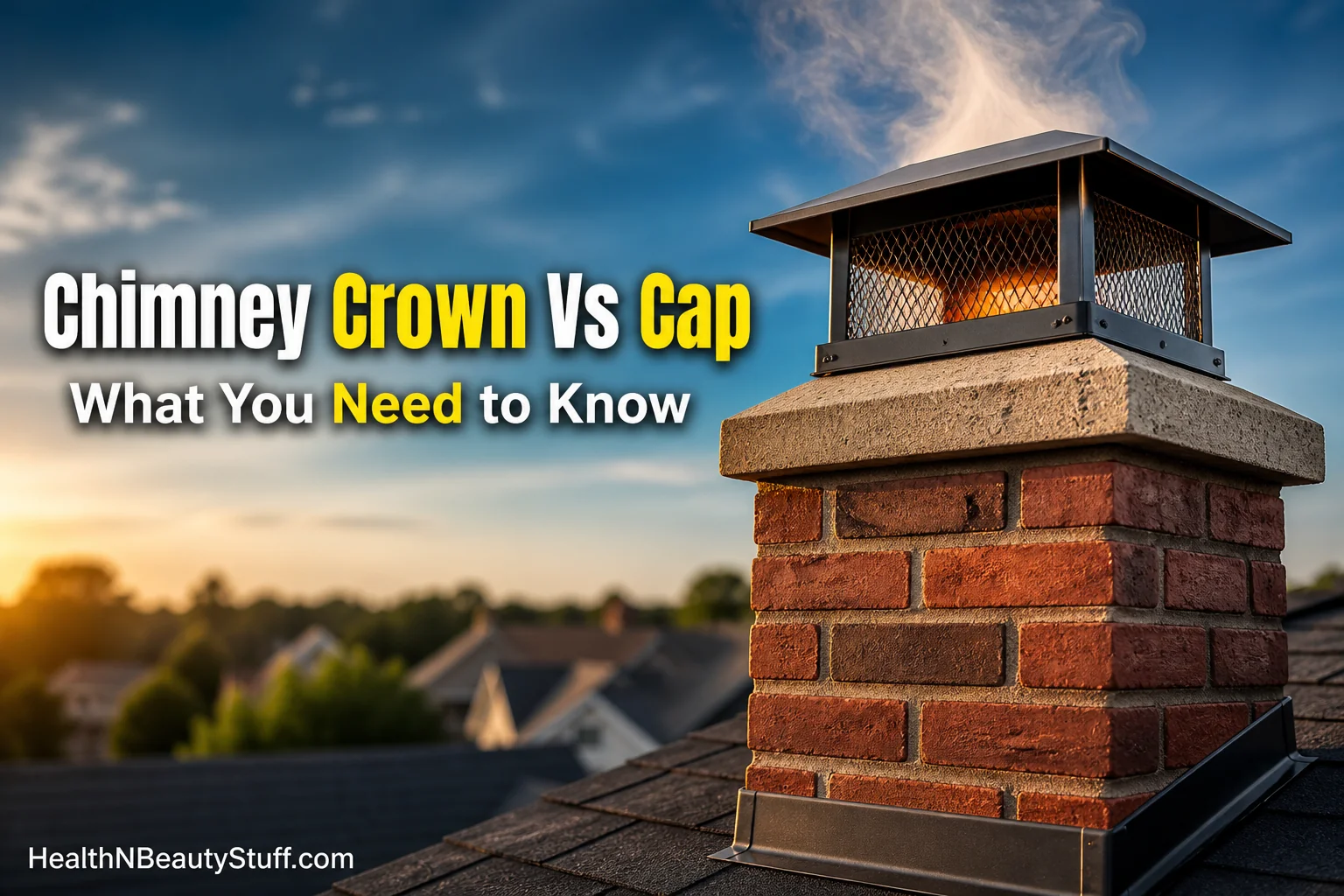
It’s Monday morning. You’re reading the chimney inspection report over cold coffee. Two lines jump out: “Crown cracked, recommend repair.” Then, “No cap installed, recommend new cap.”
Now you’re wondering if that means one problem, two problems, or one very large bill. That concern is fair. The parts sit inches apart, yet they do completely different jobs.
A chimney crown protects the top of the masonry chimney. A chimney cap protects the flue opening. You may need both. If money is tight, your chimney type and the damaged part should guide the decision.
Quick Verdict: For an active masonry chimney, a damaged crown comes first. Repair it before installing a cap. A cap is useful and often less costly, but it cannot seal cracks in the crown. If you have a factory-built chimney, you may need a manufacturer-approved cap or chase cover instead.
Chimney crown vs chimney cap: At-a-glance comparison
The crown protects the masonry, the cap protects the flue, and a chase cover protects a factory-built chimney chase. These parts work together, but they are not interchangeable.
| Comparison item | Chimney crown | Chimney cap | Chase cover |
|---|---|---|---|
| What it is | A sloped concrete or masonry top over the chimney walls | A metal cover, often with mesh, over the flue opening | A sheet-metal cover over an entire chimney chase |
| Primary job | Sheds water away from brick and mortar | Blocks direct rain, animals, leaves, and debris | Protects the top of a factory-built chimney chase |
| Common chimney type | Masonry chimneys | Masonry chimneys and approved factory-built systems | Factory-built chimneys inside framed chases |
| If it fails | Water can enter masonry and damage brick or mortar | Water, animals, or debris can enter the flue | Water can leak into the chase and nearby building materials |
| Typical installer | Chimney or masonry contractor | Chimney contractor, roofer, or capable homeowner | Chimney or roofing contractor |
| Cost position | Usually costs more because masonry work is involved | Usually costs less than crown repair or replacement | Price changes with metal, size, shape, and roof access |
Still unsure what you have? Look at the top from the ground with binoculars. Do not climb onto the roof just to identify it. A chimney inspection can confirm the parts safely.
What does a chimney crown do? (And why a cracked crown is the bigger problem)
A chimney crown sheds water away from the top of a masonry chimney. Think of it as a solid umbrella around the flue liner.
The crown sits on the chimney walls, with the flue passing through it. It is usually made from concrete or a similar cement-based material. A proper crown slopes outward so water does not pool on top.
Its job is not glamorous, but it matters. Brick and mortar absorb moisture. When water enters small crown cracks, it can move deeper into the chimney.
Cold weather makes that worse. Trapped water freezes, expands, and pushes against the masonry. Over time, brick faces may flake or pop off. This damage is called spalling.
Watch for these possible crown problems:
- Visible cracks across the top surface
- Loose or crumbling crown material
- Pieces of masonry near the roof or fireplace
- White mineral stains on the chimney
- Flaking brick faces
- Water stains near the fireplace or chimney walls
These signs do not prove the crown caused the leak. Flashing, mortar joints, or the roof may also be involved. A close inspection should trace the actual water path.
A chimney cap does not repair a cracked crown. Rain can still land beside the cap and enter those cracks. Covering the flue alone leaves the damaged masonry exposed.
What does a chimney cap do? (Rain, animals, debris, downdrafts)
A chimney cap covers the flue opening and keeps unwanted material out. It works more like a screened roof than a structural cover.
Most caps are made from galvanized steel, stainless steel, or copper. Many have wire mesh around the sides. Smoke can escape, while larger animals and debris stay outside.
A chimney cap can help block:
- Rain and snow entering the flue directly
- Birds, squirrels, raccoons, and nesting material
- Leaves, twigs, and windblown debris
- Some wind-driven downdrafts
- Escaping sparks when approved mesh is included
Imagine hearing scratching inside the fireplace at sunrise. That is the kind of problem a screened cap may prevent. It can also stop wet leaves from collecting inside the flue.
However, a cap does not waterproof the chimney walls. It cannot correct failed mortar, cracked masonry, damaged flashing, or a leaking crown.
Caps also need the right fit. A loose cap can shift in high winds. Mesh that is too fine or dirty can restrict airflow, especially when creosote collects on it.
Chimney crown vs cap: Pros and cons
The crown offers broader structural protection, while the cap offers focused flue protection. Most active masonry chimneys benefit from having both in good condition.
Chimney crown pros and cons
A sound crown helps protect the chimney’s most costly material: its masonry.
Pros include:
- Protects the full top of the masonry structure
- Sheds water away from brick and mortar
- Helps limit moisture-related masonry damage
- Forms part of a properly built masonry chimney
Cons include:
- Costs more to repair than a basic cap
- Usually requires masonry skills and roof access
- Needs the correct slope and edge detail
- Does not stop animals from entering an open flue
Chimney cap pros and cons
A cap is a practical way to protect an otherwise open flue.
Pros include:
- Often costs less than masonry repair
- Can be added to many existing chimneys
- Blocks animals, leaves, and direct rainfall
- May reduce some wind-driven downdrafts
- Can include approved spark-arresting mesh
Cons include:
- Does not protect the full masonry surface
- Cannot seal crown cracks
- May corrode, loosen, or blow off
- Needs inspection for clogged or damaged mesh
Chimney crown vs cap cost: Which one will cost you more?
A chimney crown repair usually costs more than a chimney cap installation. That is because crown work involves masonry, shaping, curing, and often difficult roof access.
There is no reliable universal price that fits every home. Local labor rates vary. So do chimney height, roof pitch, crown size, access, and the amount of damage.
Cap prices also vary by:
- Metal type, such as galvanized steel, stainless steel, or copper
- Single-flue or multi-flue design
- Custom or standard dimensions
- Mounting method
- Roof height and accessibility
A small crown crack may qualify for a surface repair. A crumbling, flat, or badly separated crown may require replacement. Ask the contractor to show you photos and explain the proposed method.
Get three local written estimates when possible. Each quote should state whether it covers repair, rebuilding, sealing, cleanup, cap installation, and warranty terms.
Ask these questions before approving the work:
- Can you show me where water is entering?
- Can the crown be repaired, or must it be replaced?
- What material will you use?
- How will you create the slope and overhang?
- Is the cap sized and approved for this flue?
- Are flashing or mortar repairs also needed?
- What is included in the written warranty?
Some companies offer a metal cover over an existing masonry crown. This may work in certain setups. Yet a poorly installed cover may hide damage or trap moisture. Get a clear explanation before choosing it.
Lifespan and maintenance: How long do they last?
Workmanship, material, weather, and maintenance determine how long crowns and caps last. There is no single verified lifespan that applies to every chimney.
A properly shaped crown can serve for many years. Still, tiny cracks may appear after weather exposure or building movement. Early repair is usually simpler than waiting for pieces to loosen.
Cap durability depends heavily on metal type:
- Stainless steel resists corrosion well in many climates.
- Galvanized steel may rust as its coating wears.
- Copper resists corrosion and develops a natural patina.
- Coastal air can speed corrosion on some metals.
No material is maintenance-free. Wind can loosen fasteners. Branches can dent metal. Birds may build against damaged mesh.
The Chimney Safety Institute of America recommends at least one chimney inspection each year. Usage, fuel type, or visible trouble may justify more frequent attention.
NFPA 211 provides standards related to chimneys, fireplaces, vents, and solid-fuel appliances. Local building and fire rules may add requirements. A qualified chimney pro can explain what applies to your home.
Your annual check should include:
- Crown cracks, gaps, and loose material
- Cap corrosion, dents, and fasteners
- Blocked or creosote-coated mesh
- Flue liner condition
- Mortar joints and brick faces
- Roof flashing around the chimney
Installation and repair: Can you DIY a chimney cap or crown?
A simple cap may be a DIY job, but crown repair is usually work for a pro. Roof safety is the first deciding factor.
A cap may attach with clamps or screws. You must measure the flue correctly and choose a compatible product. Factory-built systems often require parts approved by the chimney manufacturer.
Do not attempt the job if the roof is steep, wet, icy, fragile, or difficult to reach. A low-cost cap is not worth a fall.
Crown repair is more involved. Damaged material may need removal. The new material must bond correctly, slope away from the flue, and cure as directed by its manufacturer.
Mortar smeared over a crack is not always a lasting crown repair. The contractor should address loose material and the reason the crack formed.
With a factory-built chimney, do not improvise. The wrong cap can affect clearances or airflow. Confirm the model and follow the manufacturer’s installation instructions.
Chimney cap vs crown: What if you can only pick one?
Choose based on the chimney type and the part that has already failed. Cost matters, but the cheaper item may not solve the active problem.
Choose the crown first if:
- You have a masonry chimney.
- The crown is cracked, loose, or crumbling.
- Brick faces are flaking or popping.
- You see white mineral deposits on masonry.
- Water appears to be entering through the chimney top.
Repairing the crown first protects the base beneath any future cap. Once the masonry work has cured, the cap can be fitted without ignoring active damage.
Choose the cap first if:
- The crown is sound and properly sloped.
- The flue is open to direct rain or snow.
- Animals or birds have entered the chimney.
- Leaves or debris collect inside the flue.
- The existing cap is loose, rusted, or missing.
Choose a chase cover instead if:
- You have a factory-built chimney inside a framed chase.
- The metal top over the chase is rusted or leaking.
- Water is entering around the chase cover seams.
- The manufacturer specifies a chase cover system.
A chase cover and a chimney cap are separate parts. The chase cover spans the broad framed enclosure. The cap protects the vent opening above it.
Choose neither as the first repair if:
- The chimney has severe structural movement.
- Large masonry sections are loose.
- The flue liner has serious damage.
- The leak comes from failed flashing or roofing.
- The unused chimney will be professionally decommissioned.
If a contractor recommends both parts, that is not automatically an upsell. Ask for close photos. Then ask what each item fixes. Two different defects may require two different repairs.
For most active masonry chimneys, repair a damaged crown first, then add or replace the cap. The crown guards the structure. The cap guards the opening.
Start with four practical steps:
- Have a CSIA-certified chimney sweep or qualified masonry contractor inspect the system.
- Repair crown cracks before relying on a new cap.
- Add a fitted cap when the flue needs protection.
- For factory-built systems, confirm the approved cap or chase cover.
That inspection report may still lead to two repairs. At least now the logic is clear. One handles water on the masonry. The other handles what can enter the flue.