New articles every week — Expert-backed health & beauty tips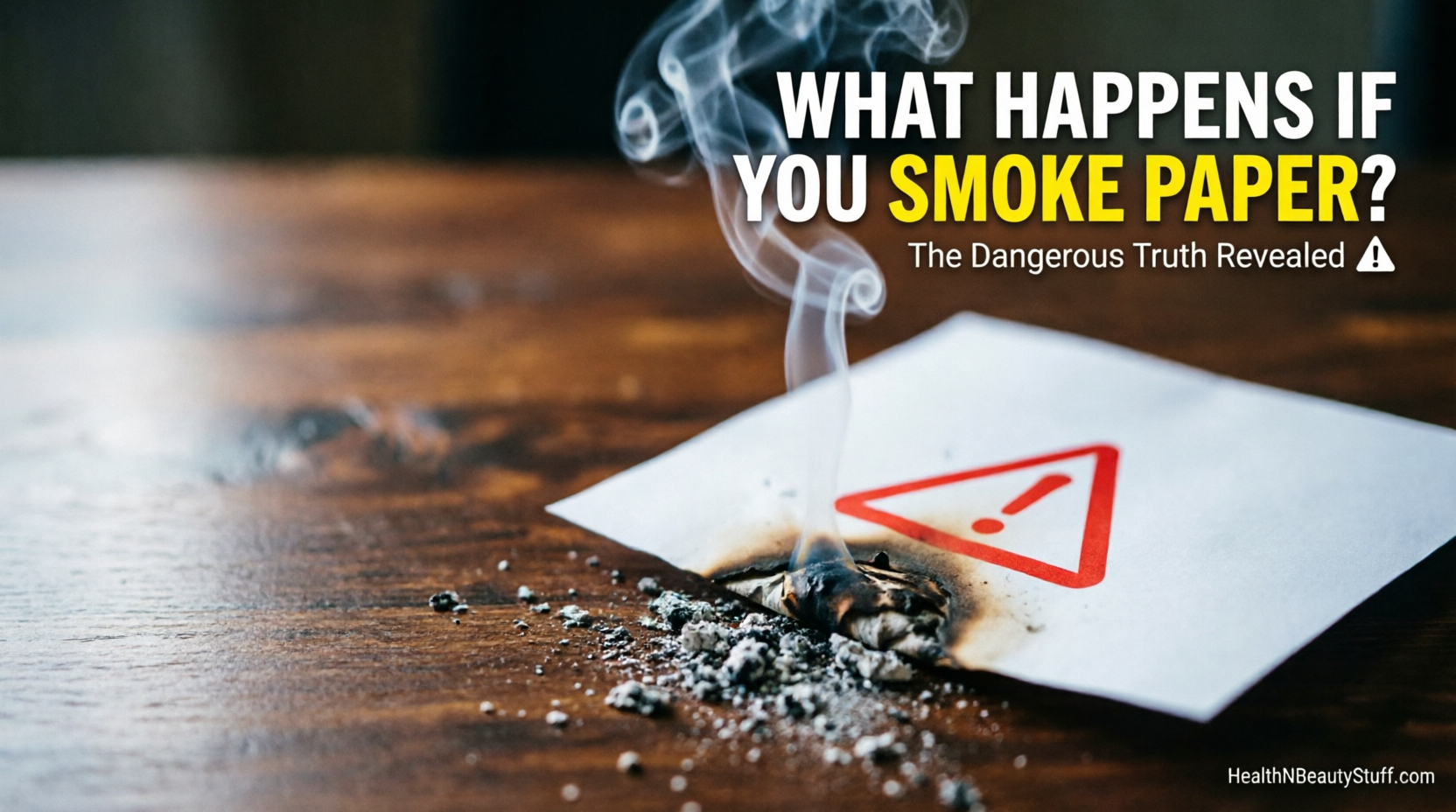
You are scrolling late at night, curiosity gets the better of you, or maybe you are in a pinch without proper supplies. The question pops up: what happens if you smoke paper?
It seems simple, but the answer matters for your health. Many people worry after a one-time experiment or wonder if notebook paper could work in a pinch.
The truth is, not all paper is created equal, and what you inhale depends entirely on what that paper was made for. Let me walk you through the science, the risks, and exactly what to do if you have already tried it.
What Happens If You Smoke Paper: The Short Answer

Smoking regular paper like notebook or printer sheets releases toxic chemicals from ink, bleach, and industrial additives that can irritate your lungs and respiratory system. Is smoking paper bad?
Yes, especially when it is not designed for combustion. Rolling papers are manufactured with minimal additives and food-grade materials, while everyday paper contains chlorine residues, optical brighteners, and sizing chemicals that become harmful when burned.
A single exposure is unlikely to cause permanent damage in healthy individuals, but repeated use increases risks of chronic inflammation and toxin buildup.
Why Paper Type Changes Everything
The biggest mistake people make is assuming all paper behaves the same when burned. It does not. Manufacturing purpose dictates chemical composition, and that composition determines what enters your lungs.
Rolling Paper vs Notebook Paper: A Critical Comparison
Understanding the difference helps you make safer choices.
| Feature | Rolling Paper | Notebook or Printer Paper |
|---|---|---|
| Base Material | Hemp, rice, or unbleached pulp | Bleached industrial wood pulp |
| Bleaching | None or food-safe oxygen methods | Chlorine or chlorine dioxide |
| Additives | Minimal: natural gum, calcium carbonate | Optical brighteners, sizing agents, coatings |
| Ink Content | None | Often petroleum-based inks with metals |
| Thickness | 13 to 18 GSM very thin | 70 to 100 GSM much thicker |
Rolling papers are classified as smoking accessories and manufactured with combustion safety in mind. Regular paper is engineered for writing durability, not inhalation.
The Chemistry: What Your Lungs Actually Inhale
When paper burns, it undergoes cellulose combustion, a chemical process that releases various compounds into the air. What you inhale depends on the paper’s original composition.
Burning releases fine particulate matter, carbon monoxide, and volatile organic compounds, with incomplete combustion creating a more dangerous mix of toxins.
Notebook paper contains chlorine bleaching residues that can form dioxins and furans when burned, highly toxic substances linked to serious health problems.
If the paper has printed ink, heavy metals in ink like lead, cadmium, and chromium become airborne and can be inhaled deep into lung tissue.
- Chlorine compounds from bleaching can form toxic dioxins when burned
- Optical brighteners and sizing chemicals vaporize into respiratory irritants
- Petroleum-based inks release heavy metals and synthetic compounds
- Thick paper smolders, producing more tar-like particulate matter
- Adhesives and coatings decompose into unpredictable fumes
Immediate Effects You Might Feel
After smoking regular paper, you may experience several acute symptoms. These typically appear within minutes to hours and reflect your body’s reaction to irritants.
Throat and airway irritation, often with a burning sensation Persistent coughing as lungs try to clear particulates
Chest tightness or mild difficulty breathing Headache from carbon monoxide exposure Eye watering or irritation from smoke particles
These side effects of smoking notebook paper are your respiratory system signaling distress. Most resolve within 24 to 48 hours with rest and fresh air, but they should not be ignored.
Long-Term Risks of Repeated Exposure
While a single incident is unlikely to cause lasting harm, repeated exposure changes the risk profile significantly. Is smoking paper bad for lungs over time?
Research indicates that chronic inhalation of non-designated paper smoke can lead to reduced lung function, increased susceptibility to respiratory infections, and potential accumulation of heavy metals in lung tissue.
The particulate matter from paper smoke is particularly concerning because these fine particles can penetrate deep into the lungs and even enter the bloodstream, potentially affecting cardiovascular health.
What to Do Right Now If You’ve Smoked Paper
Accidents happen. If you have smoked notebook or printer paper and are worried, follow these steps.
- Move to fresh air immediately and breathe deeply to help clear irritants.
- Drink plenty of water to support your body’s natural detoxification processes.
- Avoid further smoke exposure for at least 24 to 48 hours to let your lungs recover.
- Monitor for severe symptoms like persistent chest pain, coughing up blood, or worsening shortness of breath.
- Use a humidifier if your throat feels dry or irritated to soothe airways.
Most symptoms from a one-time exposure will resolve within a few days as your respiratory system clears the irritants. However, if symptoms persist beyond a week or worsen, seek medical evaluation.
Safer Alternatives And Why Waiting Is Often Best
If you find yourself without proper supplies, the safest choice is to wait. Improvising with household paper introduces unknown chemical risks.
That said, some alternatives carry lower immediate risk than notebook paper, though none are recommended for regular use.
| Alternative | Relative Risk | Important Note |
|---|---|---|
| Corn husk dried | Lower | Natural material but can produce harsh smoke |
| Unbleached rolling papers | Lowest | Specifically designed for combustion safety |
| Rice paper sheets | Lower | Thin and minimal processing, verify food-grade |
| Tobacco leaf wrapper | Moderate | Natural but adds nicotine exposure |
| Gum wrapper foil removed | High | Contains adhesives and unknown coatings |
The reality is that any improvised smoking material carries unpredictable combustion chemistry. Materials not designed for this purpose will produce compounds that have not been safety tested for inhalation.
Frequently Asked Questions
1
What happens if you smoke paper once?
A single exposure to paper smoke is unlikely to cause permanent lung damage in healthy individuals. However, you may experience immediate throat irritation, coughing, chest tightness, or headache from carbon monoxide. These acute symptoms typically resolve within 24 to 48 hours with rest and fresh air. Repeated exposure is where serious risks accumulate.
2
Is smoking notebook paper bad for your lungs?
Yes. Notebook paper contains chlorine bleaching residues, optical brighteners, and sizing chemicals that release toxic compounds when burned. Inhaling this smoke can cause respiratory irritation and, with repeated exposure, may contribute to chronic inflammation or reduced lung function. Rolling papers are specifically designed to minimize these chemical risks.
3
Can you get sick from smoking printer paper?
Yes, you can experience acute illness symptoms. Printer paper often contains petroleum-based inks with heavy metals like lead and cadmium. When burned, these become airborne and can cause throat irritation, coughing, headache, or nausea. While a single incident rarely causes lasting harm, repeated exposure increases toxic buildup and respiratory risk.
4
Are rolling papers actually safer than regular paper?
Yes, significantly. Quality rolling papers use food-grade materials like hemp or rice, avoid chlorine bleaching, and contain no inks or industrial coatings. They are manufactured with combustion safety in mind. While no smoke inhalation is completely harmless, rolling papers dramatically reduce exposure to the toxic chemicals found in burned notebook or printer paper.
When to Seek Medical Help
Most reactions to accidental paper smoking are mild and self-limiting. However, contact a healthcare provider or seek emergency care if you experience:
Severe difficulty breathing or wheezing that does not improve with rest Chest pain that is sharp, persistent, or radiates to your arm or jaw Coughing up blood or dark phlegm Symptoms that worsen after 48 hours instead of improving Fever combined with respiratory symptoms.
which could indicate infection Your lungs are resilient, but they deserve respect. When in doubt, professional medical advice is always the safest path.
Sources:
● American Lung Association — Understanding Smoke Inhalation and Lung Health
● National Institute of Environmental Health Sciences — Chemicals in Everyday Products and Respiratory Effects
● World Health Organization — Indoor Air Quality Guidelines: Selected Pollutants