New articles every week — Expert-backed health & beauty tips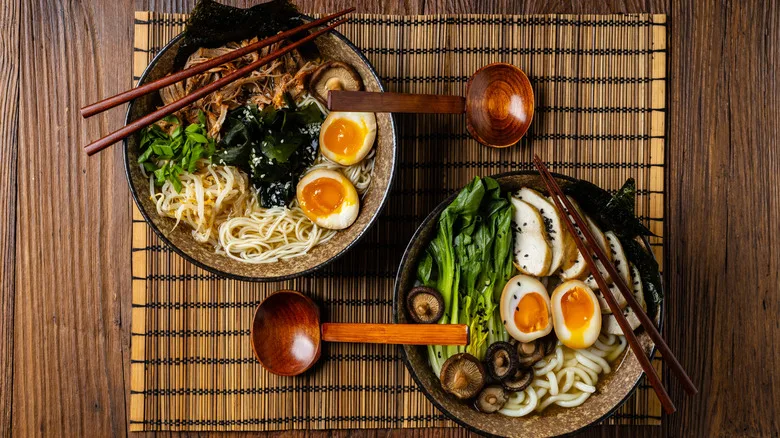
Ever scrolled through a Japanese menu, paused at udon vs ramen, and wondered which bowl will hit the spot? You’re not alone. Both feature wheat noodles in savory broth, but that’s where the similarities end.
Whether you’re ordering takeout, meal-prepping, or exploring Japanese cuisine for the first time, knowing the real differences helps you choose with confidence. Let’s break down what makes each special—so your next bowl is exactly what you crave.
What Is Udon?

Udon noodles are thick, chewy, and delightfully soft. Made from just three ingredients—wheat flour, water, and salt—they have a neutral, mildly sweet flavor that lets broths and toppings shine .
Originating in Japan over 1,200 years ago, udon is often served in a light, soothing dashi-based broth with simple toppings like green onions, tempura, or a soft-boiled egg.
The noodles themselves are white, smooth, and about 2–4 mm thick, with a comforting, pillowy bite.
What Is Ramen?
Ramen noodles are thinner, firmer, and distinctly springy. Their secret ingredient? Kansui, an alkaline mineral water that gives ramen its signature yellow tint, firm chew, and unique aroma .
Ramen broth is where the magic happens: rich tonkotsu (pork bone), savory shoyu (soy sauce), salty miso, or light shio (salt). Toppings are bold and abundant—chashu pork, nori, menma, corn, and marinated eggs. Ramen is a hearty, customizable experience.
Udon vs Ramen: Key Differences
While both are beloved Japanese noodle dishes, three core areas set them apart.
Noodle Ingredients and Texture
- Udon: Made with wheat flour, water, salt; thick (2–4 mm), soft, chewy, white
- Ramen: Wheat flour + kansui; thin (1–2 mm), firm, springy, pale yellow
That alkaline kansui is the game-changer—it alters the gluten structure, giving ramen its bounce. Udon’s simplicity delivers comforting softness.
Broth Styles and Flavor Depth
Udon broth is typically light and clear, built on dashi (kombu seaweed + bonito flakes) with a touch of soy or mirin. It’s soothing, umami-rich, but not heavy. Ramen broth is deeply layered: hours of simmered bones, aromatics, and tare (seasoning base) create intense, complex flavors. Think creamy pork bone vs bright soy vs earthy miso.
Serving Temperature and Seasonal Use
Both can be served hot or cold, but tradition guides preference. Udon shines in summer as zaru udon (chilled with dipping sauce) or in winter as kake udon (hot broth).
Ramen is most often served piping hot, making it a cold-weather favorite—though chilled ramen exists for adventurous eaters.
Nutrition and Health Comparison
Both dishes can fit into a balanced diet, but details matter. A standard bowl of udon (noodles + light broth) has roughly 300–400 calories, moderate sodium (800–1,200 mg), and simple carbs .
Ramen, especially restaurant-style with rich broth and toppings, often ranges 500–800 calories and can exceed 1,500 mg sodium.
For lower sodium, ask for broth on the side or choose shio (salt) base. Both provide B vitamins from wheat; ramen may offer more protein from toppings like pork or egg.
Cooking and Substitution Guide
Can you swap udon and ramen? Sometimes—but texture and broth pairing matter.
When to Choose Udon
- You want a comforting, mild meal that’s easy to digest
- Preparing a quick weeknight dinner (udon cooks in 3–5 minutes)
- Pairing with delicate toppings like tempura or fresh vegetables
- Following a lower-sodium or vegetarian diet (dashi can be plant-based)
When to Choose Ramen
- You crave bold, complex flavors and rich textures
- Hosting a fun, interactive meal with customizable toppings
- Enjoying a hearty post-workout or cold-weather meal
- Exploring regional Japanese cuisine (Sapporo miso, Hakata tonkotsu, Tokyo shoyu)
Can You Swap Them? Quick Reference
| If the recipe calls for… | You can substitute with… | Note |
|---|---|---|
| Udon noodles | Ramen noodles | Broth may taste unbalanced; ramen’s firm bite changes mouthfeel |
| Ramen noodles | Udon noodles | Add extra tare or seasoning to compensate for udon’s neutral flavor |
How to Buy and Store Noodles
Look for udon labeled “fresh” (refrigerated section) for best texture, or dried for pantry storage. Ramen comes fresh, dried, or instant—fresh offers superior chew. Store dried noodles in a cool, dry place for up to 1 year.
Fresh noodles keep 3–5 days refrigerated; freeze for up to 1 month. Cook just until tender to avoid mushiness.
FAQ
Udon vs Ramen: Your Questions Answered
Discover the delicious differences between two iconic Japanese noodle dishes—from broth to nutrition.
🍜
Udon vs Ramen: Quick Comparison
| Feature | Udon | Ramen |
|---|---|---|
| Noodle Texture | Thick, soft, chewy | Thin, springy, firm |
| Key Ingredient | Wheat, water, salt | Wheat + kansui (alkaline water) |
| Broth Style | Light dashi (soy/kelp) | Rich tonkotsu, miso, shoyu, or shio |
| Typical Toppings | Tempura, scallions, kamaboko | Chashu, egg, nori, bamboo shoots |
| Vegan-Friendly? | Yes (noodles + dashi check) | Sometimes (broth often contains pork/fish) |
💡
Pro Tip for Ordering
Ask about the broth base! Many ramen shops offer shio (salt) or shoyu (soy) bases that are lighter than tonkotsu. For udon, request extra vegetables and lean protein to boost nutrition without adding heavy calories.
Sources:
● Just One Cookbook — https://www.justonecookbook.com
● The Spruce Eats — https://www.thespruceeats.com
● Chopstick Chronicles — https://www.chopstickchronicles.com