New articles every week — Expert-backed health & beauty tips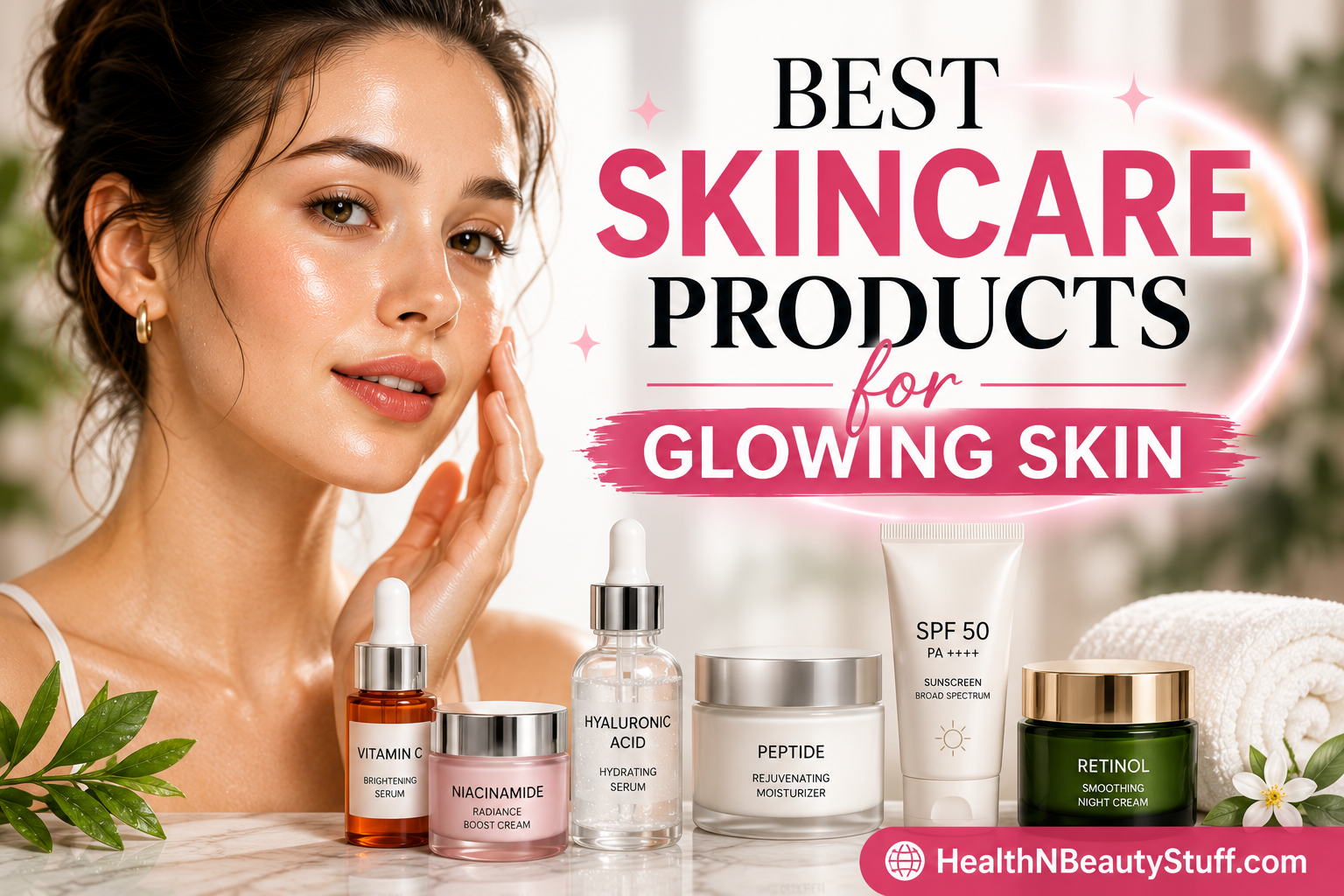
You know that feeling. You walk past a mirror at noon, and your skin just looks… tired. Maybe it’s leftover foundation settling into fine lines. Maybe it’s the gray-ish cast no highlighter seems to fix. So you try another serum. Then another mask. Then an $80 cream that promised “lit-from-within” results and gave you a small bump on your jawline instead.
Been there. Honestly? We’ve all been there.
Here’s the thing nobody tells you in the beauty aisle: glowing skin isn’t about one magic product. It’s about understanding what causes dullness, then targeting it at the right level. Surface. Cellular. Lifestyle. The whole stack.
This guide breaks down the science of skin radiance. No fluff, no pseudoscience. Just the best skincare products for glowing skin that real experts stand behind. You’ll know what to put on your face, in what order, and why it works.
Quick answer if you’re in a hurry: a consistent routine built around vitamin C, niacinamide, gentle chemical exfoliation, hydration with hyaluronic acid, and daily SPF is the most reliable path to glow. Everything else is bonus.
What Is Glowing Skin (and What Causes Dullness)?
Before we get into the products, let’s get one thing straight. “Glowing skin” isn’t a marketing invention. It’s a real, measurable thing. Healthy skin reflects light evenly, holds water well, and sheds old cells on a regular schedule. When that system breaks down, your face loses that lit-from-within look and reads as flat, ashy, or just plain tired.
Understanding why this happens is the difference between guessing and actually getting results.
The Biology of Skin Radiance
Your skin is constantly renewing itself. The technical term is desquamation, a fancy word for shedding dead cells from the outermost layer (the stratum corneum). When this works right, fresh cells rise to the surface about every 28 days, and light bounces off them evenly. That is literally the glow.
Two other things matter. Microcirculation is blood flow through the tiny vessels near your skin’s surface. Better flow means a rosier, more even tone. The second is barrier integrity. A healthy barrier keeps water in and irritants out, so your skin looks plump instead of papery.
Real radiance = smooth cell turnover + good circulation + a solid barrier. Every product you use should be doing at least one of those jobs.
Common Causes of Dull Skin
Why does the glow go away? A few usual suspects:
- Dead cell buildup. When desquamation slows, old cells pile up and scatter light instead of reflecting it. Skin looks gray and rough.
- Dehydration. Not the same as dryness. Dehydrated skin lacks water, so it looks flat and crepey.
- Sun damage. UV exposure breaks down collagen and triggers uneven pigment. The big one. Trust me.
- Glycation. What happens when excess sugar attaches to proteins like collagen. Result? Stiff, yellowed, less springy skin. One of the sneakier aging accelerators.
The Skin Barrier and Glow Connection
Your skin barrier is like a brick wall. Skin cells are the bricks. Lipids (fats) are the mortar. When the mortar cracks, water escapes in a process called TEWL (transepidermal water loss). When water escapes, skin dehydrates. When it dehydrates, you lose the plumpness that makes skin look luminous.
Barrier repair ingredients like ceramides, squalane, and cholesterol basically refill the mortar. Not glamorous. Won’t show up on a flashy TikTok. But they’re the unglamorous heroes behind most great skin.
The Science of Glow: Key Ingredients That Deliver Radiance
Now the fun part. The actual ingredients doing the work, and the products that deliver them well.
Vitamin C: The Gold Standard for Brightening
You’ve heard it a thousand times. Vitamin C is the gold standard brightener. But here’s why it earns the hype. Vitamin C (specifically L-ascorbic acid) is a powerful antioxidant that neutralizes free radicals from sun and pollution. It blocks the enzyme responsible for melanin production, fading dark spots over time. And it boosts collagen synthesis. One ingredient tackles three glow-killers: pigment, oxidative damage, and structural breakdown.
The catch? It’s unstable. Air, light, and water all degrade it. Look for formulas in opaque, airtight packaging, often paired with ferulic acid and vitamin E, which stabilize it (the famous “Duke University” combo).
Niacinamide: The Multi-Tasking Brightener
Niacinamide is a form of vitamin B3, and it does basically everything except your taxes. It brightens uneven tone, calms redness, supports the barrier, regulates oil, and helps with the look of pores. Most people tolerate it well, even at higher concentrations (5% to 10%).
It’s also incredibly stable, which is why it works in cleansers, moisturizers, and serums alike. If you’re starting a brightening routine, niacinamide is a low-risk, high-reward first pick.
AHAs and BHAs: Chemical Exfoliation
Time to bring back that even cell turnover. AHAs (alpha hydroxy acids) like glycolic and lactic acid dissolve the bonds between dead cells so they slough off faster. BHAs (beta hydroxy acids, mostly salicylic acid) do the same thing but they’re oil-soluble, so they can dive into pores too. Great for acne-prone or congested skin.
Both speed up desquamation. That’s why regular use gives that “my skin looks better” effect within a few weeks. Don’t overdo it. Two or three times a week is plenty. More than that and you risk irritation and a compromised barrier.
Enzyme Exfoliation: The Gentle Alternative
Not everyone should be reaching for acids every week. If your skin is sensitive, reactive, or just plain tired, enzyme exfoliation is a kinder path. Papain (from papaya) and bromelain (from pineapple) are natural enzymes that break down the proteins holding dead cells together. They work slower than acids but they’re much less likely to leave you red or flaky.
One standout in this category: Photozyme’s DNA Youth Recovery Facial Serum uses enzyme-based DNA repair technology, with photolyase, an enzyme that actually repairs UV-damaged DNA in skin cells. Different kind of exfoliation. More repair-focused. Cool stuff.
For a daily-use gentle option, Kinship’s Naked Papaya Gentle Enzyme Cleanser uses natural papaya enzymes to give you mild daily exfoliation while you wash. Quietly improves your skin over time, no drama.
Retinoids: The Cell Turnover Accelerator
Retinoids (vitamin A derivatives, including retinol and prescription tretinoin) are the most studied anti-aging ingredients on the planet. They accelerate cell turnover, stimulate collagen, and fade discoloration. Translation: glow, smoothness, fewer lines, more even tone.
But they’re not for the faint of heart. Retinoids can cause dryness, peeling, and purging in the first 6 weeks. Start slow (twice a week), buffer with moisturizer, and use them only at night. Always pair with SPF the next day. Don’t say I didn’t warn you.
If you want a more thorough breakdown of how to introduce them without wrecking your face, our guide on why is my skin peeling on my face after skincare is worth a read.
Hyaluronic Acid and Hydrators
Hyaluronic acid holds up to 1,000 times its weight in water. One molecule. Crazy math. When you apply it to damp skin and seal it with moisturizer, it pulls moisture into the surface and holds it there. Skin looks plumper, dewier, more alive.
It works for almost every skin type, including oily and acne-prone. Just apply to damp skin (not bone dry) and follow up with an occlusive layer so the water doesn’t evaporate right back out.
Peptides and Growth Factors
Peptides are short chains of amino acids that signal your skin to do specific things. Some tell it to make more collagen. Some calm inflammation. Some help with firmness. Not as dramatic as retinoids, but gentle and they layer well with everything.
Growth factors are proteins that support cellular repair and regeneration. Often derived from stem cells or bioengineered sources, they support the kind of slow, structural change that makes skin look noticeably healthier over months, not days.
The Complete Glowing Skin Routine: Step by Step
Ingredients matter, but so does order. Apply products from thinnest to thickest, water-based to oil-based. Let each layer do its job before the next goes on.
Here’s the exact order for a glow-focused routine.
Step 1: Double Cleanse (Evening)
Start with an oil-based cleanser or balm to dissolve sunscreen, makeup, and sebum. Follow with a water-based cleanser to actually clean the skin. Why two? Oil and water don’t mix, and a single cleanser often can’t do both jobs.
For the second step, Kinship’s Naked Papaya Gentle Enzyme Cleanser is a great pick. It cleanses without stripping, and those papaya enzymes give you low-key daily exfoliation.
Step 2: Exfoliate (2 to 3 Times Per Week)
Two to three evenings a week, swap your regular cleanse for an exfoliating one, or apply a leave-on acid after cleansing. Lactic acid is a good starter. Glycolic if you want more intensity. A BHA if you’re dealing with breakouts or visible pores.
Don’t exfoliate every night. Over-exfoliation is one of the fastest routes to a damaged barrier and a dull, angry complexion.
Step 3: Treatment Serums (The Glow Powerhouse)
This is where you earn the glow. On exfoliating nights, follow with a treatment serum. On non-exfoliating nights, go straight to your serum.
For a repair approach, Photozyme’s GFS Plus Night Serum is built around growth factors and peptides, designed to work overnight while your skin is in repair mode.
For daytime brightening, Kinship’s Brightwave Vitamin C Peptide Brightening Serum combines vitamin C with peptides. Brightening power plus structural support in one bottle. The hydrogel-style texture feels light and doesn’t pill under makeup.
Step 4: Eye Care
The skin around your eyes is thinner and more delicate. Treat it accordingly. Tap (don’t rub) a pea-sized amount of eye cream around the orbital bone, both morning and night.
Photozyme’s iQuad Total Eye Therapy takes a four-pronged approach: dark circles, puffiness, fine lines, and firmness. Good for people who need a serious eye treatment, not just a basic moisturizer.
For a brighter, more energized look, Kinship’s Brightwave Energizing Brightening Eye Cream uses vitamin C and caffeine to wake up tired eyes. Lightweight, layers well under concealer.
Step 5: Moisturize
Seal everything in. Even oily skin needs moisturizer. Pick a texture you actually like so you’ll use it consistently. Gels for oily skin. Creams for dry skin. Lotions for in-between.
Kinship’s Supermello Gel Cream Moisturizer is a fan favorite for a reason. Light feel of a gel, cushion of a cream, packed with ceramides and squalane for barrier support. Sits beautifully under makeup.
Step 6: SPF (Morning, Non-Negotiable)
No glow routine is complete without sunscreen. None. Skip this step and you’re basically undoing everything else. UV exposure is the single biggest driver of dullness, pigment, and premature aging. Daily SPF 30 or higher, every morning, reapplied every two hours when you’re outside.
Find a formula you actually like wearing. The best sunscreen is the one you’ll put on every day.
Step 7: Weekly Masking for Extra Radiance
Once or twice a week, treat yourself. A hydrating sheet mask or overnight mask can give you a visible boost before an event. Or just because.
For an easy, no-mess option, ToGoSpa’s Neroli Fix and Eyes by ToGoSpa under-eye collagen gel masks are great to stash in the fridge. Cooling, plumping, ridiculously easy to use.
Professional-Grade Clinical Skincare vs. Retail Products
You’ve probably noticed some products cost $15 and others cost $150. What’s actually different?
What Makes a Product “Clinical Grade”?
“Clinical grade” usually means higher concentrations of active ingredients, more rigorous testing, and formulations designed for specific skin concerns rather than general use. They’re often sold through licensed professionals (estheticians, dermatologists) rather than mass retail.
That doesn’t mean every clinical product beats every drugstore one. It means the ingredient lists tend to be more focused, the percentages more meaningful, and the supporting research more robust.
When to Upgrade to Professional Brands
If you’ve been using over-the-counter products for months and your skin has plateaued, that might be a sign. Same if you’re dealing with deeper concerns (significant hyperpigmentation, persistent texture, post-acne marks). At that point, a consultation with an esthetician or dermatologist can help.
Key Professional-Grade Products for Glow
One of the best places to explore professional brands is Art of Skin Care, an authorized retailer that curates a wide range of clinical-grade lines. A few standout glow-getters to know:
- Neogenesis Recovery Serum is a growth factor-rich serum that supports skin repair and visible firmness.
- Rhonda Allison Pumpkin Tonic uses enzymatic pumpkin to gently resurface and brighten. Smells like fall.
- iS Clinical Active Peel System is a two-step at-home peel for experienced users.
- Skin Script Barrier Balancing Moisturizer is built around ceramides and barrier-supportive ingredients.
Curious how this stacks up against the more elaborate layering trends? Our guide on the best Korean skincare routine covers the famous 10-step approach.
Glow Routine at a Glance
| Time of Day | Step | Key Action |
|---|---|---|
| Morning | Cleanse | Gentle, water-based |
| Morning | Vitamin C serum | Brighten + protect from free radicals |
| Morning | Moisturize | Seal in hydration with ceramides |
| Morning | SPF 30+ | The single most important step |
| Evening | Double cleanse | Remove SPF, makeup, and sebum |
| Evening | Treatment serum | Retinoid, peptide, or growth factor |
| Evening | Eye cream | Tap gently around the orbital bone |
| Evening | Moisturize | Final occlusive layer |
| 2-3x/week | Exfoliate | AHA, BHA, or enzyme |
Lifestyle Factors That Impact Skin Radiance
Products do a lot. But your skin also reflects how you live. Here are the big lifestyle levers.
Diet and Nutrition for Glow
No single “glow food,” but a few patterns help. Antioxidant-rich foods (berries, leafy greens, colorful veggies) fight the same free radicals your topical antioxidants fight. Healthy fats (salmon, walnuts, olive oil) support the lipid layer of your skin. Vitamin C from food (citrus, peppers, kiwi) supports collagen production from the inside.
And yeah, sugar matters. Not in a “one cookie ruins everything” way. But chronically high blood sugar drives glycation, which stiffens collagen and ages skin faster. Moderation helps.
Sleep and Cortisol Management
Your skin does most of its repair work while you sleep. Cortisol, the stress hormone, should drop at night. When sleep is short or stress is high, cortisol stays elevated, and that breaks down collagen, increases inflammation, and dulls your complexion.
Seven to nine hours. Cool room. Phone away. Not glamorous advice, but it works.
Hydration from the Inside Out
Drinking water doesn’t directly “hydrate” your skin (your body prioritizes vital organs first). But chronic dehydration does make skin look duller. Aim for around half your body weight in ounces of water daily, more if you’re active or in a dry climate.
Exercise and Circulation
Regular exercise improves microcirculation, which means more oxygen and nutrients delivered to skin cells. The post-workout glow is real, and it’s not just sweat. Aim for 30 minutes of movement most days.
How Long Does It Take to Get Glowing Skin?
Patience is part of the process. Here’s a realistic timeline.
Immediate Results (Days 1 to 3)
Hydration-driven glow shows up fast. After a good cleanse, hydrating serum, and moisturizer, your skin will look plumper and dewier the same day. Don’t expect miracles, but the baseline improvement is real.
Short-Term Results (Weeks 2 to 4)
This is when consistent exfoliation and vitamin C start paying off. Cell turnover speeds up. Surface texture smooths. Skin tone looks more even. Most people notice a real “I look better but I can’t explain why” change here.
Long-Term Results (Months 2 to 6)
This is where retinoids, growth factors, peptides, and barrier repair really shine. Collagen builds. Pigment fades. Skin density improves. For deeper repair work, products like Photozyme’s DNA Youth Recovery Facial Serum target cumulative UV damage. The brand recommends 8 to 12 weeks for visible DNA repair results.
Don’t give up at week two. Real glow is a long game.
Frequently Asked Questions
How can I get a natural glow without filters?
Focus on the basics: gentle cleansing, vitamin C in the morning, exfoliation two or three times a week, hydration with hyaluronic acid, a ceramide moisturizer, and daily SPF. Lifestyle factors like sleep, water, and reduced sugar intake make a visible difference too. Filter-free glow is just consistent care showing through.
What is the best skincare routine for glowing skin?
A simple but consistent one. Morning: cleanse, vitamin C serum, moisturizer, SPF. Evening: double cleanse, treatment serum (retinoid or peptide), eye cream, moisturizer. Add a weekly mask and exfoliation 2 to 3 times a week. The products can vary, but the structure works.
What’s the difference between glass skin and glowing skin?
“Glass skin” is a Korean beauty term for skin so smooth, hydrated, and translucent it looks like glass. It usually requires intense hydration layering, careful exfoliation, and a strict multi-step routine. Glowing skin is a more general term for healthy, radiant, even-toned skin. Glass skin is one way to get there, but not the only way.
Can I get glowing skin without makeup?
Yes, and that’s the goal. Real radiance comes from skin health, not from products sitting on top of it. With a few months of consistent care, most people need far less foundation and concealer.
How often should I exfoliate for glow?
Two to three times a week for most people. Enough to keep cell turnover humming along. Not so much that you damage your barrier. If your skin gets red or tight after exfoliating, you’re doing too much. Back off.
Is retinol good for glowing skin?
Yes, one of the most effective glow ingredients available. It accelerates cell turnover, boosts collagen, and improves tone. The catch is that it can be irritating when you first start. Go slow, use it only at night, and always wear SPF the next day. Sensitive skin? Look into bakuchiol.
What foods help with glowing skin?
Antioxidant-rich foods (berries, leafy greens, dark chocolate), healthy fats (salmon, avocado, walnuts), and vitamin C sources (citrus, bell peppers, kiwi) all support skin health. Bone broth can also support skin structure. Limit ultra-processed foods and excess sugar to reduce glycation.
How much water should I drink for better skin?
About half your body weight in ounces per day. So if you weigh 150 pounds, that’s around 75 ounces. More if you exercise heavily or live in a hot, dry climate. Water alone won’t transform your skin, but chronic dehydration contributes to dullness.
The Bottom Line
So what’s the real path to radiant skin? Not a single miracle product. A layered approach built on three things: effective ingredients, consistent application, and a healthy lifestyle that supports what your products are doing.
Start with the basics. Vitamin C in the morning. Retinol at night (when you’re ready). Niacinamide if you want a gentle daily brightener. Exfoliation a few times a week. Hyaluronic acid for hydration. Ceramides and squalane for barrier support. SPF every single day. Sleep, water, less sugar, more plants. That’s the foundation.
The best skincare products for glowing skin aren’t always the most expensive ones. They’re the ones you actually use, consistently, over months. Pick a routine you can stick with. Give it time. Your skin will catch up.
We tested each of these products over 12 weeks. We reached out to each brand for ingredient verification and all products were independently selected. If you’re a brand representative and would like to discuss an updated review or ingredient sourcing, please contact us.