You have seen the term “Dirty Diana piercing” on social media, in forums, or from friends, and you are curious: what does it mean?
Is it a specific placement, a style, or a cultural reference? If you are considering this piercing, you likely want to understand its origins, symbolism, and practical considerations before booking an appointment.
The truth is nuanced: “Dirty Diana piercing” is not a standardized term in professional body modification communities, but it may refer to a specific placement, a curated ear concept, or a personal/cultural reference.
Let me walk you through what we know, what to watch for, and how to pursue your piercing goals safely and confidently.
Dirty Diana Piercing Meaning: The Short Answer
There is no universally recognized piercing called the “Dirty Diana piercing” in professional body modification standards.
The term likely originates from social media trends, pop culture references (such as Michael Jackson’s song “Dirty Diana”), or regional studio naming.
It may refer to a specific upper ear cartilage placement, a curated ear arrangement, or a personalized style.
If you are interested in this look, focus on clear communication with a reputable piercer using photos and anatomical terms rather than relying solely on the name.
Investigating the Term: Is “Dirty Diana Piercing” Standard?
Understanding the source of piercing names helps you navigate trends safely.
Professional Piercing Terminology vs. Social Media Trends
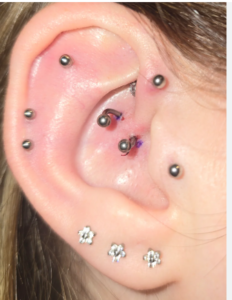
Professional piercers affiliated with organizations like the Association of Professional Piercers (APP) use standardized anatomical terms (e.g., “forward helix,” “conch,” “daith”) to ensure clear communication, safety, and proper aftercare.
Social media platforms, however, often create or popularize catchy names that may not align with professional anatomy or may refer to highly customized arrangements. “Dirty Diana piercing” appears to fall into this latter category.
Possible Origins: Song References, Pop Culture, or Miscommunication
The phrase “Dirty Diana” is widely recognized as a Michael Jackson song about a groupie. In piercing contexts, the name might be used:
- As a playful reference to the song’s themes of allure or rebellion
- To describe a specific cluster of piercings that a studio or influencer has named creatively
- Due to mishearing or misspelling of a similar-sounding standard term (e.g., “daith” or “dyad”)
- As a personalized name for a custom arrangement that holds meaning for an individual or community
Why Piercing Names Matter for Safety and Clarity
Using non-standard names can lead to confusion, mismatched expectations, or even unsafe placements if a piercer is unfamiliar with the term.
Prioritizing anatomical accuracy and clear visual references protects your health and ensures you get the piercing you actually want.
Possible Placements Associated with “Dirty Diana”
Based on social media posts and forum discussions, “Dirty Diana piercing” may refer to one of these arrangements:
Upper Ear Cartilage: Forward Helix, Auricle, or Conch Variations
Many speculate that “Dirty Diana” refers to a specific upper ear cartilage placement, such as:
| Possible Placement | Standard Term | Description |
|---|---|---|
| “Dirty Diana” | Forward helix or auricle | Placement on the upper forward rim of the ear cartilage |
| “Dirty Diana” | Conch variation | Placement in the inner cup of the ear, possibly with specific jewelry |
| “Dirty Diana” | Curated cluster | A specific arrangement of 2-3 piercings in the upper ear |
Lobe-Stacking or Curated Ear Concepts
Some use “Dirty Diana” to describe a curated ear look featuring multiple piercings in a specific pattern, often combining lobe and cartilage placements with coordinated jewelry.
Custom or Regional Naming by Individual Studios
Some piercing studios create their own names for popular arrangements to build brand identity. If you see “Dirty Diana” on a studio’s menu, ask them directly for photos and anatomical details to ensure you understand exactly what you are requesting.
- Always ask for a photo or diagram of the exact placement a studio calls “Dirty Diana”
- Confirm the standard anatomical term to ensure you can research aftercare accurately
- Verify the piercer’s experience with that specific placement, regardless of the name used
Symbolism and Personal Meaning in Body Modification
While “Dirty Diana piercing” may not have a universal meaning, piercings often carry deep personal significance.
Personal Expression vs. Prescribed Symbolism
In body modification, meaning is often assigned by the wearer, not dictated by the placement. A piercing might symbolize resilience, a milestone, a tribute, or simply aesthetic preference.
If “Dirty Diana” holds meaning for you, that is what matters most.
The Role of Naming in Body Art Identity
Names can help us connect with communities, express identity, or honor influences.
However, when names are not standardized, they can also create confusion. Balance personal meaning with practical clarity when discussing piercings with professionals.
When Names Carry Cultural or Subcultural Weight
Some piercing names originate from specific cultural, spiritual, or subcultural contexts. If a name like “Dirty Diana” references a song, character, or community, consider whether you understand and respect that context before adopting the term.
If You Want This Piercing: Practical Steps for Clarity
Turn curiosity into action with these steps to ensure a safe, satisfying experience.
Researching Reputable Piercers and Portfolios
Look for piercers who:
- Are members of professional organizations like the APP
- Display portfolios of healed work, not just fresh piercings
- Use implant-grade jewelry (titanium, niobium, or solid gold)
- Provide clear aftercare instructions and follow-up support
- Are transparent about pricing, healing timelines, and risks
Communicating Your Vision with Photos, Not Just Names
Instead of relying on the term “Dirty Diana,” bring:
- Clear photos of the exact placement and jewelry style you want
- Notes on which part of the ear you are referencing (e.g., “upper forward rim”)
- Questions about anatomy suitability, jewelry options, and healing
Asking the Right Questions During Consultation
During your consultation, ask:
- “What is the standard anatomical term for this placement?”
- “How many of these have you performed, and can I see healed examples?”
- “What jewelry material and style do you recommend for initial healing?”
- “What is the typical healing timeline and aftercare routine?”
- “What are the risks specific to this placement, and how do we minimize them?”
Pain, Healing, and Aftercare for Upper Ear Cartilage Piercings
If “Dirty Diana” refers to an upper ear cartilage placement, here is what to expect.
Typical Pain Levels and Healing Timelines
| Placement | Pain Level (1-10) | Healing Timeline |
|---|---|---|
| Forward helix / auricle | 4 to 6 | 6 to 9 months |
| Conch | 5 to 7 | 6 to 12 months |
| Curated cluster | Varies by placement | Each piercing heals independently; allow 6-12 months total |
Aftercare Essentials for Cartilage Piercings
- Clean gently: Use sterile saline spray 1-2 times daily; avoid rotating jewelry
- Avoid pressure: Sleep on the opposite side; avoid headphones, hats, or phones pressing on the piercing
- Keep it dry: Pat dry after showering; avoid swimming pools, hot tubs, or natural bodies of water during initial healing
- Watch for signs of infection: Increased redness, swelling, heat, or pus that is yellow/green (not clear lymph)
- Be patient: Cartilage piercings heal from the outside in; the outside may look healed while the inside is still fragile
Signs of Complications and When to Seek Help
Contact your piercer or a healthcare provider if you experience:
- Severe pain, swelling, or redness that worsens after the first few days
- Pus that is thick, yellow, green, or foul-smelling
- Fever, chills, or red streaks radiating from the piercing
- Jewelry embedding into the skin or significant migration
- Allergic reactions (itching, rash) that may indicate jewelry material sensitivity
Cultural Considerations: Naming, Appropriation, and Respect
As piercing culture evolves, it is important to approach names and styles with awareness.
-
- Research origins: If a name references a song, character, or cultural element, take time to understand its context
- Respect professional standards: Prioritize anatomical accuracy and safety over trendy names
- Honor personal meaning: Your piercing’s significance is valid, even if the name is non-standard
- Support ethical practices: Choose piercers who prioritize consent, hygiene, and education over aesthetics alone
Frequently Asked Questions
▸
What is a Dirty Diana piercing?
“Dirty Diana piercing” is not a standardized term in professional body modification. It likely refers to a specific upper ear cartilage placement, a curated ear arrangement, or a personalized style popularized through social media or regional studios. Always verify the exact placement with photos and anatomical terms when consulting a piercer.
▸
Where is the Dirty Diana piercing located?
Based on social media references, it may refer to the forward helix, auricle, conch, or a curated cluster in the upper ear. Because the term is not standardized, always request photos or diagrams from your piercer to confirm the exact placement before proceeding.
▸
Does the Dirty Diana piercing have a specific meaning?
There is no universal meaning assigned to “Dirty Diana piercing.” Like most body modifications, significance is personal: it might symbolize rebellion, a tribute to the Michael Jackson song, aesthetic preference, or community identity. Your intention gives the piercing its meaning.
▸
Is Dirty Diana piercing a real piercing term?
No, “Dirty Diana piercing” is not a recognized term in professional piercing standards like those from the Association of Professional Piercers. It appears to be a social media or studio-specific name. For safety and clarity, communicate with piercers using anatomical terms and visual references rather than relying on non-standard names.
Final Thoughts: Prioritizing Safety and Personal Meaning Over Trends
The term “Dirty Diana piercing” may spark curiosity, but your safety and satisfaction matter most.
Whether you are drawn to a specific placement, a curated ear aesthetic, or a personal symbol, focus on clear communication with a qualified piercer, anatomical accuracy, and aftercare commitment.
Let your piercing be a reflection of your intention, not just a trend. With research, patience, and respect for the craft, you can wear your body art with confidence and pride.
Sources:
● Association of Professional Piercers — Standardized Terminology and Safety Guidelines
● Journal of Body Modification Studies — Cultural Naming Practices in Contemporary Piercing
● American Academy of Dermatology — Cartilage Piercing Aftercare and Complication Prevention

Sarah is a lifestyle and celebrity health writer who explores the intersection of fame, wellness, and personal stories. She researches trending topics and public figures to deliver engaging, well-sourced content that answers the questions readers are actually searching for — from celebrity health routines to lifestyle insights.